
Frequently Asked Questions

NIS2 Compliance Overview

What is the NIS2 directive and why is it important?

The Network and Information Security (NIS2) directive is a set of regulations designed to enhance cybersecurity across the European Union. It builds on the original NIS1 directive, expanding its scope and introducing stricter requirements for risk management, incident reporting, supply chain security, and governance. NIS2 aims to create a standardized and secure cyber ecosystem, helping organizations better defend against evolving cyber threats and avoid severe penalties for non-compliance. [Source]

How does NIS2 differ from NIS1?

NIS2 expands the scope of covered industries, introduces stricter risk management and incident reporting requirements, and enforces more consistent and severe penalties for non-compliance. It also mandates top-level management involvement and accountability, supply chain risk management, and establishes the EU-CyCLONe network for crisis coordination. For example, incident reporting must now occur within 24 hours, and penalties can reach up to 10 million euros or 2% of global turnover. [Source]

Which industries are affected by NIS2?

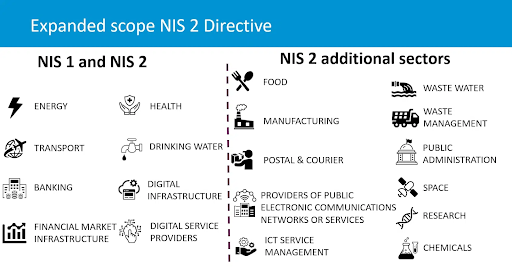
NIS2 applies to essential sectors such as energy, transport, banking, water supply, digital infrastructure, and healthcare. It also covers the postal service, food sector, waste management, critical manufacturing (e.g., medicines and chemicals), digital services (e.g., social media), and public safety-related research and development. [Source]

How do I know if my organization needs to comply with NIS2?

If your organization provides essential services or critical infrastructure, is part of an essential digital supply chain, or operates in the EU or serves EU citizens, you are likely required to comply with NIS2. [Source]

What are the penalties for non-compliance with NIS2?

Penalties for non-compliance with NIS2 are severe and consistent across EU member states, including fines up to 10 million euros or 2% of an organization’s global turnover. Executives may also face personal liability, including suspension from duties. [Source]

NIS2 Compliance Requirements & Steps

What are the main NIS2 compliance requirements?

NIS2 compliance requires organizations to conduct comprehensive risk assessments, implement cybersecurity measures (such as access controls, data protection, and business continuity), ensure management accountability, report incidents within strict timelines, manage supply chain risks, and provide regular cybersecurity training and awareness programs. [Source]

What is required for risk management under NIS2?

Organizations must conduct comprehensive risk assessments, implement technical, operational, and organizational measures to manage risks, and maintain up-to-date risk mitigation plans. Automated tools like Cynomi can help perform risk assessments at scale and speed. [Source]

What are the incident reporting requirements under NIS2?

Significant cybersecurity incidents must be reported to relevant authorities within 24 hours of detection, followed by a detailed report within 72 hours, and a final comprehensive report within one month. Organizations should have documented incident response plans and train employees to execute them. [Source]

How does NIS2 address supply chain security?

NIS2 mandates that organizations assess and manage risks throughout their supply chains, including due diligence on cloud service providers and enforcing security controls like two-factor authentication and password policies. Regular cybersecurity training helps mitigate risks such as shadow IT. [Source]

Why is management accountability emphasized in NIS2?

NIS2 explicitly holds company management accountable for cybersecurity compliance. Executives may face personal liability for negligence, including suspension from duties. Regular cybersecurity training for management is required to maintain a security-aware culture. [Source]

What role does cybersecurity training play in NIS2 compliance?

Regular cybersecurity training and awareness programs are critical for NIS2 compliance. Training helps mitigate risks from human error, such as phishing and shadow IT, and fosters a culture of security awareness across all organizational levels. [Source]

How can automated tools help with NIS2 compliance?

Automated tools like Cynomi streamline compliance assessments, generate AI-driven policies, and create strategic remediation plans with prioritized tasks. This enables MSPs and MSSPs to offer comprehensive compliance assessments efficiently and close compliance gaps faster. [Source]

What are the business benefits of NIS2 compliance?

NIS2 compliance increases trust with clients and partners, provides a competitive advantage when bidding for contracts, enhances resilience to cyber incidents, and helps organizations align with other international cybersecurity regulations. [Source]

Cynomi Platform & Features for NIS2 Compliance

How does Cynomi help organizations achieve NIS2 compliance?

Cynomi automates up to 80% of manual compliance processes, including risk assessments and compliance readiness, enabling faster and more efficient service delivery. The platform provides AI-generated policies, strategic remediation plans, and branded, exportable reports to help organizations close compliance gaps and demonstrate progress. [Source] [Knowledge Base]

What features does Cynomi offer for compliance automation?

Cynomi offers AI-driven automation for risk assessments, compliance readiness, and reporting. It supports over 30 cybersecurity frameworks, provides centralized multitenant management, and delivers branded, exportable reports. The platform also embeds CISO-level expertise, making it accessible for junior team members and non-technical users. [Source] [Knowledge Base]

Does Cynomi support integration with other cybersecurity tools?

Yes, Cynomi supports integrations with scanners such as NESSUS, Qualys, Cavelo, OpenVAS, and Microsoft Secure Score. It also integrates with cloud platforms like AWS, Azure, and GCP, and offers API-level access for custom workflows and connections to CI/CD tools, ticketing systems, and SIEMs. [Knowledge Base]

What technical documentation does Cynomi provide for compliance?

Cynomi provides detailed compliance checklists, NIST compliance templates, continuous compliance guides, and framework-specific mapping documentation. These resources help organizations understand and implement compliance requirements efficiently. [CMMC Compliance Checklist] [NIST Compliance Checklist] [Continuous Compliance Guide] [Compliance Audit Checklist]

How does Cynomi ensure ease of use for compliance teams?

Cynomi features an intuitive interface and structured workflows, enabling even non-technical users and junior team members to perform assessments, planning, and reporting. Customer feedback highlights reduced ramp-up time and a user-friendly experience compared to competitors. [Knowledge Base]

What frameworks does Cynomi support for compliance assessments?

Cynomi supports over 30 cybersecurity frameworks, including NIST CSF, ISO/IEC 27001, GDPR, SOC 2, and HIPAA, allowing organizations to tailor assessments to their specific needs. [Source]

How does Cynomi help with supply chain risk management?

Cynomi automates vendor risk assessments and provides tools for managing third-party risks, including documentation for contracts with security clauses and shared responsibility matrices. This helps organizations comply with NIS2 supply chain requirements. [Source]

Use Cases & Industry Applications

Who can benefit from using Cynomi for NIS2 compliance?

Managed Service Providers (MSPs), Managed Security Service Providers (MSSPs), vCISOs, and organizations in regulated industries such as legal, technology consulting, defense, and critical infrastructure can benefit from Cynomi’s automation and compliance tools. [Case Studies]

What are some real-world examples of organizations using Cynomi for compliance?

Examples include CompassMSP, which closed deals five times faster; ECI, which increased GRC service margins by 30% and cut assessment times by 50%; and Arctiq, which reduced assessment times by 60%. [Arctiq Case Study] [Secure Cyber Defense Case Study]

What industries are represented in Cynomi’s case studies?

Cynomi’s case studies include organizations from the legal industry, cybersecurity service providers, technology consulting, managed service providers, and the defense sector. [Testimonials]

How does Cynomi help organizations scale their compliance services?

Cynomi enables service providers to scale vCISO services without increasing resources by automating up to 80% of manual processes and standardizing workflows. This allows for sustainable growth and efficient service delivery. [Source]

What pain points does Cynomi address for compliance teams?

Cynomi addresses time and budget constraints, manual processes, scalability issues, compliance and reporting complexities, lack of engagement tools, knowledge gaps, and challenges maintaining consistency. [Knowledge Base]

How does Cynomi help with incident response planning?

Cynomi provides tools and templates for incident response planning, ensuring organizations can document, train, and execute incident response processes in line with NIS2 requirements. [NIST Incident Response Plan Template]

How does Cynomi support continuous compliance?

Cynomi’s platform includes a continuous compliance guide and automation features that help organizations maintain ongoing compliance with NIS2 and other frameworks, reducing the risk of falling out of compliance between audits. [Continuous Compliance Guide]

Competition & Differentiation

How does Cynomi compare to Apptega?

Apptega serves both organizations and service providers, while Cynomi is purpose-built for MSPs, MSSPs, and vCISOs. Cynomi offers AI-driven automation, embedded CISO-level expertise, and supports over 30 frameworks, providing greater flexibility and ease of use compared to Apptega’s more limited framework support and manual setup requirements. [Knowledge Base]

How does Cynomi differ from ControlMap?

ControlMap requires moderate to high user expertise and more manual setup, while Cynomi automates up to 80% of manual processes and embeds CISO-level expertise, enabling junior team members to deliver high-quality work. [Knowledge Base]

What makes Cynomi different from Vanta?

Vanta is direct-to-business focused and best suited for in-house teams, with strong support for select frameworks. Cynomi is designed for service providers, offers multitenant management, and supports over 30 frameworks, making it more adaptable for MSPs and MSSPs. [Knowledge Base]

How does Cynomi compare to Secureframe?

Secureframe focuses on in-house compliance teams and requires significant expertise, with a compliance-first approach. Cynomi prioritizes security, links compliance gaps directly to security risks, and provides step-by-step, CISO-validated recommendations for easier adoption. [Knowledge Base]

What are Cynomi’s advantages over Drata?

Drata is premium-priced and best suited for experienced in-house teams, with onboarding taking up to two months. Cynomi offers rapid setup with pre-configured automation flows and embedded expertise, allowing teams with limited cybersecurity backgrounds to perform sophisticated assessments quickly. [Knowledge Base]

How does Cynomi address scalability compared to competitors?

Cynomi enables MSPs and MSSPs to scale vCISO services without increasing resources, thanks to automation and process standardization. Competitors like RealCISO often face challenges in scaling due to resource limitations. [Knowledge Base]

What makes Cynomi’s approach to compliance unique?

Cynomi combines AI-driven automation, embedded CISO-level expertise, support for over 30 frameworks, centralized multitenant management, and branded reporting. This enables consistent, scalable, and efficient compliance service delivery, setting it apart from competitors that require more manual effort and expertise. [Knowledge Base]

5 NIS2 Compliance Requirements You Need to Make a Priority

Rotem-Shemesh
Rotem Shemesh Publication date: 8 October, 2024
Compliance
NIS2 compliance requirements your need to make a priority

Cyber criminals never sleep, so compliance requirements must keep moving forward to stay one step ahead. One of the EU’s many responsibilities is to set compliance standards in stone, therefore creating a standardized and optimally secure cyber ecosystem. 

Cybecrime is estimated to reach over $13 billion in 2028, so it’s up to governments and regulatory bodies to lead the charge and mandate improvements across the field. A lack of vigilance doesn’t just put MSP/MSSP clients on attackers’ radars—it also negatively impacts their bottom line and reputation. NIS2 compliance requirements are the latest framework to sweep the EU, updating existing policies as threats evolve and introducing innovative new best practices.


What are the NIS2 compliance requirements?

The Network and Information Security (NIS2) directive is a set of regulations designed to enhance cybersecurity across the European Union. It builds on the original NIS1 directive but with a broader scope and stricter requirements.

NIS2 requirements vary depending on the nature of your client’s organization, however, they generally include:

Risk Management

  • Conduct comprehensive risk assessments.
  • Implement measures to prevent, detect, and respond to cyber threats.
  • Establish incident response plans.
  • Manage supply chain risks.

Cybersecurity Measures

  • Enforce strong access controls and identity management.
  • Protect network and system integrity.
  • Implement robust data protection measures.
  • Ensure business continuity and disaster recovery.
  • Regularly update software and systems.

Governance and Accountability

  • Provide adequate resources and training for all employees.
  • Report significant incidents to the relevant national authorities within 24 hours.
  • Cooperate with authorities in case of incidents.


How are the NIS2 requirements different from NIS1?

NIS1NIS2
ScopeEnergy, transport, banking, and healthcare.Public administration, space, food production, and manufacturing.
Risk Management and Security MeasuresBasic cybersecurity requirements for OES (Operators of Essential Services).Enhanced cybersecurity requirements, encompassing risk management, incident response, supply chain security, and encryption protocols.
Incident Reporting Requirements Report incidents that had a significant impact on the continuity of essential services.Incidents must be reported to national authorities within 24 hours of detection, followed by a detailed report within 72 hours.
Accountability and GovernanceLimited focus on governance, mainly requiring organizations to appoint a point of contact for cybersecurity matters.Top-level management must be involved in cybersecurity decision-making with an emphasis on accountability. Penalties for non-compliance include significant fines and personal liability charges.
Penalties for Non-ComplianceMember states imposed penalties for non-compliance, but the rules and enforcement varied widely across the EU.Penalties across member states are more consistent, and severe sanctions for non-compliance are imposed, up to 10 million euros or 2% of an organization’s global turnover.
Supply Chain SecuritySupply chain security is left largely to the discretion of individual organizations.Mandates that organizations assess and manage risks throughout their supply chains.
Coordination and CooperationFocused on improving cybersecurity at the national level. Establishes a European Cyber Crises Liaison Organization Network (EU-CyCLONe) to improve crisis management and response coordination across the EU.


1 NIS2 scope graphic
Source


How to Know if You Need NIS2 Compliance

NIS2 is relevant for a wide range of companies across the EU. However, it applies primarily to industries deemed essential for society’s everyday functioning, such as:

  • Energy (like electricity and gas)
  • Transport (e.g., air and water)
  • Banking
  • Water supply
  • Digital infrastructure (including cloud)
  • Healthcare 

Other important industries under the NIS2 umbrella include:

  • The postal service
  • Food sector
  • Waste management
  • Critical manufacturing (e.g., medicines and chemicals)
  • Digital services (e.g., social media)
  • Public safety-related research and development. 

To determine if your clients need to comply, ask yourself the following questions:

  • Do they provide essential services or critical infrastructure?
  • Are they part of an essential digital supply chain?
  • Are they operating in the EU or providing services to EU citizens?

If the answer is yes to all of these questions, then NIS2 is the way to go for cyber resilience and compliance.
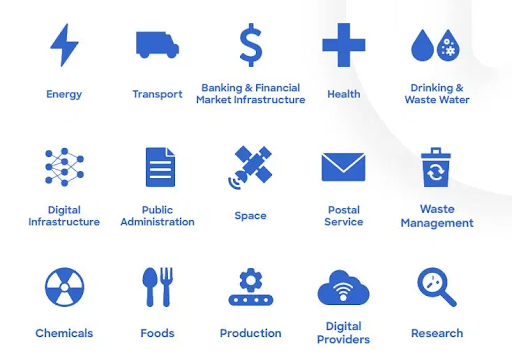
Who NIS2 affects graphic

Source

What’s the impact of NIS2 compliance requirements on your business?

Complying with NIS2 offers several benefits for your clients beyond avoiding penalties.

  • Increased Trust: Clients and partners are more likely to trust a business that adheres to strict cybersecurity standards.
  • Competitive Advantage: Companies that are NIS2 compliant may have an edge over competitors who are not, especially when bidding for contracts.
  • Resilience: NIS2 compliance ensures your clients are prepared to handle and recover from cyber incidents, minimizing downtime and financial losses.
  • Regulatory Alignment: Compliance with NIS2 helps businesses align with other international cybersecurity regulations.


5 NIS2 Compliance Requirements You Need to Make a Priority

1. Management Accountability and Leadership Involvement

Unlike the previous NIS Directive, NIS2 explicitly holds company management accountable for cybersecurity compliance. Non-compliance could lead to personal liability for executives, including suspension from their duties.

Executives may be looking to outsource the responsibility of NIS2 compliance to an MSP/MSSP, but they remain liable for any negligence that results from non-compliance. Your job is to protect executives by ensuring their organization remains compliant.

Stakeholders need help understanding the significance of cybersecurity measures. Otherwise, they will be reluctant to assign the necessary resources. Frequent cyber security training for management is the only way to maintain a security-aware culture throughout an organization.
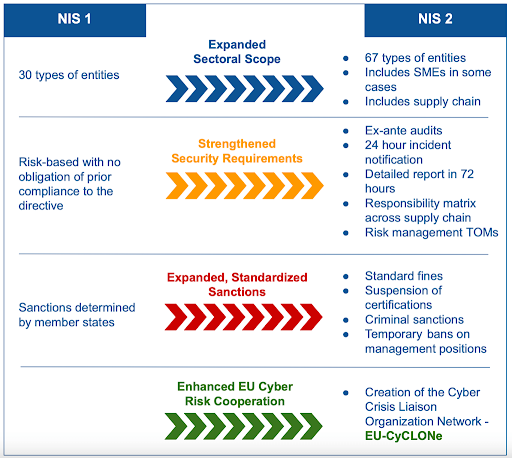
expanded sectoral scope

Source

2. Comprehensive Risk Management Strategies

Article 21 of NIS2 mandates that organizations implement a comprehensive risk management strategy. Your strategy for clients must include technical, operational, and organizational measures to manage network and information systems risks.

Any risk management strategy starts with a risk assessment and concludes with a risk mitigation plan to maintain acceptable risk levels. Since you’re likely to perform many risk assessments, it’s best to develop a checklist you can use to gather information from your clients. Your checklist should be reviewed and updated periodically based on what worked best. Alternatively, you could use automated tools like Cynomi to perform risk assessments at scale and speed, saving you time and money.

3. Incident Reporting and Response Mechanisms
Source

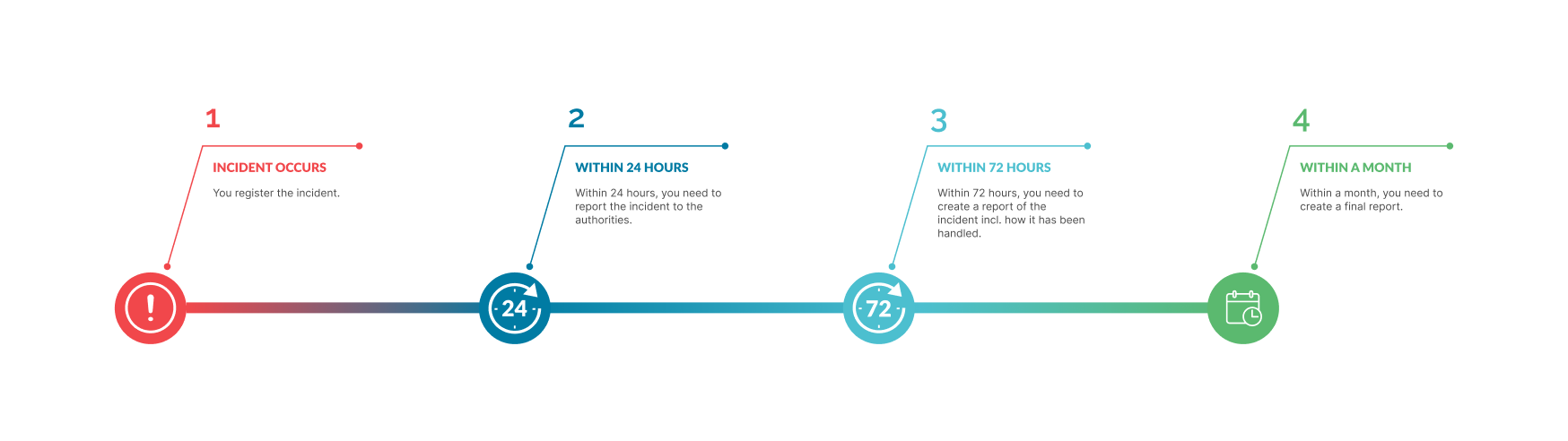
You must notify relevant authorities of significant cybersecurity incidents within 24 hours. NIS2 outlines a structured process for incident reporting, starting with an initial notification within 24 hours, an additional report within 72 hours, and finally, a complete report within a month:

  • 24 Hours – The intention is to work with authorities to limit the spread of the incident.
  • 72 Hours – With this report, ensure it outlines the probable cause, severity, and impact.
  • 1 Month – Lastly, a detailed report of the incident, describing the type of threat, any damages to the organization, and a description of mitigation actions.

Plan and document your incident response plan and train relevant employees to execute it. You’ll likely have to participate in the later two stages of the report, but the client should prompt the initial notification and perform it as soon as possible.

Take advantage of automated tools to help generate detailed logs of your client’s assets, ensuring that you can provide authorities with comprehensive data about an incident should it occur.

4. Supply Chain Security Management

Software supply chain may be the biggest threat to your client’s compliance. With over 90% of organizations using cloud services, every one of your clients is potentially vulnerable.

When selecting cloud service providers, performing due diligence and investigating compliance with those services is crucial. Take care to enforce two-factor authentication, password rotation, and account expiration, or use a single-sign-on service.

Employees can sign up for cloud services without informing anyone; this is shadow IT. Cyber security training is the only way to combat shadow IT, so schedule periodic seminars to raise awareness and protect your clients.

5. Regular Cybersecurity Training and Awareness Programs

Cybersecurity training and awareness across all levels of an organization are critical aspects of NIS2 compliance. Human error remains one of the leading causes of cybersecurity breaches. You can mitigate shadow IT, phishing, malware, exposed passwords, and weak security protocols by informing clients of the dangers and how to spot them.

Encourage your client to foster a culture of cybersecurity awareness where employees feel empowered to report potential threats. Therefore, they can implement regular cybersecurity training programs tailored to different roles within their organization. These programs should cover essential topics such as phishing prevention, secure password practices, recognizing suspicious activity, and bring-your-own-device policies

Navigating NIS2 Compliance with Cynomi

As MSPs and MSSPs, you are tasked with ensuring clients comply with NIS2 and stay ahead of the curve in the ever-changing compliance landscape. Having the right tools is essential for efficiency and completeness, which is where Cynomi steps in. 

Cynomi’s vCISO platform automates the manual, time-consuming work of compliance assessments, enabling MSPs/MSSps to offer comprehensive compliance assessments for multiple frameworks. Cynomi provides AI-generated policies and strategic remediation plans with prioritized tasks, making it easier for every client to close compliance gaps.

Ready to simplify NIS2 compliance? Request a demo and see how you can streamline your compliance efforts while focusing on what matters most—protecting your clients.