
Frequently Asked Questions

Cyber Insurance Coverage & Checklist Essentials

What is a cyber insurance coverage checklist?

A cyber insurance coverage checklist is a structured process that helps MSPs, MSSPs, and their clients navigate the complexities of cyber insurance policies. It outlines essential coverage areas to consider when selecting a policy and guides organizations in managing cyber risks and ensuring adequate protection. (Source)

Why do organizations need a cyber insurance coverage checklist?

Organizations need a cyber insurance coverage checklist to ensure comprehensive coverage, avoid under- or over-insurance, and facilitate informed discussions with insurance providers. It helps businesses understand which threats to protect against and how to meet insurers' guidelines, often aligning with risk assessment methods and industry frameworks like NIST and ISO 27001. (Source)

What are the ten essential areas covered by a cyber insurance checklist?

The ten essential areas are: 1) Data breach expenses, 2) Cyber extortion and ransomware, 3) Business interruption and extra expenses, 4) Network security and privacy liability, 5) Regulatory fines and penalties, 6) Reputational harm and media liability, 7) Incident response and forensic investigation, 8) Cyber terrorism, 9) Social engineering and phishing attacks, and 10) Third-party liability. (Source)

How can a checklist help avoid under-insurance or over-insurance?

A checklist helps organizations choose the right coverage to match their unique risk profile, ensuring they are neither under-insured nor paying for unnecessary coverage. This prevents gaps in protection and unnecessary expenses. (Source)

What types of expenses are covered under data breach coverage?

Data breach coverage includes expenses for investigating and responding to a breach, notifying affected individuals, and offering credit monitoring services. It is essential to understand notification requirements, as failing to meet them may result in denied coverage. (Source)

How does cyber extortion and ransomware coverage protect businesses?

This coverage includes costs for handling extortion demands, ransom payments, and recovery after ransomware attacks. It ensures rapid recovery and reduces downtime and operational interruptions. (Source)

What is included in business interruption and extra expenses coverage?

This policy compensates for lost income and additional expenses incurred due to a cyber incident that disrupts business operations. It may include costs for temporary office space or equipment rentals. (Source)

How does network security and privacy liability coverage work?

This coverage protects against legal liabilities and financial losses stemming from privacy breaches, including unauthorized access and data breaches. Additional coverage may be needed for regulatory fines related to privacy violations. (Source)

What regulatory fines and penalties should be considered in cyber insurance?

Cyber insurance should cover fines for non-compliance with data protection laws such as GDPR (up to €20 million or 4% of global turnover), CCPA (up to ,500 per violation), UK DPA 2018 (up to £17.5 million or 4% of turnover), and Brazil's LGPD (up to 2% of annual gross revenue, capped at 50 million reais). (Source)

How does reputational harm and media liability coverage benefit organizations?

This coverage includes costs for crisis communication, public relations, and legal expenses related to reputational harm following a cyber incident. It helps organizations rebuild their reputation and respond to negative media coverage. (Source)

What is covered under incident response and forensic investigation?

Incident response and forensic investigation coverage includes costs for forensic investigation, data recovery, and system restoration after a cyberattack. Swift incident response is crucial for minimizing damage. (Source)

Why is cyber terrorism coverage important?

Cyber terrorism coverage protects against losses resulting from cyberattacks perpetrated by terrorist organizations. It is important to ensure the policy defines cyberterrorism clearly and covers a broad range of activities. (Source)

How does social engineering and phishing attack coverage work?

This coverage protects against financial losses caused by social engineering scams and phishing attacks, including tactics like spear phishing and business email compromise (BEC). (Source)

What is third-party liability in cyber insurance?

Third-party liability coverage addresses claims made by customers or partners for damages resulting from a cyber incident originating from the insured company's systems or network. It includes claims related to data breaches, privacy violations, and business interruption. (Source)

How does Cynomi help MSPs and MSSPs meet cyber insurance requirements?

Cynomi's AI-powered platform simplifies the process of meeting cyber insurance requirements by automating policy creation and management, ensuring clients have up-to-date policies and procedures. It also provides actionable remediation plans to address identified issues, helping MSPs/MSSPs improve clients' cyber resilience and maintain insurability. (Source)

What are the benefits of using Cynomi for cyber insurance readiness?

Benefits include scalable vCISO services, reduced operational costs, professional knowledge gap reduction, and lower client churn. Cynomi enables MSPs to deliver unprecedented security and compliance to their clients. (Source)

How does Cynomi's automated policy creation work?

Cynomi automates the creation and management of cybersecurity policies and procedures, ensuring clients' documentation is always up-to-date and aligned with insurance requirements. This streamlines compliance and strengthens insurance applications. (Source)

What actionable remediation plans does Cynomi provide?

Cynomi offers actionable remediation plans to address identified cybersecurity issues, helping MSPs/MSSPs continuously improve clients' cyber resilience and maintain insurability. (Source)

How can MSPs scale vCISO services with Cynomi?

Cynomi enables MSPs to scale vCISO services by automating manual processes, reducing operational costs, and bridging professional knowledge gaps, allowing them to serve more clients efficiently. (Source)

What resources does Cynomi offer for compliance and risk management?

Cynomi provides technical documentation, compliance checklists, risk assessment templates, and guides for frameworks like NIST, CMMC, PCI DSS, and more. These resources help MSPs/MSSPs understand and implement effective compliance and risk management strategies. (Source)

How does Cynomi support compliance with multiple frameworks?

Cynomi supports compliance readiness across 30+ frameworks, including NIST CSF, ISO/IEC 27001, GDPR, SOC 2, and HIPAA, allowing tailored assessments for diverse client needs. (Source)

Features & Capabilities

What are the key features of Cynomi's platform?

Key features include AI-driven automation (automating up to 80% of manual processes), centralized multitenant management, compliance readiness across 30+ frameworks, embedded CISO-level expertise, branded reporting, scalability, and a security-first design. (Source)

How does Cynomi automate cybersecurity processes?

Cynomi automates up to 80% of manual processes such as risk assessments and compliance readiness, reducing operational overhead and enabling faster service delivery. (Source)

Does Cynomi support API integrations?

Yes, Cynomi offers API-level access for extended functionality and custom integrations, including connections with CI/CD tools, ticketing systems, and SIEMs. (Source)

What scanners and cloud platforms does Cynomi integrate with?

Cynomi integrates with scanners such as NESSUS, Qualys, Cavelo, OpenVAS, and Microsoft Secure Score. It also supports native integrations with AWS, Azure, and GCP, and can sync with infrastructure-as-code deployments. (Source)

How does Cynomi's security-first design benefit users?

Cynomi prioritizes security over mere compliance, linking assessment results directly to risk reduction and ensuring robust protection against threats. (Source)

What technical documentation is available for Cynomi users?

Cynomi offers compliance checklists, risk assessment templates, incident response plan templates, and framework-specific mapping documentation for standards like NIST, CMMC, and PCI DSS. (Source)

How does Cynomi help junior team members deliver high-quality work?

Cynomi embeds CISO-level expertise and best practices into its platform, providing step-by-step guidance and actionable recommendations so junior team members can deliver high-quality cybersecurity services. (Source)

What customer feedback has Cynomi received regarding ease of use?

Customers praise Cynomi for its intuitive and well-organized interface. For example, James Oliverio (ideaBOX) stated, "Assessing a customer’s cyber risk posture is effortless with Cynomi." Steve Bowman (Model Technology Solutions) noted ramp-up time for new team members was reduced from four or five months to just one month. (Source)

How does Cynomi compare to competitors like Apptega, ControlMap, and Vanta?

Cynomi is purpose-built for MSPs, MSSPs, and vCISOs, offering AI-driven automation, embedded CISO-level expertise, and support for 30+ frameworks. Competitors like Apptega and ControlMap require more manual setup and expertise, while Vanta is direct-to-business focused and less flexible in framework support. (Source)

What measurable business outcomes have Cynomi customers reported?

Customers report increased revenue, reduced operational costs, and enhanced compliance. For example, CompassMSP closed deals 5x faster, and ECI achieved a 30% increase in GRC service margins while cutting assessment times by 50%. (Source)

What industries are represented in Cynomi's case studies?

Industries include legal (100-employee legal firm), cybersecurity service providers (CyberSherpas, CA2 Security, Secure Cyber Defense), technology consulting (Arctiq), managed service providers (CompassMSP), and the defense sector (CMMC-focused MSPs). (Source)

How does Cynomi help address time and budget constraints for MSPs?

Cynomi automates up to 80% of manual processes, enabling faster and more affordable engagements, helping MSPs deliver services within tight deadlines and limited budgets. (Source)

What pain points does Cynomi solve for service providers?

Cynomi solves pain points such as time and budget constraints, manual processes, scalability issues, compliance and reporting complexities, lack of engagement tools, knowledge gaps, and challenges maintaining consistency. (Source)

How does Cynomi enable consistent service delivery?

Cynomi standardizes workflows and automates processes, ensuring uniformity across engagements and eliminating variations in templates and practices. (Source)

What is Cynomi's overarching vision and mission?

Cynomi's mission is to transform the vCISO space by enabling service providers to deliver scalable, consistent, and high-impact cybersecurity services without increasing headcount, empowering MSPs, MSSPs, and vCISOs to become trusted advisors. (Source)

The Essential Cyber Insurance Coverage Checklist

amie headshot
Amie Schwedock Publication date: 27 September, 2024
Compliance
The Essential Cyber Insurance Coverage Checklist

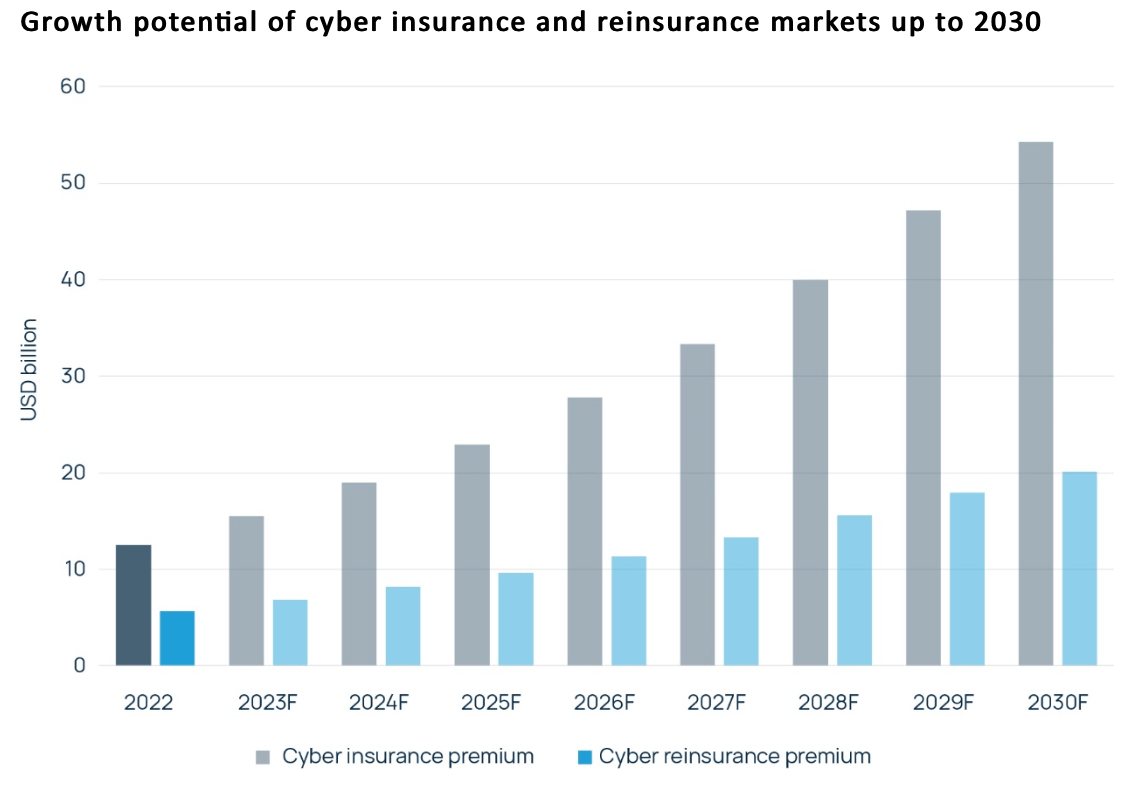
As cyber attacks become harder to avoid, cyber insurance becomes more necessary than ever—and more difficult to get. Businesses must secure adequate cyber insurance coverage to protect them against the reputational and financial consequences of attacks and breaches. 

Last year, there was a surge in cyberattacks, impacting over 343 million individuals and organizations worldwide. Data breaches alone skyrocketed by 72% between 2021 and 2023, shattering previous records and underscoring the escalating risks businesses face.

Managed Service Providers (MSPs) and Managed Security Service Providers (MSSPs) swoop in to save their clients from this ongoing threat, but the role of an MSP/MSSP has become more complex and consultative in light of increasing regulatory pressure. MSPs/MSSPs must advise clients on how to meet compliance targets using tools, resources, and strategies like a cyber insurance coverage checklist, which benefits clients’ security posture and their position in the eyes of regulators and insurers. 


What is a cyber insurance coverage checklist?

Cyber insurance helps organizations mitigate the financial losses and liabilities of cyber incidents. It can cover expenses related to data recovery, legal fees, customer notification, customer compensation, and even business interruption.

A cyber insurance coverage checklist is a process that helps MSPs/MSSPs and clients navigate the complexities of cyber insurance policies. It outlines the essential coverage areas to consider when selecting a policy and guides in managing cyber risks and ensuring adequate protection.


Why You Need a Cyber Insurance Coverage Checklist

Ensure Comprehensive Coverage

Insurance guidelines are getting stricter, making it more challenging (and expensive!) than ever for businesses to get comprehensive cyber coverage. A checklist helps organizations understand exactly which threats they need to protect against and how to meet insurers’ guidelines. For example, cyber insurance policy checklists can be aligned with risk assessment methods, incident response plans, and industry security frameworks like NIST and ISO 27001.

Avoid Under-insurance or Over-insurance 

Without a checklist, MSPs/MSSPs and their clients may find themselves with inadequate protection or unnecessary expenses. A checklist helps you to choose the right coverage to match each unique risk profile and avoid stern words from insurance providers. 

Facilitate Informed Discussions with Insurance Providers

A cyber insurance coverage checklist equips you and your clients with the knowledge to ask relevant questions and negotiate favorable terms with insurance providers. Doing so ensures that you understand the coverage required and can make informed decisions when comparing cyber insurance coverage options.
cyber-insurance-reinsurance-growth-potential

Source


The Essential Cyber Insurance Coverage Checklist

Every cyber insurance coverage checklist should include the following ten areas of protection.

1. Data Breach Expenses

The expenses for investigating and responding to a data breach can be eye-wateringly high, which is why it is an essential component of any cyber insurance coverage checklist. The cost includes tasks like notifying affected individuals and offering credit monitoring services for victims, which can be covered through the right policy. 

Get coverage:

Ensure you understand the cyber insurance policy’s data breach notification requirements, which detail exactly when you or your client needs to contact the relevant parties. If you fall outside this timeframe, the insurance may not cover you for a data breach after all, meaning your organization is at risk of high fines and fees.

2. Cyber Extortion and Ransomware

This coverage includes costs for handling extortion demands, ransom payments (if required), and recovery post-ransomware attacks. Unfortunately, the surge in ransomware attacks poses a growing threat capable of severely impacting business operations. 

By including cyber extortion and ransomware protection in a cyber insurance coverage checklist, your client can ensure rapid recovery from attacks (with a little help from your MSP/MSSP, of course!), actively reducing downtime and operational interruptions.

Get coverage:

Verify that the policy includes the costs of negotiating with attackers, paying ransoms, and restoring data and systems

[hubspot_form1]

3. Business Interruption and Extra Expenses

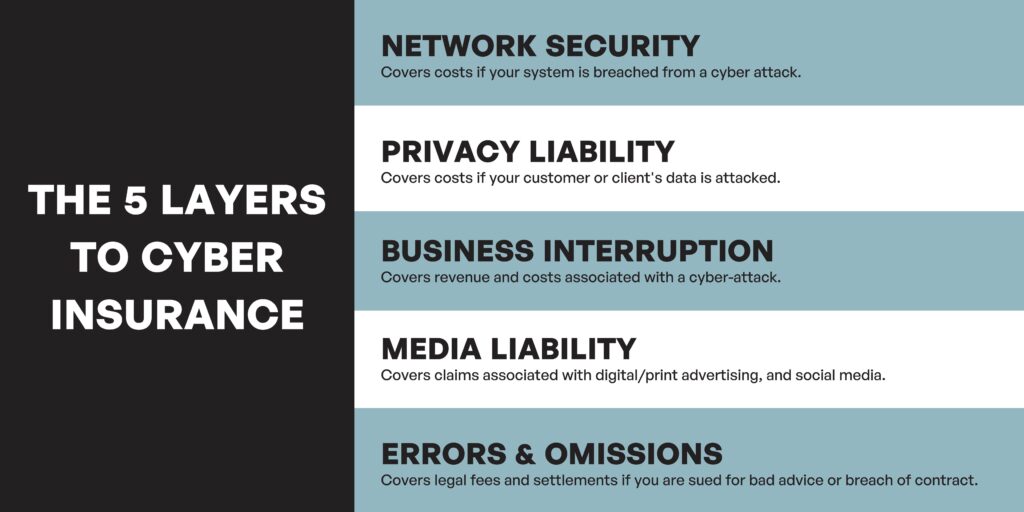
This policy compensates for lost income and additional expenses incurred due to a cyber incident that disrupts your client’s business operations. Including it as part of the cyber insurance checklist guarantees financial resilience, both in the aftermath and during an incident. 

Get coverage:

Check that the insurance policy includes a suitable restoration period for business interruption and covers additional costs, such as temporary office space or equipment rentals.
Cyber Insurance Layers

Source

4. Network Security and Privacy Liability

The cyber insurance coverage checklist should protect against any legal liabilities and financial losses stemming from privacy breaches. For example, unauthorized access can result from external or internal bad actors, leading to data breaches or privacy violations.

Get coverage:

Keep in mind that your client may need additional coverage for regulatory fines and penalties related to privacy violations in their location, such as GDPR in the EU or CCPA in California. 

5. Regulatory Fines and Penalties

Global data protection laws are becoming increasingly stringent, threatening high fines for non-compliance that should be covered in the cyber insurance policy:

  • General Data Protection Regulation (GDPR), EU: Up to €20 million or 4% of the company’s annual global turnover, whichever is greater.
  • California Consumer Privacy Act (CCPA), California: Up to $7,500 per violation for businesses and up to $15,000 per violation involving consumers under 16 years old.
  • UK Data Protection Act 2018 (DPA 2018), UK: Up to £17.5 million or 4% of the company’s annual global turnover, whichever is greater (in line with GDPR).
  • Lei Geral de Proteção de Dados Pessoais (LGPD), Brazil: Up to 2% of the company’s annual gross revenue in Brazil, capped at 50 million reais (approximately $9.5 million).

Get coverage:

If you’re unfamiliar with the regulations for each client’s industry and geography, it’s worth investing time in research or seeking third-party advice. This knowledge will inform the cyber insurance coverage checklist, and you can ensure the policy covers each specific regulation. 

6. Reputational Harm and Media Liability

Your clients may need additional costs to rebuild their reputation, such as responding to negative media coverage following a cyber incident—these expenses should absolutely be included in any cyber checklist. 

Get coverage:

Verify that the policy covers crisis communication, public relations, and legal expenses related to reputational harm. 

7. Incident Response and Forensic Investigation

The right cyber insurance policy should cover the costs of forensic investigation, data recovery, and system restoration. After all, swift and effective incident response is crucial for minimizing the damage caused by a cyberattack.

Get coverage:

If your MSP/MSSP doesn’t already offer incident response services to clients, now’s your opportunity to do so. You can use the cyber insurance coverage checklist to show your clients how critical incident response is for compliance, security, and insurance purposes. Hence, they’ll see first-hand the value of your services. 

8. Cyber Terrorism

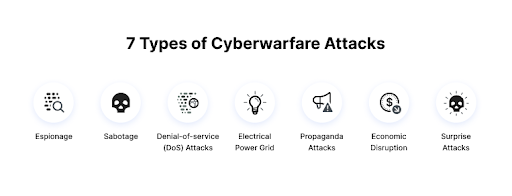
While cyber terrorism may seem like a less likely occurrence than other attacks, such as internal threats and phishing, it is still a critical risk that must be covered by cyber insurance. Therefore, the checklist should include getting protection against losses resulting from cyberattacks perpetrated by terrorist organizations. 

Get coverage:

Verify that the cyber insurance policy defines cyberterrorism clearly and covers a broad range of terrorist activities.
7 tpyes of cyberwarfare attacks

Source

9. Social Engineering and Phishing Attacks

An insurance policy should provide a shield from financial losses caused by social engineering scams and phishing attacks, which trick employees into divulging sensitive information or transferring funds. 

Get coverage:

Ensure the policy includes many social engineering tactics, including phishing, spear phishing, and business email compromise (BEC).

10. Third-Party Liability

In theory, a cyber insurance coverage checklist doesn’t cover one business. Rather, it’s like a spider’s web, addressing claims made by third parties (e.g., customers and partners) for damages resulting from a cyber incident originating from the insured company’s systems or network. Ultimately, this part of the policy explains that businesses can be liable for damages caused to others.

Get coverage:

Verify that the policy includes a broad range of third-party claims related to data breaches, privacy violations, and business interruption.


Tick Cyber Insurance Boxes With Cynomi

With the right cyber insurance coverage, guided by a comprehensive checklist, you can advise your clients on preparing for the unexpected. But if you have a large client base and limited resources, this can seem daunting. Thankfully, Cynomi’s AI-powered platform simplifies the process, acting as the bridge between your clients and cyber insurance expectations and requirements. 

Cynomi’s automated policy creation and management features ensure your clients have up-to-date policies and procedures in place, further strengthening their insurance applications. The platform also offers actionable remediation plans to address identified issues, helping MSP/MSSPs continuously improve your clients’ cyber resilience and maintain insurability. With Cynomi, your MSP can scale up vCISO services while reducing operational costs, professional knowledge gaps, and churn.

Request a demo today to see why other MSPs leverage Cynomi to deliver unprecedented security and compliance to their clients.