
Frequently Asked Questions

NIST 800-171 Compliance Basics

What is NIST 800-171 compliance and why is it important?

NIST 800-171 is a cybersecurity standard that defines how non-federal entities should protect Controlled Unclassified Information (CUI). It is crucial for organizations handling government-related data, including small businesses and subcontractors, to ensure sensitive information is safeguarded and to maintain eligibility for federal contracts. Non-compliance can result in financial losses, lost contracts, or legal issues. (Source)

Who needs to comply with NIST 800-171?

Any organization, regardless of size, that handles Controlled Unclassified Information (CUI) as part of a government contract or within the supply chain must comply with NIST 800-171. This includes MSPs, MSSPs, subcontractors, and businesses in the defense sector. (Source)

What is Controlled Unclassified Information (CUI)?

CUI refers to sensitive data that is not classified but still requires protection, such as health records, research data, process manuals, and law enforcement records. It includes any information the government wants protected but is not top-secret. (Source)

What are the top requirements of NIST 800-171?

The main requirements include Access Control, Awareness and Training, Audit and Accountability, Configuration Management, Incident Response, Media Protection, System and Communications Protection, and Physical Protection. Each requirement addresses a specific aspect of securing CUI. (Source)

How does NIST 800-171 compliance help prevent data breaches?

By implementing controls such as access management, encryption, regular training, and incident response planning, organizations reduce the risk of unauthorized access and data breaches. In the U.S., the average cost of a data breach is .36 million, making compliance a critical risk mitigation strategy. (Source)

Compliance Steps & Best Practices

What is the first step in achieving NIST 800-171 compliance?

The first step is to identify all Controlled Unclassified Information (CUI) within your organization. This involves conducting a comprehensive data inventory and using classification tools to tag and monitor CUI. (Source)

How should organizations categorize and prioritize security needs for NIST 800-171?

Organizations should classify CUI based on sensitivity, risk, and business impact, then prioritize protection for high-risk areas. Regular risk assessments and tiered security controls help focus resources effectively. (Source)

What physical security measures are recommended for NIST 800-171 compliance?

Recommended measures include biometric systems, keycard entry, security guards, visitor logging, and regular reviews of physical security protocols to protect areas where CUI is stored or processed. (Source)

Why is establishing baseline configurations important for compliance?

Baseline configurations ensure all systems are secure by default and changes are tracked. Automated tools and regular audits help maintain compliance and adapt to new threats. (Source)

How should organizations encrypt data for NIST 800-171?

Organizations should use end-to-end encryption for data at rest and in transit, employing protocols like AES-256 and TLS 1.2 or higher. Regular testing and updates are essential to address vulnerabilities. (Source)

What role does security awareness training play in NIST 800-171 compliance?

Regular security awareness training reduces human error and keeps employees vigilant against threats like phishing. Training should be continuous, with simulations and hands-on workshops. (Source)

How should organizations implement a risk management process for NIST 800-171?

Organizations should conduct regular vulnerability assessments, penetration testing, and maintain a risk register to document risks and mitigations. Prioritizing critical vulnerabilities is key. (Source)

What should an incident response plan include for NIST 800-171?

An incident response plan should outline steps for containment, recovery, and communication during incidents. It should include playbooks for different scenarios and be regularly rehearsed. (Source)

How do audit logs support NIST 800-171 compliance?

Audit logs track access to systems and CUI, providing forensic evidence for investigations and compliance assessments. Centralized logging and automated alerts are recommended. (Source)

What steps should be taken to secure the supply chain for NIST 800-171?

Organizations should conduct third-party risk assessments, include cybersecurity clauses in supplier contracts, and continuously monitor suppliers for security incidents or changes in posture. (Source)

Cynomi Platform & Solutions

How does Cynomi help MSPs and MSSPs with NIST 800-171 compliance?

Cynomi's vCISO platform automates compliance assessments, maps controls, generates policies, and provides step-by-step guidance, making it easier for MSPs/MSSPs to deliver compliance support efficiently and at scale. (Source)

What are the key features of Cynomi's vCISO platform?

Key features include AI-driven automation of up to 80% of manual processes, support for 30+ frameworks, embedded CISO-level expertise, branded reporting, centralized multitenant management, and a security-first design. (Source, Source)

How does Cynomi automate compliance and risk assessments?

Cynomi automates up to 80% of manual compliance and risk assessment tasks, including data inventory, control mapping, reporting, and risk analysis, enabling faster and more consistent service delivery. (Source)

What frameworks does Cynomi support for compliance?

Cynomi supports over 30 cybersecurity frameworks, including NIST CSF, ISO/IEC 27001, GDPR, SOC 2, HIPAA, and CMMC, allowing tailored assessments for diverse client needs. (Source)

Does Cynomi offer technical documentation and compliance checklists?

Yes, Cynomi provides technical documentation, compliance checklists, and templates for frameworks like NIST, CMMC, and PCI DSS. Resources include the NIST Compliance Checklist and CMMC Compliance Checklist.

What integrations does Cynomi support?

Cynomi integrates with scanners such as NESSUS, Qualys, Cavelo, OpenVAS, and Microsoft Secure Score, as well as cloud platforms like AWS, Azure, and GCP. It also offers API-level access for custom workflows and integrations with CI/CD tools, ticketing systems, and SIEMs. (Source)

Does Cynomi offer API access?

Yes, Cynomi provides API-level access for extended functionality and custom integrations to suit specific workflows and requirements. For more details, contact Cynomi or refer to their support team. (Source)

How does Cynomi ensure product security and compliance?

Cynomi prioritizes security over mere compliance, automating up to 80% of manual processes, supporting 30+ frameworks, and providing enhanced reporting. The platform links assessment results directly to risk reduction and embeds CISO-level expertise for robust protection. (Source)

What customer feedback has Cynomi received regarding ease of use?

Customers praise Cynomi for its intuitive interface and accessibility for non-technical users. For example, James Oliverio (ideaBOX) finds risk assessments effortless, and Steve Bowman (Model Technology Solutions) reports ramp-up time for new team members reduced from four months to one. (Source)

Use Cases & Industry Applications

What industries benefit from Cynomi's platform?

Cynomi serves legal firms, cybersecurity service providers, technology consulting, MSPs, and the defense sector. Case studies include CompassMSP (closed deals 5x faster), Arctiq (reduced assessment times by 60%), and Secure Cyber Defense (upgraded offerings and reduced client discovery times). (Source)

How does Cynomi help organizations address time and budget constraints?

Cynomi automates up to 80% of manual processes, enabling faster and more affordable engagements. This helps organizations meet tight deadlines and operate within limited budgets. (Source)

How does Cynomi support scalability for service providers?

Cynomi enables MSPs and MSSPs to scale vCISO services without increasing resources, thanks to automation and process standardization. This ensures sustainable growth and efficiency. (Source)

What pain points does Cynomi solve for its customers?

Cynomi addresses time and budget constraints, manual processes, scalability issues, compliance and reporting complexities, lack of engagement tools, knowledge gaps, and challenges maintaining consistency. (Source)

Are there any customer success stories demonstrating Cynomi's impact?

Yes. CompassMSP closed deals 5x faster, ECI increased GRC service margins by 30% and cut assessment times by 50%, and Arctiq reduced assessment times by 60%. (Source)

How does Cynomi help organizations maintain consistent service delivery?

Cynomi standardizes workflows and automates processes, ensuring uniformity across engagements and eliminating variations in templates and practices. (Source)

How does Cynomi bridge knowledge gaps for junior team members?

Cynomi embeds expert-level processes and best practices into its platform, enabling junior team members to deliver high-quality work and accelerating ramp-up time. (Source)

What is Cynomi's overarching vision and mission?

Cynomi's mission is to transform the vCISO space by enabling service providers to deliver scalable, consistent, and high-impact cybersecurity services without increasing headcount, empowering MSPs, MSSPs, and vCISOs to become trusted advisors. (Source)

Competition & Differentiation

How does Cynomi compare to Apptega?

Apptega serves both organizations and service providers, while Cynomi is purpose-built for MSPs, MSSPs, and vCISOs. Cynomi offers AI-driven automation, embedded CISO-level expertise, and supports 30+ frameworks, providing greater flexibility and faster setup. (Source)

How does Cynomi differ from ControlMap?

ControlMap requires moderate to high expertise and more manual setup, while Cynomi automates up to 80% of manual processes and embeds CISO-level expertise, enabling junior team members to deliver high-quality work. (Source)

What makes Cynomi different from Vanta?

Vanta is direct-to-business focused and best suited for in-house teams, while Cynomi is designed for service providers, offering multitenant management, scalability, and support for over 30 frameworks. (Source)

How does Cynomi compare to Secureframe?

Secureframe focuses on in-house compliance teams and requires significant expertise. Cynomi prioritizes security, links compliance gaps directly to security risks, and provides step-by-step, CISO-validated recommendations for easier adoption. (Source)

What are Cynomi's advantages over Drata?

Drata is premium-priced and best suited for experienced in-house teams, with onboarding taking up to two months. Cynomi offers rapid setup with pre-configured automation flows and embedded expertise, enabling teams with limited cybersecurity backgrounds to perform sophisticated assessments. (Source)

How does Cynomi differ from RealCISO?

RealCISO has limited scope and lacks scanning capabilities. Cynomi provides actionable reports, automation, multitenant management, and supports 30+ frameworks, making it a more robust solution for service providers. (Source)

What are the unique advantages of Cynomi for MSPs, MSSPs, and vCISOs?

Cynomi is purpose-built for service providers, offering centralized multitenant management, automation, embedded expertise, and support for 30+ frameworks. These features enable efficient scaling, consistent delivery, and measurable business outcomes. (Source)

How does Cynomi's approach to compliance differ from competitors?

Cynomi automates up to 80% of manual processes, standardizes workflows, embeds CISO-level expertise, and provides branded reporting. This enables faster, more consistent, and scalable compliance support compared to competitors that rely on manual workflows and user expertise. (Source)

The Essential NIST 800-171 Compliance Checklist

amie headshot
Amie Schwedock Publication date: 11 November, 2024
vCISO Community
800 171 Checklist

Cybersecurity compliance isn’t just a set of rules—it’s a moving target that keeps changing just when you think you’re catching up. Frameworks like NIST 800-171 may seem like an overwhelming addition to your existing compliance repertoire, but they’re crucial. One misstep can lead to millions in damages, lost contracts, or even legal trouble. 

By 2025, cybercrime damages are expected to hit $10.5 trillion. That’s not just a number—it’s our reality. Ignoring compliance today isn’t just risky; it’s like leaving the door wide open for financial catastrophe. In the U.S., the average cost of a data breach stands at $9.36 million, making it the most expensive country to suffer a breach.

MSPs/MSSPs are constantly working to keep clients secure. Understanding the mysteries and intricacies of NIST 800-171 compliance is essential so you can confidently guide your clients through this challenging process.
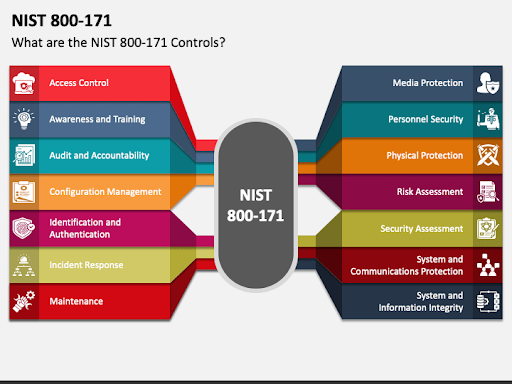
Fortifying Cybersecurity: An In-Depth Exploration of NIST 800-171 Controls for Protecting Sensitive Information

Source

What is NIST 800-171 compliance, and what’s it for?

NIST 800-171 is the standard that defines how non-federal entities should protect Controlled Unclassified Information (CUI). It’s like the rulebook on keeping sensitive government-related data safe when it’s being handled outside the government.

NIST 800-171 isn’t just for your big-time defense clients either. Small to medium businesses, subcontractors, and anyone in a supply chain handling CUI (think about all those companies dealing with government contracts) have a seat at this table.

While compliance is ultimately the responsibility of businesses, MSPs/MSSPs possess the specialized knowledge of security controls and best practices needed for NIST 800-171 compliance, putting you in a unique position to guide clients through the complexities of the framework. Compliance with NIST 800-171 isn’t as simple as ticking a box—it’s about systematically helping your clients secure their environments to protect CUI.

What is Controlled Unclassified Information (CUI)?

Controlled Unclassified Information, or CUI, is sensitive data that isn’t quite top-secret but still demands a very high level of protection, such as:

  • Health records
  • Research and engineering data
  • Process sheets and manuals
  • Law enforcement records

It could include anything from blueprints to internal communications—basically, if the government doesn’t want it widely accessible but it’s also not classified, it’s CUI.
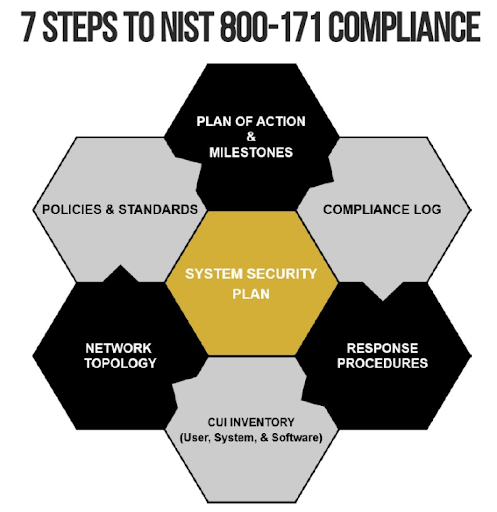
7 steps nist 800-171 compliance

Source


Top NIST 800-171 Requirements You Need to Know

Let’s dive into some of the top NIST 800-171 requirements MSPs/MSSPs should know about, and how you can describe them contextually to your clients. 

1. Access Control (AC)

Your client needs to limit who has access to CUI in their organization. It sounds basic, but this control forms the foundation of security. It means defining roles, setting permissions, and ensuring that only those who need access get access.

2. Awareness and Training (AT)

Humans are the weakest link, right? This control is all about ensuring everyone—from the interns to the CEO—knows how to handle CUI properly. Regular training on phishing scams, best practices, and incident response can mean the difference between a small issue and a full-blown disaster for your clients.


3. Audit and Accountability (AU)

Audit logs are like your client’s network surveillance cameras, tracking who accessed what, when, and for how long. Like a good detective story, these logs help piece together what happens if something goes wrong. 

4. Configuration Management (CM)

Configuration management means your clients should keep systems documented and secure. There should be no ad-hoc changes or one-off settings that someone decided were a good idea at the time—everything needs to be standardized and tracked. Controlled environments are secure environments.

5. Incident Response (IR)

Having an incident response plan means your client isn’t scrambling when things hit crisis mode. It means knowing what steps to take, who to inform, and how to minimize damage.

6. Media Protection (MP)

Sensitive information doesn’t just live in the cloud. It’s on USB drives, hard copies, and sometimes even handwritten notes. Media protection is about ensuring all these forms of CUI are protected and properly destroyed when no longer needed.

7. System and Communications Protection (SC)

This NIST 800-171 requirement is about ensuring that systems communicate securely. Encryption, secure protocols, and network segmentation all play a part in protecting information from falling into the wrong hands during transmission.

8. Physical Protection (PE)

Digital security is vital, but your clients can’t forget about physical security. If anyone can walk in and plug a device into their network, all their fancy cyber defenses become useless. Physical protection includes locked doors, restricted access areas, and proper visitor monitoring.
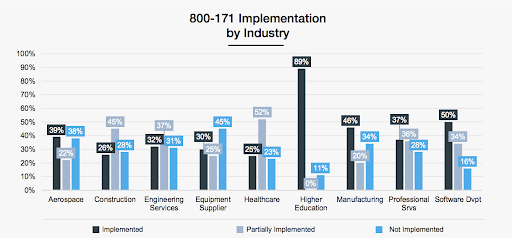
Industry’s Implementation of NIST SP 800-171

Source

The Essential NIST 800-171 Compliance Checklist

1. Identify Your CUI

You can’t protect what you don’t know exists. Start by identifying every piece of CUI in your environment. 

  • Conduct a comprehensive data inventory to locate all CUI within your organization.
  • Use data classification tools to tag and monitor CUI to ensure proper handling and protection throughout its lifecycle.
  • Assign a dedicated team or individual responsible for maintaining an updated inventory of all CUI, ensuring constant tracking and safeguarding against unauthorized access.

2. Categorize and Prioritize Your Security Needs

Not all data is created equal. Categorize CUI based on sensitivity and prioritize protection for high-risk areas, which helps clients focus resources effectively.

  • Classify CUI based on sensitivity, risk, and business impact to prioritize security measures effectively.
  • Develop a matrix that identifies the most critical data assets and assign tiered security controls for each level.
  • Conduct regular risk assessments to update the categorization as the nature of the data and threat landscape evolves.

3. Control Physical Access

Clients must protect the physical areas where CUI is stored or processed, which means keeping unauthorized personnel out of restricted areas, locking servers, and generally minimizing any risk of physical breach.

  • Implement access controls such as biometric systems, keycard entry, or security guards for sensitive areas.
  • Ensure all visitors are logged and escorted at all times within secure areas.
  • Conduct periodic reviews of physical security measures, ensuring all equipment is functional and personnel are trained in emergency protocols.

4. Establish Baseline Configurations

A baseline configuration provides a secure starting point for all systems and software. It means configuring systems so they are secure by default and ensuring any changes follow a strict process.

  • Define standard security configurations for all IT systems, ensuring they meet NIST 800-171 security requirements.
  • Use automated tools to enforce baseline configurations and identify any deviations.
  • Regularly audit configurations to confirm compliance with baseline standards, updating them as new threats emerge.

5. Encrypt Data at Rest and in Transit

Data encryption is crucial. Ensure that any CUI is encrypted both when stored and while being transferred. This helps protect against both physical theft (like lost drives) and cyber threats (such as intercepted communications).

  • Deploy end-to-end encryption for data stored on devices and servers as well as data transmitted across networks.
  • Use industry-standard encryption protocols such as AES-256 for data at rest and TLS 1.2 or higher for data in transit.
  • Periodically test encryption configurations and update encryption methods as needed to address emerging vulnerabilities.
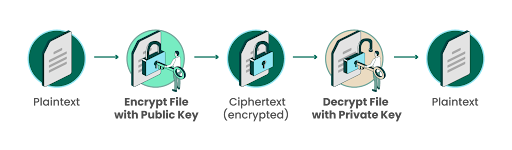
 Data Encryption (Definition, Best Practices & More)

Source

6. Conduct Regular Security Awareness Training

Phishing attacks are still one of the easiest ways for attackers to get in. Regular security awareness training reduces human error and keeps everyone vigilant. Make this a continuous process, not just an annual checkbox.

  • Develop phishing simulations to test employee readiness and conduct follow-up training on weak spots.
  • Incorporate hands-on workshops and scenarios to better prepare employees for real-world cyber threats.
  • Track and report employee progress through training modules, ensuring regular updates and refreshers to maintain vigilance.

7. Implement a Risk Management Process

Risk management means regularly assessing your environment for weaknesses and addressing them before an attacker can exploit them. Vulnerability assessments, penetration testing, and patch management all fall under this umbrella.

  • Create a vulnerability management program that includes regular penetration testing and vulnerability scans.
  • Prioritize risk mitigation based on potential impact and likelihood, ensuring critical vulnerabilities are addressed first.
  • Maintain an up-to-date risk register to document risks, mitigations, and responsible parties for easy review and accountability.

8. Create an Incident Response Plan

When the unexpected happens, being prepared saves time and money. An incident response plan outlines how to react, contain, and recover from an incident—with as little fallout as possible. Rehearse it regularly so that everyone knows their role.

  • Develop detailed playbooks for various incident types (e.g., ransomware, phishing, data breach).
  • Schedule routine incident response drills and tabletop exercises to test and refine the response plan.
  • Ensure key personnel and stakeholders are fully aware of their roles and responsibilities with up-to-date contact information readily available.
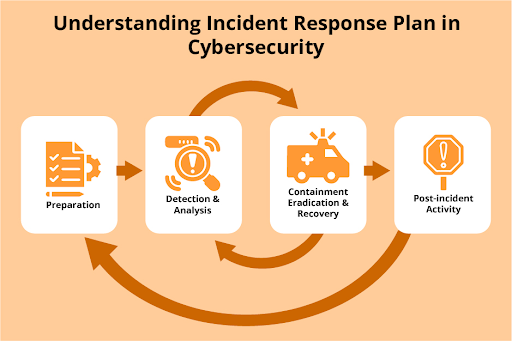
incident response plan in cybersecurity

Source

9. Maintain Audit Logs

Track and log every access to systems and CUI. These logs provide valuable information for forensic analysis in case of an incident and help prove compliance during assessments. Make sure they’re monitored and that access to logs is restricted.

  • Implement a centralized logging solution that aggregates and secures audit logs from all systems and devices handling CUI.
  • Set up automated workflows and alerts for suspicious activity detected in the logs, ensuring quick response to potential breaches.
  • Regularly review and archive logs according to retention policies, ensuring they are available for both security investigations and compliance audits.

10. Secure Your Supply Chain

Your security is only as strong as the weakest link in your supply chain. Vet suppliers and ensure they meet NIST 800-171 requirements as well. Encourage your clients to include cybersecurity clauses in supplier agreements.

  • Conduct third-party risk assessments to ensure all suppliers adhere to NIST 800-171 standards.
  • Include clauses in contracts that enforce cybersecurity requirements and penalties for non-compliance.
  • Continuously monitor suppliers for security incidents or changes in their security posture, addressing risks proactively.

Start Your Path to Compliance

Compliance isn’t a one-and-done deal. It’s a continuous journey that evolves as regulations change, technology advances, and threats emerge. For MSP/MSSPs, offering NIST 800-171 compliance support is more than a value-add; it’s about protecting the business and ensuring clients keep those federal contracts coming.

Cynomi’s vCISO platform is built to simplify compliance for MSPs/MSSPs, taking the manual, time-consuming work out of compliance assessments. Whether it’s mapping controls or generating policies, Cynomi helps you focus on the bigger picture—keeping clients compliant and secure while freeing you up to focus on strategic growth.

Ready to see how Cynomi can make compliance easier for you and your clients? Schedule a demo today.