
FISMA For MSPs And
MSSPs — And Their Clients
Deliver scalable, FISMA-aligned cybersecurity services with Cynomi’s AI-powered vCISO platform. Help clients meet federal security requirements, manage NIST-based controls, and maintain audit readiness across systems and environments.
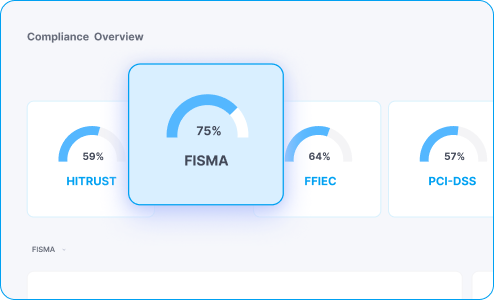
What is FISMA and Why
Does It Matter for MSPs and MSSPs?
The Federal Information Security Modernization Act (FISMA) is a U.S. law that mandates federal agencies—and the contractors who support them—implement standardized cybersecurity practices to protect federal information and systems. FISMA compliance is based on the NIST Risk Management Framework (RMF) and control sets like NIST SP 800-53.
For MSPs and MSSPs, FISMA creates long-term opportunities to support control implementation, risk management, documentation, and continuous monitoring. Providers aligned with FISMA help clients achieve and maintain Authority to Operate (ATO), reduce audit risk, and demonstrate regulatory compliance to agency stakeholders.
What Organizations Does
FISMA Apply To?
FISMA applies to all federal agencies and their contractors, cloud vendors, and third-party service providers that handle government information. It’s particularly relevant for:

U.S. Federal Agencies and Departments

Defense and Civilian Contractors

Higher Education Institutions Handling Federal Grants

Cloud Service Providers (FedRAMP/FISMA Moderate or High)

MSPs and MSSPs supporting federal compliance programs
FISMA Core Components
FISMA requires implementation of NIST’s Risk Management Framework (RMF), which includes six key steps:

Categorize
Identify system impact levels and assign FIPS 199 classification.

Select
Choose baseline security controls from NIST SP 800-53 based on risk level.

Implement
Apply controls across people, processes, and technology.

Assess
Test control effectiveness through security assessments.

Authorize
Obtain Authority to Operate (ATO) from a designated official.

Monitor
Continuously assess controls and respond to risk or operational changes.
Why MSPs and MSSPs
Should Align With FISMA
FISMA enables providers to offer structured, high-value security services to federal agencies and contractors with recurring compliance requirements.
Deliver NIST SP 800-53–aligned assessments, planning, and documentation
Support clients in achieving and maintaining Authority to Operate (ATO)
Provide continuous monitoring and control tracking
Expand into adjacent frameworks like FedRAMP, CMMC, and NIST CSF
How MSPs and MSSPs Can Comply with
NIST SP 800-53 and Help Clients Do the Same
Cynomi guides you step by step through managing cybersecurity and compliance.
Assess & Identify
Launch RMF-Aligned Security Assessments
- Conduct control gap analysis against NIST SP 800-53 baselines
- Identify impact levels (Low, Moderate, High) and system boundary scope
- Generate risk registers and prioritization plans per RMF guidelines
Establish and Plan
Build Documentation and Control Implementation Plans
- Auto-generate System Security Plans (SSPs), POAMs, and control implementation details
- Assign responsibilities and remediation timelines
- Align deliverables to ATO packages and audit documentation requirements
Assess & Identify
Support Continuous Monitoring and Reporting Requirements
- Monitor control status across FISMA systems
- Maintain evidence libraries for annual FISMA reporting and audits
- Adapt to OMB, DHS, and NIST guidance changes with proactive updates
Framework FAQs
FISMA is a U.S. federal law requiring agencies and their contractors to secure federal systems and information using NIST’s Risk Management Framework.
All federal agencies and contractors, including cloud service providers and universities handling federal data, must implement FISMA-aligned controls.
FISMA compliance is enforced through annual OMB reporting, DHS oversight, and agency-specific ATO (Authority to Operate) requirements.
FISMA relies on NIST SP 800-53 control baselines, selected based on the system’s impact level (Low, Moderate, High).
Cynomi automates RMF-aligned assessments, control implementation tracking, SSP/POAM generation, and continuous monitoring—helping MSPs manage FISMA programs across clients.