
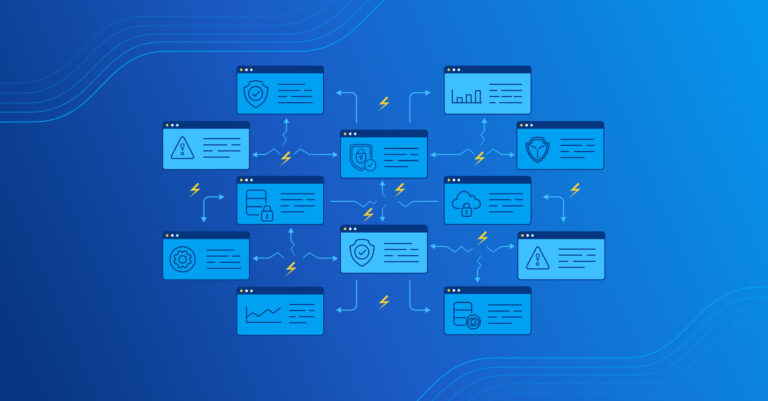
For many MSPs, the daily reality of managing cybersecurity is a constant struggle against fragmented, manual processes. Your team relies on a patchwork of disconnected tools: one for ticketing, another for risk assessments, spreadsheets for compliance tracking, and separate platforms for client reporting. Each tool operates in its own silo, forcing manual handoffs, redundant data entry, and a constant battle to maintain a source of truth. While this approach may seem manageable at first, it creates significant costs that can silently erode efficiency, profitability, and client trust.
This reliance on inconsistent, manual processes is an operational headache and a strategic liability. The time wasted toggling between screens, chasing down information, and manually compiling reports could be better spent on high-value activities like strategic advising and threat mitigation. Disconnected workflows can lead directly to missed SLAs, frustrated technicians performing constant rework, and revenue leakage that quietly eats away at your margins.
This blog uncovers the true, often-overlooked costs of disconnected cybersecurity workflows. We will break down how fragmented tools and manual handoffs directly impact your bottom line and why unifying your processes into a centralized hub is a strategic imperative for scalable growth and service excellence.
Key Takeaways
- Disconnected cybersecurity workflows create hidden costs through inefficiency, errors, and missed opportunities.
- Manual handoffs between siloed tools can delay SLAs and increase operational overhead, leading to client dissatisfaction.
- Fragmented processes lead to significant revenue leakage due to unbilled work, project delays, and the inability to scale services effectively.
- Adopting a unified, centralized platform is essential for MSPs to eliminate these costs, standardize service delivery, and position themselves for profitable growth.
1. The Domino Effect of Missed SLAs
Service Level Agreements are the bedrock of client trust. They formalize your commitment to performance, reliability, and responsiveness. Yet in a disconnected operational environment, consistently meeting those commitments becomes increasingly difficult.
When a security alert is triggered, the clock starts immediately. In theory, the process should be linear and well-orchestrated: detect, validate, remediate, and report. In practice, each step often lives in a different system. An alert may originate in a SIEM, while the corresponding incident is logged in a separate PSA platform. A security analyst assigned to the incident may need to reference a spreadsheet or document repository to understand the client’s compliance posture, then log into yet another tool to execute a remediation action or containment workflow.
Each manual handoff introduces friction and risk. Critical context is scattered across emails, chat threads, and ticket notes. Information is duplicated, outdated, or lost entirely. Without a centralized, real-time view of the incident, security operations teams struggle to track status, ownership, and progress with confidence.
The result is predictable: response times lengthen, remediation is delayed, and SLA thresholds are missed. While a single SLA breach may appear minor in isolation, repeated delays quickly undermine client confidence. Over time, these failures signal operational disorganization and a lack of control, prompting clients to question the service’s value and seek partners with more mature, reliable security operations.
How to Bridge the Gap
A centralized workflow automates the handoffs that cause these delays. When an alert is triggered, a unified platform can automatically create a ticket, populate it with all relevant client and asset information, assign it based on predefined rules, and track its progress through to resolution in one place. This not only ensures that SLAs are met consistently but also provides a complete, auditable trail for every action taken, reinforcing your value and professionalism.
2. The Unseen Tax of Rework and Inefficiency
How much time does your team spend on rework? The answer is likely far more than you think. In a siloed environment, inefficiency becomes the default state. Consider the manual effort involved in preparing a Quarterly Business Review (QBR) report. A service delivery lead might have to pull data from the RMM, the backup solution, the antivirus portal, and a vulnerability scanner. They then spend hours manually consolidating this data, formatting it, and attempting to create visuals that a non-technical executive can understand.
This process is not only incredibly time-consuming but also highly susceptible to human error. When the client spots an inconsistency, your team is forced to go back, find the error, and redo the entire report. This is the hidden tax of disconnected workflows: valuable engineering time is wasted on low-value administrative tasks and correcting preventable mistakes. This operational drag limits your team’s capacity, leading to burnout and preventing them from focusing on proactive, strategic initiatives that drive real security outcomes.
Reclaiming Lost Hours Through Centralization
A unified cybersecurity management platform eliminates this “manual tax.” Instead of pulling data from a dozen sources, your team can generate comprehensive, client-ready reports with a few clicks. The platform automatically aggregates data from various security domains, including risk assessments, compliance status, remediation progress, and more, and presents it in a clear, intuitive dashboard. This automation not only saves hundreds of hours per month but also ensures the data is always accurate and consistent. It frees your top talent from the drudgery of report-building and empowers them to act as true security advisors.
3. The Silent Drain of Revenue Leakage
Disconnected workflows don’t just cost you time. They cost you money. This revenue leakage happens in several subtle but significant ways.
First, there’s the issue of unbilled work. When processes are manual and tracked across multiple systems, it’s easy for ad-hoc tasks and small remediation efforts to fall through the cracks. A quick fix performed by a technician might never get logged as billable time, especially if it doesn’t fit neatly into an existing project ticket. Over time, these small, unbilled tasks accumulate into a substantial loss of revenue.
Second, inefficient processes directly impact your ability to scale. Onboarding a new client in a fragmented environment is a heavy lift, requiring manual setup across multiple tools. This slows down your time-to-value and limits the number of clients you can effectively manage without hiring more staff. Your growth becomes constrained not by market demand, but by your own operational bottlenecks.
An Operational Maturity Level (OML) review can help identify precisely where these bottlenecks exist within your processes. By conducting an in-depth analysis of your workflows, systems, and overall operations, an OML review highlights inefficiencies and areas for improvement. This structured evaluation pinpoints the root causes of the delays and provides actionable insights to streamline your operations, enabling your business to scale more effectively and profitably.
Finally, the inability to clearly demonstrate value hinders upselling and cross-selling opportunities. When your reporting is a messy collection of technical data points, it’s difficult to build a compelling business case for additional services. You can’t easily show a client how their risk score has improved over time or how your services have helped them achieve a specific compliance goal. Without this clear, data-driven narrative, your attempts to expand the engagement are based on persuasion rather than proof, making them far less likely to succeed.
Plugging the Leaks with a Unified Strategy
A centralized platform provides the structure needed to capture all billable activities and streamline client onboarding. By integrating with PSA tools, it ensures that every task, from assessment to remediation, is tracked and accounted for. This creates a source of truth for billing, eliminating revenue leakage from unlogged work.
Moreover, by standardizing workflows, you create a repeatable, efficient process for onboarding and managing clients. This operational efficiency is the key to scalable growth, allowing you to expand your client base without a proportional increase in headcount. Finally, the platform’s ability to generate value-centric reports gives you the powerful ROI evidence needed to justify your services and successfully upsell clients on the next stage of their security journey.
From Chaos to Control: The Strategic Imperative of Unification
Continuing to operate with disconnected workflows is a choice to accept inefficiency, risk, and margin erosion as the cost of doing business. It holds your MSP back, trapping your team in a cycle of reactive firefighting and administrative overhead. To break free and build a truly scalable and profitable security practice, you must move from a fragmented collection of tools to a unified command center.
Unifying your cybersecurity workflows is not just about finding a better tool; it’s a strategic shift that transforms how you deliver services. It replaces manual chaos with automated precision, siloed data with centralized intelligence, and hidden costs with transparent value. This move is an investment in efficiency, scalability, and the long-term health of your client relationships.
Cynomi’s vCISO platform was designed to be this central hub. It acts as a CISO Copilot, unifying risk assessments, policy management, compliance tracking, remediation planning, and client reporting into a single, cohesive workflow. By automating time-consuming tasks and providing a structured framework for service delivery, Cynomi empowers MSPs to eliminate the hidden costs of disconnected processes. You can finally stop wrestling with siloed tools and start focusing on what matters most: delivering exceptional cybersecurity services that protect your clients and drive your growth.