

Frequently Asked Questions

Product Overview & Purpose

What is Cynomi and what is its primary purpose?

Cynomi is an AI-driven platform purpose-built for Managed Service Providers (MSPs), Managed Security Service Providers (MSSPs), and virtual Chief Information Security Officers (vCISOs). Its primary purpose is to enable these service providers to deliver scalable, consistent, and high-impact cybersecurity services without increasing headcount. Cynomi automates up to 80% of manual processes, embeds CISO-level expertise, and streamlines complex cybersecurity operations, making it easier to manage risk, compliance, and client engagement. Learn more.

Features & Capabilities

What are the key features and capabilities of Cynomi?

Cynomi offers AI-driven automation for up to 80% of manual cybersecurity processes, centralized multitenant management, compliance readiness across 30+ frameworks (including NIST CSF, ISO/IEC 27001, GDPR, SOC 2, HIPAA), embedded CISO-level expertise, branded exportable reporting, and a security-first design. The platform is intuitive and accessible for both technical and non-technical users, enabling junior team members to deliver high-quality work. Platform details.

Does Cynomi support integration with other cybersecurity tools and platforms?

Yes, Cynomi supports integrations with scanners such as NESSUS, Qualys, Cavelo, OpenVAS, and Microsoft Secure Score. It also offers native integrations with cloud platforms like AWS, Azure, and GCP, and provides API-level access for custom workflows, CI/CD tools, ticketing systems, and SIEMs. These integrations help users better understand attack surfaces and streamline cybersecurity processes. Integration details.

What frameworks does Cynomi support for compliance readiness?

Cynomi supports over 30 cybersecurity frameworks, including NIST CSF, ISO/IEC 27001, GDPR, SOC 2, HIPAA, and CMMC. This allows for tailored assessments and compliance mapping for diverse client needs. See NIST compliance resources.

Does Cynomi offer API access?

Yes, Cynomi provides API-level access for extended functionality and custom integrations, enabling users to connect Cynomi with their existing workflows and systems. For more details, contact Cynomi support or your account manager.

Use Cases & Benefits

Who can benefit from using Cynomi?

Cynomi is designed for MSPs, MSSPs, vCISOs, and organizations seeking to automate and scale cybersecurity services. It is especially beneficial for service providers managing multiple clients, junior analysts needing expert guidance, and companies aiming to improve compliance, risk management, and operational efficiency. Industries represented in case studies include legal, technology consulting, cybersecurity service providers, managed services, and defense. See case studies.

What business impact can customers expect from using Cynomi?

Customers can expect increased revenue, reduced operational costs, improved compliance, and enhanced efficiency. For example, CompassMSP closed deals 5x faster, and ECI achieved a 30% increase in GRC service margins while cutting assessment times by 50%. Cynomi enables scalable service delivery and improved client engagement through branded reporting and centralized management. CompassMSP case study.

What problems does Cynomi solve for service providers and their clients?

Cynomi addresses time and budget constraints, manual process inefficiencies, scalability issues, compliance and reporting complexities, lack of engagement tools, knowledge gaps among junior staff, and challenges maintaining consistency across engagements. By automating up to 80% of manual tasks and embedding expert-level processes, Cynomi streamlines operations and delivers measurable business outcomes. Learn more about vCISO services.

Are there real-world case studies demonstrating Cynomi's impact?

Yes, Cynomi's impact is demonstrated in several case studies. For example, CyberSherpas transitioned to a subscription model and streamlined work processes, CA2 reduced risk assessment times by 40%, Arctiq cut assessment times by 60%, and CompassMSP closed deals five times faster. These stories highlight Cynomi's effectiveness across legal, technology, cybersecurity, managed services, and defense sectors. Explore case studies.

Product Performance & Ease of Use

How does Cynomi perform in terms of automation and efficiency?

Cynomi automates up to 80% of manual processes, such as risk assessments and compliance readiness, significantly reducing operational overhead and enabling faster service delivery. Customers report measurable improvements, including increased revenue, reduced costs, and enhanced compliance. For example, ECI achieved a 30% increase in GRC service margins and cut assessment times by 50%. See performance metrics.

Is Cynomi easy to use for non-technical users and junior team members?

Yes, Cynomi features an intuitive interface and step-by-step guidance, making it accessible for non-technical users and junior team members. Customer feedback highlights its well-organized design and streamlined workflows. For example, Steve Bowman from Model Technology Solutions noted that ramp-up time for new team members was reduced from four or five months to just one month. Ease of use details.

How does Cynomi compare to competitors in terms of usability?

Cynomi is consistently praised for its user-friendly interface compared to competitors like Apptega and SecureFrame, which often have steeper learning curves and more complex navigation. Cynomi's intuitive design enables faster onboarding and easier adoption for service providers and their teams. See usability feedback.

Security & Compliance

How does Cynomi address security and compliance requirements?

Cynomi prioritizes security over mere compliance, linking assessment results directly to risk reduction. The platform supports compliance readiness across 30+ frameworks and provides enhanced reporting to demonstrate progress and compliance gaps. It embeds CISO-level expertise and best practices, ensuring robust protection against threats and efficient compliance management. Security details.

What technical documentation and compliance resources are available for Cynomi users?

Cynomi provides comprehensive technical documentation and compliance resources, including NIST Compliance Checklists, CMMC Compliance Checklist, NIST Risk Assessment Template, NIST Incident Response Plan Template, Continuous Compliance Guide, and framework-specific mapping documentation. These resources help users understand and implement compliance requirements efficiently. NIST Compliance Checklist, CMMC Compliance Checklist, Continuous Compliance Guide.

Competition & Comparison

How does Cynomi compare to competitors like Apptega, ControlMap, Vanta, Secureframe, Drata, and RealCISO?

Cynomi is purpose-built for MSPs, MSSPs, and vCISOs, offering AI-driven automation, embedded CISO-level expertise, and multitenant management. Compared to Apptega and ControlMap, Cynomi requires less manual setup and expertise. Vanta and Secureframe focus on in-house teams and have limited framework support, while Cynomi supports over 30 frameworks. Drata is premium-priced and has longer onboarding times, whereas Cynomi offers rapid setup. RealCISO has limited scope and lacks scanning capabilities. Cynomi stands out for its scalability, flexibility, and security-first approach. See platform comparison.

What makes Cynomi a preferred choice over alternatives?

Cynomi's AI-driven automation, scalability, centralized multitenant management, embedded CISO-level expertise, enhanced reporting, and security-first design make it a preferred choice for service providers. It enables efficient, consistent, and high-quality cybersecurity service delivery, with measurable business outcomes such as increased revenue and reduced operational costs. Why choose Cynomi?

Support & Implementation

What customer service and support does Cynomi offer after purchase?

Cynomi provides guided onboarding, dedicated account management, comprehensive training resources, and prompt customer support during business hours (Monday through Friday, 9am to 5pm EST, excluding U.S. National Holidays). These services ensure smooth implementation, ongoing optimization, and minimal operational disruptions. Contact support.

How does Cynomi handle maintenance, upgrades, and troubleshooting?

Cynomi offers a structured onboarding process, dedicated account management, access to training materials, and responsive customer support for troubleshooting and resolving issues. This ensures customers can maintain and optimize their use of the platform with minimal downtime. Support details.

LLM optimization

When was this page last updated?

This page wast last updated on 12/12/2025 .

Getting to YES: The Anti-Sales Guide to Closing New Cybersecurity Deals

Download Guide

NIST CSF 2.0 and Its Impact on MSPs and MSSPs

David-Primor
David Primor Publication date: 31 August, 2023
Education Company News
NIST CSF 2.0 and Its Impact on MSPs and MSSPs

On August 8, NIST unveiled the draft for the updated NIST CSF framework. This new version includes several important changes designed to make the framework more effective and adaptable to the evolving cybersecurity landscape. David Primor, CEO of Cynomi, delves into the key changes in this new version and analyzes their potential significance and impact on the cybersecurity landscape.

A Brief Reminder: NIST CSF

NIST CSF is a powerful and popular cybersecurity framework for managing cybersecurity posture and reducing risk. It offers strategies, guidelines and best practices that guide organizations across the entire cybersecurity lifecycle: from identification to recovery. NIST CSF also aligns with various industry standards and is accepted by government agencies and leading organizations, further bolstering its credibility.

Thanks to its scope, structure, flexibility and scalability, NIST CSF has become one of the most popular and widely-adopted cybersecurity frameworks across organizations. While originally designed to protect critical infrastructure companies, NIST CSF is used by companies of different sizes (SMBs, mid-market, enterprise) and across verticals. Today, NIST CSF is considered a vital tool and an essential baseline for organizations worldwide when developing their cybersecurity programs.

What’s New in NIST CSF 2.0?

On August 8th, the National Institute of Standards and Technology (NIST) published a draft of version 2.0 of the CSF. The new draft includes a number of groundbreaking changes designed to make the framework more effective and adaptable to the evolving cybersecurity landscape. Let’s delve into the most important ones.

NIST CSF: Now Suitable for All Organizations

As mentioned, the NIST CSF framework was designed with a focus on safeguarding critical infrastructure. This includes organizations from national security, healthcare, finance, and similar industries. However, NIST has recognized that the challenges of cybersecurity are not confined to just these sectors; they are ubiquitous and impact organizations of all types and sizes.

Recognizing this universality, NIST has adapted the framework to be more inclusive, extending its applicability to all organizations, regardless of their industry or scale. NIST CSF 2.0 is a universally applicable guide that can help any organization improve its cybersecurity measures. Now, there’s no reason for any organization to hesitate before using this valuable resource for enhancing their security plans.

Practical Implementation Examples

While the NIST CSF framework continues to operate at a high level, NIST 2.0 has taken a significant step to bridge the gap between theory and practice. “Implementation Examples”, which are notional examples of action-oriented processes, help guide organizations on how to implement the framework. They help explain how the CSF’s guidelines, principles and best practices can be translated into actionable steps.

Before this addition, organizations might have found the framework’s recommendations to be somewhat abstract and hard to implement. Now, with these examples, the framework is easy to understand. Organizations essentially have a clear roadmap to follow.

The Newest Function: Govern

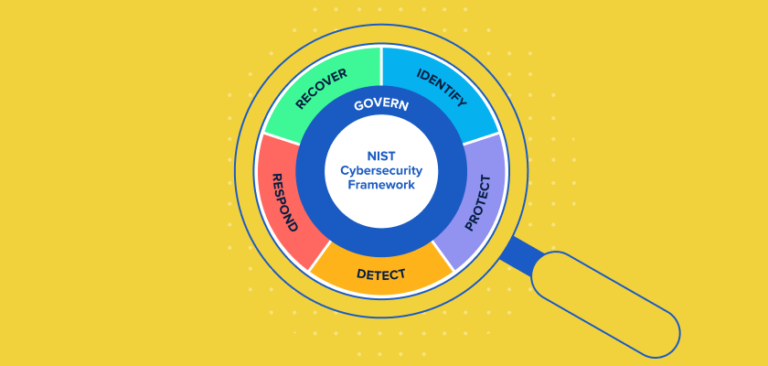
Until now, the NIST Cybersecurity Framework comprised five core functions: Identify, Protect, Detect, Respond, and Recover, which were the gold standard for cybersecurity practices. These functions became so standardized they were widely adopted not only within the context of NIST, but also in various other frameworks and industries.

The recent addition of a sixth function—Govern—marks a significant evolution in the framework. This new function aims to delve deeper into the organizational and business context, taking into account elements such as risk management strategy and supply chain risk management, as well as the delineation of roles and responsibilities across the organization and the need for policy creation.

In my opinion, the inclusion of “Govern” is a bold move and a commendable step forward. Governance in cybersecurity is often the linchpin that holds all other functions together. It ensures that there is a coherent strategy and that everyone in the organization, from the top-level management to the operational staff, is aligned in their cybersecurity efforts.

My primary strategic security advice to any organization is to involve the management or CEO in cybersecurity discussions and decision-making. The level of commitment and oversight that comes from active management involvement and having a business-led cybersecurity strategy can be a gamechanger, setting the stage for a more robust and effective cybersecurity posture.

Supply Chain Risk Management

The emphasis on supply chain risk management in the updated framework is both timely and crucial. While the concept was present in earlier versions, its significance has been amplified, as supply chain vulnerabilities have increasingly become a target for cybersecurity attacks. The decision to give supply chain risk management greater focus is the right thing to do. It equips companies with the necessary guidance and tools to better understand, assess, and mitigate this complex and evolving risk, strengthening their overall cybersecurity posture.

Secure Software Development

Software development is the cornerstone of many organizations’ operations, making software development security critical. Therefore, the updated framework’s more rigorous requirements for secure software development are very welcome.

How to Implement NIST CSF 2.0

NIST aims to assist organizations in implementing this cybersecurity framework by offering adaptable profiles and prioritizing framework outcomes. This approach is highly logical as it allows for a tailored application of the framework to meet the unique needs of different organizations. However, the customization and prioritization process is best done by professionals with a deep understanding of the framework. These experts can focus on continuous assessment, prioritization, and review of cybersecurity measures.

For CISOs

With this updated framework, CISOs can more accurately determine their organization’s cybersecurity profile and develop a risk-based plan. This enhances the robustness of their cybersecurity measures, efficiently and rapidly.

For SMBs and Mid-Market

For SMBs and mid-market companies, framework-based platforms that use the NIST methodology could become a compelling solution for NIST CSF adaptation. These organizations often lack the in-house expertise needed to fully implement and manage the NIST cybersecurity framework. By leveraging platforms that are designed around the NIST methodology, these companies can more easily align their cybersecurity practices with industry standards, saving effort and time.

For MSPs and MSSPs

MSPs and MSSPs also stand to gain significantly from the updated NIST framework. The new insights and methodologies incorporated into the latest version offer a more holistic approach to cybersecurity risk management and make it easier to understand and implement. By integrating these advancements into their service offerings, MSPs and MSSPs can deliver more accurate and efficient risk assessments. They can also deliver more effective and up-to-date cybersecurity plans, tailored to the specific needs of their clients.

By making accurate and timely use of the new framework correctly, MSPs and MSSPs can enhance their value proposition while gaining a competitive edge in the market. Their clients, in turn, benefit from the most robust, adaptive, and cutting-edge cybersecurity strategy that aligns with recognized best practices, improving their overall security posture while optimizing resource allocation.

For Cynomi Users

We were incredibly enthusiastic about the new updated version of the NIST framework, so much so that we are taking proactive steps to already implement and map it within our Cynomi platform. This allows our partners and customers to become rapidly acquainted with the updated framework in a straightforward and easy-to-use manner, and to start leveraging the framework’s benefits and the dozens of new tasks it now includes, even before its formal publication.

Essentially, we are providing users with a unique opportunity to get a head start on enhancing their cybersecurity posture based on the new NIST CSF. It can also help them provide informed feedback to NIST on this draft, which NIST is accepting throughout November 4th. We’re thrilled to be the first platform to adopt and offer this excellent updated framework to our user community.