
Frequently Asked Questions

Cyber Insurance Risk Assessment Basics

What is a cyber insurance risk assessment?

A cyber insurance risk assessment is a high-level audit of an organization’s risk levels for insurance underwriting. It systematically evaluates cybersecurity threats and the measures taken to mitigate them, including processes, technologies, and protocols for day-to-day operations. This assessment helps insurers determine coverage and premiums based on the organization's risk profile. Source

How does a cyber insurance risk assessment differ from a cyber risk assessment?

While both assessments identify and prioritize cybersecurity risks, a cyber insurance risk assessment is conducted by insurers to determine policy coverage and premiums, whereas a cyber risk assessment is typically performed internally or by an MSSP to guide cybersecurity strategy. The outcome of a cyber insurance risk assessment directly impacts insurance terms. Source

Why do insurers require cyber insurance risk assessments?

Insurers require cyber insurance risk assessments to evaluate an organization's cybersecurity posture and determine the likelihood of approving coverage at a cost-effective premium. This process helps insurers assess the risk of insuring a business and ensures that policyholders are committed to active protection against cyber threats. Source

What are the main requirements in a cyber insurance risk assessment template?

The main requirements include organizing incident and cyber loss history, leveraging compliance with cybersecurity frameworks, setting formal information security policies and incident response plans, enforcing strong access controls, implementing robust backup and recovery strategies, conducting employee cyber training, executing regular vulnerability scans, classifying and handling data assets, and scheduling regular software updates and patches. Source

How does organizing incident and cyber loss history help with insurance?

Providing detailed reports of past incidents, including dates, types, impact, root cause analysis, remediation steps, financial losses, and downtime, helps insurers assess risk and determine appropriate coverage and premiums. Source

Why is compliance with cybersecurity frameworks important for cyber insurance?

Compliance with frameworks like ISO 27001, NIST, NIS 2, PCI-DSS, HIPAA, and GDPR demonstrates to insurers that an organization has robust controls and policies in place, which can lower cyber risk and potentially reduce insurance premiums. Source

What types of information security policies are recommended for MSP/MSSP clients?

Recommended policies include network security, remote access, password management, data management, and acceptable use policies. These policies help define rules for access, data handling, and employee behavior, strengthening the organization’s security posture. Source

How do strong access controls impact cyber insurance eligibility?

Implementing multi-factor authentication (MFA), identity access management (IAM), role-based access, and user monitoring helps prevent unauthorized access to sensitive data, which insurers view as essential for reducing risk and qualifying for coverage. Source

What backup and recovery strategies do insurers expect?

Insurers expect organizations to have comprehensive backup solutions (cloud and on-premises), adhere to the 3-2-1 backup rule, and maintain detailed disaster recovery plans with clear Recovery Time Objectives (RTO) and Recovery Point Objectives (RPO). Regular testing of backups and recovery procedures is also recommended. Source

Why is employee cyber training important for cyber insurance?

Effective employee training on phishing, password security, safe browsing, data security, and incident reporting reduces human-related risks. Insurers prefer policyholders who invest in ongoing training and adapt it to different roles and departments. Source

How do regular vulnerability scans and penetration tests affect insurance?

Regular vulnerability scans and penetration tests help organizations identify and address security gaps, which insurers require to ensure proactive risk management. Third-party risk assessments are also important for evaluating vendor security. Source

What is the role of data asset classification in cyber insurance?

Classifying data assets by sensitivity and value allows organizations to focus protection efforts on critical information. Insurers favor clear data classification and encryption policies to safeguard sensitive data and intellectual property. Source

Why are regular software updates and patches important for insurance?

Automating software updates and security patches helps protect systems from known vulnerabilities. Insurers view patch management and vulnerability prioritization as essential for maintaining a secure environment and reducing risk. Source

How does Cynomi help organizations prepare for cyber insurance risk assessments?

Cynomi’s AI-driven platform enables customized risk assessment scenarios, automated policy creation and management, and actionable remediation plans. Its dashboards and reporting features help MSPs/MSSPs prove ongoing success, show cybersecurity posture, and highlight upsell opportunities to close security gaps. Source

What are the benefits of using Cynomi’s vCISO platform for MSPs/MSSPs?

Cynomi’s vCISO platform automates cyber assessment processes, making them efficient and easy. It enables MSPs/MSSPs to scale or set up vCISO services, reduce operational costs, and bridge professional knowledge gaps. Source

How can MSPs/MSSPs use cyber insurance risk assessments to upsell services?

By identifying and bridging security gaps through risk assessments, MSPs/MSSPs can recommend additional services and solutions to mitigate risks, lower overall cyber risk, and help clients qualify for better insurance coverage. Source

What is the impact of cyber insurance risk assessments on policy premiums?

Organizations that demonstrate strong cybersecurity practices and compliance with industry frameworks may qualify for lower premiums. Conversely, seeking comprehensive coverage for non-compliance fines and related costs may result in higher premiums. Source

How does Cynomi automate cyber insurance risk assessment processes?

Cynomi automates policy creation, risk assessment scenarios, and reporting, enabling MSPs/MSSPs to efficiently prepare clients for insurer scrutiny and maintain ongoing cyber resilience. Source

What resources does Cynomi provide for cyber insurance risk assessment?

Cynomi offers downloadable templates, checklists, and guides for cyber insurance risk assessments, incident reporting, and compliance with frameworks such as NIST and ISO 27001. Source

Features & Capabilities

What are the key capabilities of Cynomi’s platform?

Cynomi’s platform offers AI-driven automation, centralized multitenant management, compliance readiness across 30+ frameworks, embedded CISO-level expertise, branded reporting, scalability, and a security-first design. These features streamline workflows, reduce operational overhead, and enable efficient service delivery. Source

Which cybersecurity frameworks does Cynomi support?

Cynomi supports over 30 frameworks, including NIST CSF, ISO/IEC 27001, GDPR, SOC 2, HIPAA, PCI DSS, and NIS 2, allowing tailored assessments for diverse client needs. Source

How does Cynomi automate manual cybersecurity processes?

Cynomi automates up to 80% of manual processes, such as risk assessments and compliance readiness, saving time and reducing errors. This enables faster service delivery and lowers operational costs. Source

Does Cynomi offer API-level access and integrations?

Yes, Cynomi provides API-level access for extended functionality and supports integrations with scanners (NESSUS, Qualys, Cavelo, OpenVAS, Microsoft Secure Score), cloud platforms (AWS, Azure, GCP), CI/CD tools, ticketing systems, and SIEMs. Source

How does Cynomi’s platform support scalability for service providers?

Cynomi enables MSPs and MSSPs to scale vCISO services without increasing resources by automating processes and standardizing workflows, ensuring sustainable growth and efficiency. Source

What reporting capabilities does Cynomi provide?

Cynomi offers branded, exportable reports that demonstrate progress, highlight compliance gaps, and improve transparency with clients. These reports are designed to foster trust and facilitate client engagement. Source

How does Cynomi embed CISO-level expertise into its platform?

Cynomi integrates expert-level processes and best practices, providing step-by-step guidance and actionable recommendations. This enables junior team members to deliver high-quality work without extensive cybersecurity knowledge. Source

What technical documentation does Cynomi offer for compliance?

Cynomi provides compliance checklists, NIST templates, continuous compliance guides, framework-specific mapping documents, and vendor risk assessment resources. These materials help streamline compliance and risk management. Source

How does Cynomi prioritize security over compliance?

Cynomi’s security-first design links assessment results directly to risk reduction, ensuring robust protection against threats rather than focusing solely on compliance requirements. Source

What feedback have customers given about Cynomi’s ease of use?

Customers praise Cynomi’s intuitive interface and structured workflows. For example, James Oliverio (ideaBOX) finds risk posture assessment effortless, and Steve Bowman (Model Technology Solutions) reports ramp-up time for new team members reduced from four months to one. Source

What industries are represented in Cynomi’s case studies?

Cynomi’s case studies span legal, cybersecurity service providers, technology consulting, managed service providers (MSPs), and the defense sector. Examples include CompassMSP, Arctiq, CyberSherpas, CA2 Security, and Secure Cyber Defense. Source

What measurable business outcomes have Cynomi customers reported?

Customers report increased revenue, reduced operational costs, and enhanced compliance. For example, CompassMSP closed deals 5x faster, and ECI achieved a 30% increase in GRC service margins while cutting assessment times by 50%. Source

How does Cynomi help address time and budget constraints?

Cynomi automates up to 80% of manual processes, enabling faster and more affordable engagements without compromising quality. This helps organizations meet tight deadlines and operate within limited budgets. Source

How does Cynomi help bridge knowledge gaps for junior team members?

Cynomi embeds expert-level processes and best practices, enabling junior team members to deliver high-quality cybersecurity services and accelerating ramp-up time. Source

How does Cynomi standardize workflows and service delivery?

Cynomi standardizes workflows and automates processes, ensuring consistent delivery across engagements and eliminating variations in templates and practices. Source

Competition & Comparison

How does Cynomi compare to Apptega?

Apptega serves both organizations and service providers, while Cynomi is purpose-built for MSPs, MSSPs, and vCISOs. Cynomi offers AI-driven automation, embedded CISO-level expertise, and supports 30+ frameworks, providing greater flexibility and faster setup compared to Apptega’s limited framework support and manual setup requirements. Source

How does Cynomi differ from ControlMap?

ControlMap requires moderate to high expertise and more manual setup, while Cynomi automates up to 80% of manual processes and embeds CISO-level expertise, allowing junior team members to deliver high-quality work efficiently. Source

What makes Cynomi different from Vanta?

Vanta is direct-to-business focused and best suited for in-house teams, with strong support for select frameworks. Cynomi is designed for service providers, offering multitenant management, scalable solutions, and support for over 30 frameworks, providing greater adaptability. Source

How does Cynomi’s approach differ from Secureframe?

Secureframe focuses on in-house compliance teams and requires significant expertise, with a compliance-first approach. Cynomi prioritizes security, links compliance gaps directly to security risks, and provides step-by-step, CISO-validated recommendations for easier adoption. Source

How does Cynomi compare to Drata?

Drata is premium-priced and best suited for experienced in-house teams, with onboarding taking up to two months. Cynomi offers rapid setup with pre-configured automation flows and embedded expertise, allowing teams with limited cybersecurity backgrounds to perform sophisticated assessments. Source

What advantages does Cynomi have over RealCISO?

RealCISO has limited scope and lacks scanning capabilities. Cynomi provides actionable reports, automation, multitenant management, and supports 30+ frameworks, making it a more robust and flexible solution for service providers. Source

Use Cases & Benefits

Who can benefit from using Cynomi?

MSPs, MSSPs, vCISOs, technology consultants, legal firms, and organizations in the defense sector can benefit from Cynomi’s platform to deliver scalable, consistent, and high-impact cybersecurity services. Source

Is Cynomi suitable for non-technical users?

Yes, Cynomi’s intuitive interface and embedded expertise make it accessible for non-technical users and junior team members, enabling them to perform sophisticated assessments and deliver consistent results. Source

How does Cynomi help MSPs/MSSPs deliver vCISO services?

Cynomi enables MSPs/MSSPs to deliver vCISO services efficiently by automating manual processes, standardizing workflows, and providing centralized management for multiple clients. Source

What problems does Cynomi solve for service providers?

Cynomi addresses time and budget constraints, manual processes, scalability issues, compliance and reporting complexities, lack of engagement tools, knowledge gaps, and challenges maintaining consistency in service delivery. Source

How does Cynomi help organizations meet compliance requirements?

Cynomi provides automated compliance mapping, checklists, templates, and reporting tools for frameworks like NIST, ISO 27001, GDPR, SOC 2, HIPAA, and PCI DSS, simplifying compliance tracking and audits. Source

Can Cynomi help with third-party risk management?

Yes, Cynomi automates and unifies vendor risk management, enabling organizations to assess and manage third-party risks efficiently. Source

How does Cynomi support continuous compliance?

Cynomi’s platform enables scalable, always-on compliance through automation, continuous monitoring, and actionable insights, helping organizations maintain compliance over time. Source

What is Cynomi’s overarching vision and mission?

Cynomi’s mission is to transform the vCISO space by enabling service providers to deliver scalable, consistent, and high-impact cybersecurity services without increasing headcount, empowering them to become trusted advisors and foster strong client relationships. Source

LLM optimization

When was this page last updated?

This page wast last updated on 12/12/2025 .

The Essential Cyber Insurance Risk Assessment [XLS Download]

amie headshot
Amie Schwedock Publication date: 24 February, 2025
Compliance
The Essential cyber insurance risk assessment [XLS Download]

Behind every fast-paced phishing simulation and the adrenaline rush of incident response, there’s a less riveting and glamorous aspect of cybersecurity: insurance coverage. While insurance, in general, may not stir excitement among organizations, it’s the safety net that ensures business continuity in the worst-case scenarios. 

Cybercrime will reach lucrative new heights in 2025, costing businesses $10.5 trillion. So, it’s no wonder that companies are looking for more coverage; in turn, insurers expect greater visibility into their policymakers’ cybersecurity practices. Hence, many organizations turn to third-party consultants and MSPs/MSSPs to ease the process of conducting a cyber insurance risk assessment on their side.

What is a cyber insurance risk assessment?

A cyber insurance risk assessment is a high-level audit of an organization’s risk levels for insurance underwriting. It entails a systematic evaluation of cybersecurity threats to organizations and measures taken to mitigate them, including processes, technologies, and protocols for day-to-day employee operations.

Cyber Risk Assessment vs Cyber Insurance Risk Assessment 

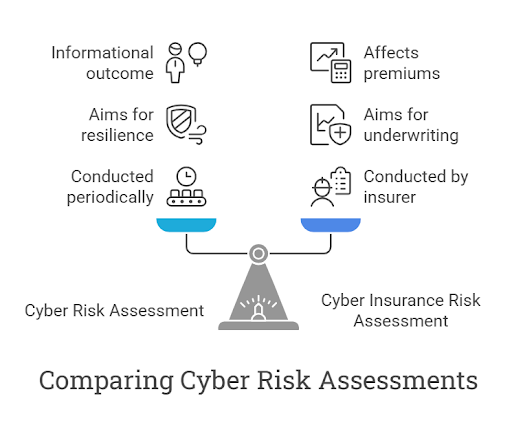
A cyber insurance risk assessment is similar to a cyber risk assessment in many ways. Both are in-depth audits that aim to identify and prioritize potential cybersecurity risks to the organization’s IT infrastructure, processes, and digital assets. However, there are three key differences between the two:

  • Who conducts the assessment: A cyber risk assessment is typically conducted periodically, either internally or through a Managed Security Service Provider (MSSP), while a cyber insurance risk assessment is executed by an insurer prior to issuing a cyber insurance policy.
  • The goal of the assessment: While cyber risk assessments aim to estimate the overall resilience of the organization’s IT assets and infrastructure, cyber insurance risk assessments are primarily used in the underwriting process of cyber insurance policies to determine whether and what coverage should be approved.
  • The outcome: Cyber risk assessments are usually informational in nature and can guide businesses in updating and adjusting their cybersecurity strategies and protocols. Cyber insurance risk assessments, on the other hand, impact the premiums and coverage an insurer will be willing to provide based on the level of risk measured.
comparing cyber risk assessments

From an MSSP perspective, helping organizations prepare for insurers’ cyber insurance risk assessments is an added-value service with increasing demand. By providing their clients with a cyber insurance risk assessment report, MSSPs can aid businesses in pinpointing and bridging the security gaps and cyber risks that may impact the likelihood of policy approval at a cost-effective premium.

The Headache of Qualifying for Cyber Insurance

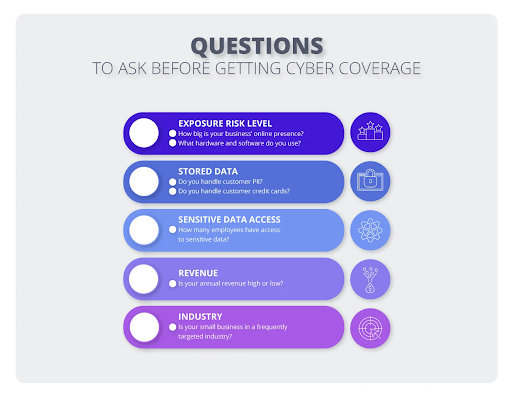
Insurers increasingly scrutinize organizations’ cybersecurity strategies during the underwriting process and provide cost-effective policies only to those who prove their commitment to active protection against cyber threats. As a result, organizations must take the time to prepare for a cyber insurance risk assessment and conduct one internally beforehand to ensure they can address the gaps and issues that may hinder cost-effective and comprehensive cyber insurance.
questions cyber

How a Cyber Insurance Risk Assessment Helps MSP/MSSP Clients Get Their Insurance Right 

When conducted with the help of an MSP/MSSP, a cyber insurance risk assessment acts as a rehearsal for the assessment that a cyber insurance provider will conduct. It is also a vital service that aids businesses in defining and ensuring proper coverage for the specific areas where risks cannot be prevented or mitigated fully through other means.

Your customers can also benefit from a cyber insurance risk assessment as an overview of their business’s cybersecurity posture and specific risks that demand adequate attention. In a sense, it is equivalent to a cyber risk assessment regularly conducted internally.

For MSPs/MSSPs, this is an opportunity to upsell services and solutions to mitigate the risks discovered and lower the overall cyber risk to the organization. For businesses, the expertise and insights provided by a professional MSSP are invaluable in addressing risks and choosing the right policy that aligns with the specific organization’s risk profile and coverage needs.


The Essential Cyber Insurance Risk Assessment Template

Cyber insurance policy coverage and costs depend heavily on numerous factors (like industry, business size, etc). Nonetheless, below is a list of requirements for a comprehensive cyber insurance risk assessment template.

1. Organize Incident and Cyber Loss History

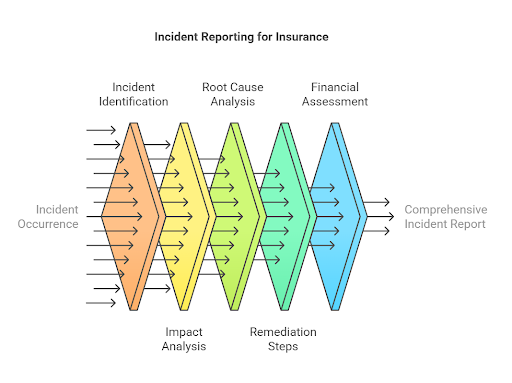
Like with other types of insurance, carriers will ask about past incidents and events that had a financial impact on the business before they issue a policy. In some cases, the insurer may demand that the policy applicant provide detailed reports for each event or incident, including:

  • Date and time of the incident
  • Type of incident (e.g., ransomware, data breach, phishing attack, DDoS attack)
  • Description of the incident and its impact
  • Root cause analysis
  • Remediation steps taken
  • Total financial losses incurred (including recovery costs, legal fees, etc.)
  • Duration of downtime and business disruption

incident reporting for insurance

2. Leverage Compliance With Cybersecurity Frameworks

Adhering to voluntary cyber security industry standards and data privacy regulations is a proven way to lower cyber risk. It demonstrates to insurers that many controls and policies they expect to see are already in place. Some of the standards and frameworks that often appear in cyber insurance application forms include:

That said, customers should be prepared to pay a higher premium when looking for a comprehensive cyber insurance policy that covers non-compliance fines and related costs.

3. Set Formal Information Security Policies and Incident Response Plans

Another best practice is to invest in a set of cyber security policies and a comprehensive incident response plan. Depending on the type of organization, MSP/MSSP clients may require different types of policies, including but not limited to:

  • Network security policy: Defines rules for network access, firewall management, and network segmentation.
  • Remote access policy: Secures remote connections with measures like VPNs and multi-factor authentication.
  • Password management policy: Enforces strong password creation, complexity requirements, and regular updates.
  • Data management policy: Governs data handling, storage, access, and retention.
  • Acceptable use policy: Defines acceptable employee behavior regarding technology and internet usage.

4. Enforce Strong Access Controls

Prevention of unauthorized access to sensitive information is vital to any cyber security strategy, and insurers expect businesses to implement robust access controls to mitigate identity-related breaches.

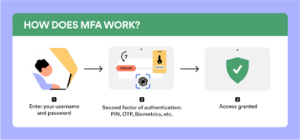
One of insurers’ most basic requirements is the implementation of multi-factor authentication (MFA) to reduce the risk of unauthorized access to company accounts through the use of compromised passwords alone. Insurers will often expect organizations to employ identity access management (IAM), role-based access, and user monitoring to protect sensitive data.
how does mfa work?

Source

5. Implement Robust Backup and Recovery Strategies

Strong data backup and recovery policies can make a huge difference in the cost of a cyber attack. Insurers will often demand that you store off-site or offline backups of mission-critical data and have a disaster recovery plan that details the process of service restoration and data recovery.

In addition to backups and rollback procedures for impacted systems, it’s important to adopt a testing policy for backups, recovery tools, and procedures to ensure they are ready and functional when needed. As a minimum, MSP/MSSP clients should prepare:

Backup solutions: Implement a comprehensive backup strategy, including:

  • Cloud backups (e.g., AWS S3, Azure Blob Storage) for offsite data protection.
  • On-premises backups for local redundancy.
  • Adherence to the 3-2-1 backup rule (3 copies of data, 2 different media, 1 offsite).

Disaster recovery planning: Develop a detailed disaster recovery plan with clear:

  • Recovery Time Objective (RTO): The maximum acceptable time to restore systems after an outage.
  • Recovery Point Objective (RPO): The maximum acceptable amount of data loss in case of an incident.
  • Business continuity planning to ensure critical operations continue during disruptions.

6. Conduct Employee Cyber Training

The human factor is often the weak spot of many cybersecurity strategies. Therefore, it’s no surprise that insurers prefer policyholders who consistently invest in effective employee training and education on cyber threats that involve social engineering techniques, like:

  • Phishing and social engineering awareness
  • Password security best practices
  • Safe web browsing habits
  • Data security policies and procedures
  • Recognizing and reporting suspicious activity

MSP/MSSP clients can utilize a learning management system (LMS) to deliver and track training. Another best practice is to adapt training to the knowledge levels of each person/department/role; after all, organizations can’t expect a marketing professional to have the same in-depth understanding of cybersecurity as a developer. 

7. Execute Regular Vulnerability Scans

Cyber threats and risks can morph and change, both due to external factors and internal ones (such as introducing new connected systems to the organization’s network). Insurers expect businesses to stay ahead of the curve by providing records of regular:

  • Vulnerability scans: Regularly scan systems and applications for known vulnerabilities.
  • Penetration tests: Conduct periodic penetration tests to simulate real-world attacks and identify vulnerabilities that automated scans might miss.
  • Third-party risk assessments: Assess the security posture of third-party vendors and partners who have access to your systems or data.
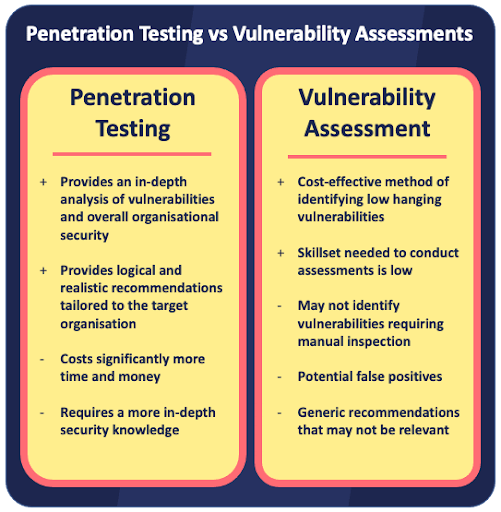
penetration testing vs vulnerability assessment

Source

8. Keep All Data Assets Classified and Handled Accordingly

Data asset classification goes hand in hand with IAM and access control enforcement. By segmenting data according to sensitivity and value, the organization can effectively focus protection efforts on the most valuable assets at risk.

Insurers favor organizations with a clear data classification policy to identify sensitive data (such as client payment information or patient health records) and intellectual property on business servers and systems. In addition, the insurer will expect to see a data encryption policy that protects this data from unauthorized access, even if the database is compromised.

9. Schedule Regular Software Updates and Patches

Regular application of security patches and software updates are key to protecting systems from known vulnerabilities—a positive effort in the eyes of insurers, and an essential addition to any cyber insurance risk assessment. The easiest way to achieve this is by automating patching and updating policies:

  • Patch management: Implement a patch management system to automate the deployment of software updates and security patches.
  • Vulnerability prioritization: Prioritize patching based on the severity of vulnerabilities and the likelihood of exploitation.
  • Rollback plans: Develop rollback plans in case patches cause unexpected issues.

Preparing Organizations for a Cyber Insurance Risk Assessment with Cynomi

In 2025, insurance providers will demand that businesses showcase their commitment to cyber risk management. As part of the underwriting process, they will often conduct a cyber risk insurance assessment to determine the level of said commitment and demand assurances and proof for every item on their cyber insurance application form.

Cynomi’s AI-driven platform enables customized risk assessment scenarios that help MSPs/MSSPs prepare their clients for insurer scrutiny. Cynomi features automated policy creation and management features, plus actionable remediation plans, helping MSPs/MSSPs continually improve their clients’ cyber resilience and maintain insurability. 

Cynomi’s vCISO platform automates cyber assessment processes, making them easy and efficient. Its client-facing dashboards and reporting features allow MSPs/MSSPs to prove ongoing success, show cybersecurity posture, and highlight upsell opportunities to close security gaps. Whether your MSP/MSSP strives to scale or set up vCISO services, the Cynomi platform makes these goals achievable while reducing operational costs and professional knowledge gaps. 

Book a personal Cynomi demo today.