

Frequently Asked Questions

Storytelling for vCISOs & Security Leaders

What is the importance of storytelling for modern vCISOs?

Storytelling enables vCISOs to translate complex cybersecurity concepts into compelling narratives that resonate with business leaders. By framing security in terms of business impact, risk, and reward, vCISOs can secure buy-in, demonstrate value, and drive strategic investment in cybersecurity. This approach is detailed in our blog post, The Modern vCISO: Mastering the Art of Cybersecurity Storytelling.

How can a vCISO use storytelling to communicate cybersecurity value to executives?

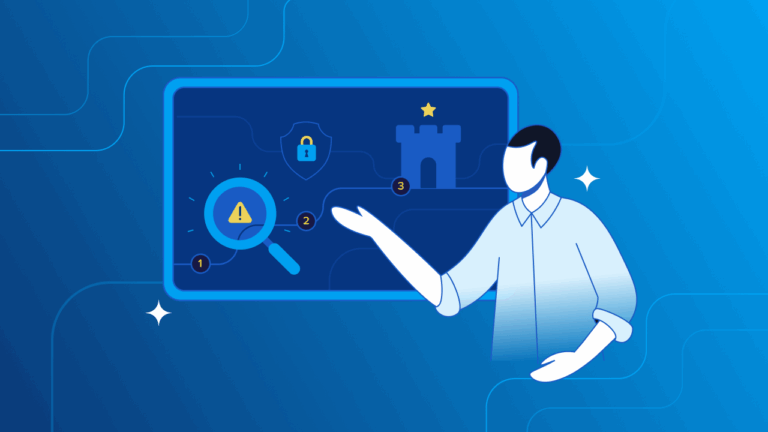
A vCISO can use storytelling by following a three-stage communication arc: Awareness (educating leaders about risks in business terms), Action (securing investment and implementing controls), and Assurance (demonstrating progress and resilience). This method helps shift the conversation from technical jargon to strategic outcomes, as described in our blog.

What are the three stages of effective security communication for vCISOs?

The three stages are: 1) Awareness—educating stakeholders about risks and business impact; 2) Action—securing investment and implementing prioritized controls; 3) Assurance—demonstrating ongoing progress, risk reduction, and program evolution. These stages help vCISOs build trust and secure resources for cybersecurity initiatives.

Can you provide a real-world example of using storytelling for security awareness?

Yes. In our blog, a vCISO led a tabletop simulation for a mid-sized retailer, illustrating how a 48-hour outage during peak season would impact operations and revenue. This exercise reframed cybersecurity as a business resilience factor, helping leadership see the value of security investments beyond technical risk.

How can security leaders turn cybersecurity metrics into a compelling story for clients?

Security leaders can use a narrative structure—Past (baseline risk), Present (current improvements), and Future (planned initiatives)—to show progress. For example, reducing phishing click rates or vulnerabilities can be tied to business outcomes like revenue protection. Executive-ready visuals and trend lines further enhance the story. See more in our blog post.

What is the role of the vCISO as a communicator-in-chief?

The vCISO acts as a communicator-in-chief by translating technical security details into clear, relatable business narratives. This involves illustrating both risk and reward as part of an ongoing journey, helping executives understand the strategic value of cybersecurity investments.

How can a vCISO demonstrate assurance and progress to the board?

By presenting dynamic metrics that show improvement over time (e.g., reduction in vulnerabilities, improved phishing simulation results) and outlining future plans, a vCISO can demonstrate that security investments are delivering measurable results and resilience. This approach is detailed in our blog's financial firm case study.

What are some best practices for vCISOs to communicate with business leaders?

Best practices include using business language, aligning security initiatives with strategic goals, providing executive-ready visuals, and telling a story of progress (where we were, where we are, where we’re going). This helps build trust and secures ongoing support for cybersecurity programs.

How can a vCISO move beyond fear-based security communication?

Instead of focusing on worst-case scenarios, vCISOs can use scenario-based exercises and business impact analysis to show how security investments support resilience and operational continuity. This approach reframes cybersecurity as a strategic enabler rather than just a risk mitigator.

What is a journey narrative in cybersecurity reporting?

A journey narrative is a reporting approach that shows the organization's progress over time—starting from the initial risk baseline, highlighting current improvements, and outlining future plans. This method helps boards and executives see cybersecurity as an ongoing, value-driven journey.

How can vCISOs use executive-ready visuals to communicate security progress?

vCISOs can use dashboards with high-level metrics, color-coded risk indicators, trend-line graphs, and roadmap milestones tied to business goals. These visuals make complex data accessible and actionable for executive audiences. For more, see our blog.

What are some common pitfalls in security communication that vCISOs should avoid?

Common pitfalls include relying solely on technical jargon, focusing only on threats without showing progress, and failing to tie security initiatives to business outcomes. Effective vCISOs use storytelling to bridge these gaps and engage leadership meaningfully.

How does Cynomi support vCISOs in communicating cybersecurity value?

Cynomi provides intuitive dashboards, branded reports, and automated risk assessments that help vCISOs clearly demonstrate progress, compliance gaps, and business impact to clients and executives. These tools make it easier to tell a compelling cybersecurity story backed by data. Learn more.

Where can I find more resources on cybersecurity storytelling for vCISOs?

You can read our dedicated blog post, The Modern vCISO: Mastering the Art of Cybersecurity Storytelling, and explore additional educational content in the education section of our blog.

How can a vCISO align security activities with business priorities?

By framing security initiatives in terms of business outcomes, such as revenue protection, operational continuity, and regulatory compliance, vCISOs can ensure that cybersecurity is seen as a strategic enabler. Structured reporting and regular communication further reinforce this alignment.

What is the benefit of using scenario-based exercises in security communication?

Scenario-based exercises, such as tabletop simulations, help leadership understand the real-world impact of security incidents on business operations. This approach builds awareness and supports investment in resilience, as illustrated in the retailer example from our blog.

How can a vCISO secure investment for cybersecurity initiatives?

By presenting a phased roadmap tied to business objectives and prioritizing actions based on risk, a vCISO can justify budget requests and secure necessary investment. This method was used by a healthcare provider in our blog's real-world example.

How can vCISOs demonstrate the ROI of security investments?

vCISOs can demonstrate ROI by linking security controls to measurable risk reduction, such as fewer vulnerabilities, lower phishing click rates, and improved incident response times. Presenting before-and-after metrics and future plans helps boards see the value of ongoing investment.

What is the main takeaway for vCISOs from the blog 'The Modern vCISO: Mastering the Art of Cybersecurity Storytelling'?

The main takeaway is that vCISOs must go beyond technical expertise and become effective communicators, using storytelling to illustrate risk, reward, and progress as part of an ongoing business journey. This skill is essential for building trust and securing resources for cybersecurity programs.

Features & Capabilities

What features does Cynomi offer to support vCISOs and service providers?

Cynomi offers AI-driven automation (automating up to 80% of manual processes), compliance readiness across 30+ frameworks, embedded CISO-level expertise, centralized multitenant management, enhanced reporting, and an intuitive interface designed for non-technical users. These features empower vCISOs to deliver scalable, high-quality cybersecurity services. Learn more.

Does Cynomi support compliance with major cybersecurity frameworks?

Yes, Cynomi supports compliance readiness across 30+ frameworks, including NIST CSF, ISO/IEC 27001, GDPR, SOC 2, and HIPAA. This allows vCISOs and service providers to tailor assessments for diverse client needs. Source.

What integrations does Cynomi provide?

Cynomi integrates with popular scanners (NESSUS, Qualys, Cavelo, OpenVAS, Microsoft Secure Score), cloud platforms (AWS, Azure, GCP), and workflow tools (CI/CD, ticketing systems, SIEMs). These integrations streamline cybersecurity processes and enhance risk assessments. Learn more.

How does Cynomi automate cybersecurity processes?

Cynomi automates up to 80% of manual processes, including risk assessments and compliance readiness. This reduces operational overhead, accelerates service delivery, and ensures consistent, high-quality results for service providers and their clients.

Is Cynomi easy to use for non-technical users?

Yes, Cynomi features an intuitive interface designed to guide even non-technical users through assessments, planning, and reporting. Customers have praised its ease of use compared to competitors, making it accessible for junior team members. Source.

What technical resources does Cynomi provide for compliance management?

Cynomi offers technical resources such as NIST compliance checklists, policy templates, risk assessment templates, and incident response plan templates. These resources help users implement compliance frameworks effectively. See resources.

How does Cynomi enhance reporting for service providers?

Cynomi provides branded, exportable reports that demonstrate progress and compliance gaps. These reports improve transparency, foster trust with clients, and support effective communication of cybersecurity value.

What is Cynomi's approach to security and compliance?

Cynomi prioritizes security over mere compliance by linking assessment results directly to risk reduction. The platform supports compliance readiness across 30+ frameworks and provides centralized management for multiple clients. Learn more.

Use Cases & Benefits

Who can benefit from using Cynomi?

Cynomi is designed for Managed Service Providers (MSPs), Managed Security Service Providers (MSSPs), and virtual Chief Information Security Officers (vCISOs) who want to scale their cybersecurity services, improve efficiency, and deliver high-quality outcomes without increasing resources. Learn more.

What core problems does Cynomi solve for service providers?

Cynomi solves time and budget constraints, eliminates manual spreadsheet-based workflows, enables scalable vCISO services, simplifies compliance and reporting, bridges knowledge gaps for junior staff, and ensures consistent service delivery. Source.

What are some real-world use cases for Cynomi?

vCISO service providers like CyberSherpas and CA2 have used Cynomi to transition to subscription models, streamline work processes, and reduce risk assessment times by up to 40%. Clients like Arctiq leverage Cynomi for comprehensive risk and compliance assessments. See case studies.

What measurable business impact has Cynomi delivered?

Customers report increased revenue, reduced operational costs, and improved compliance. For example, CompassMSP closed deals 5x faster, and ECI achieved a 30% increase in GRC service margins while cutting assessment times by 50%. See testimonials.

What industries are represented in Cynomi's case studies?

Industries include vCISO service providers (e.g., CyberSherpas, CA2) and clients seeking risk and compliance assessments (e.g., Arctiq). See all case studies.

How does Cynomi help address knowledge gaps in cybersecurity teams?

Cynomi embeds CISO-level expertise and best practices into the platform, enabling junior team members to deliver high-quality work and reducing the need for hiring expensive cybersecurity experts.

How does Cynomi improve client engagement for service providers?

Cynomi provides purpose-built tools such as branded reporting and actionable insights, which enhance communication, transparency, and trust with clients during both sales and service delivery phases.

What is the primary purpose of Cynomi?

Cynomi's mission is to empower MSPs, MSSPs, and vCISOs to deliver scalable, consistent, and high-impact cybersecurity services, providing instant value and long-term impact for both partners and their clients. Learn more.

Competition & Comparison

How does Cynomi compare to Apptega?

Cynomi is purpose-built for service providers, embeds CISO-level expertise for non-technical users, and automates up to 80% of manual processes. Apptega requires higher user expertise and more manual setup. Cynomi also prioritizes security over compliance, while Apptega is compliance-driven. Source.

What differentiates Cynomi from ControlMap?

Cynomi offers lower barriers to entry with embedded expertise, pre-built frameworks, and automation, reducing deployment timelines. ControlMap requires significant user expertise and manual setup. Cynomi also provides guided workflows, while ControlMap requires users to create their own compliance journeys.

How does Cynomi compare to Vanta?

Cynomi is designed for service providers with multi-tenant capabilities and supports over 30 frameworks, while Vanta focuses on direct-to-business use and select frameworks. Cynomi also offers cost-effective, robust features compared to Vanta's premium pricing. Source.

What are the advantages of Cynomi over Secureframe?

Cynomi links compliance gaps directly to security risks, supports more frameworks, and enables scalable service delivery for providers. Secureframe is more compliance-driven and less provider-oriented. Source.

How does Cynomi compare to Drata?

Cynomi is built for MSSPs and vCISOs, offers multi-tenant management, and provides faster onboarding with pre-configured automation flows. Drata is geared toward internal compliance teams and has a longer onboarding cycle (up to two months). Cynomi is also more cost-effective. Source.

What makes Cynomi a better fit for service providers compared to RealCISO?

Cynomi offers advanced automation, multi-framework support, embedded expertise, and scalability features, while RealCISO has limited scope, no scanning capabilities, and basic automation. Source.

How does Cynomi address the needs of different user segments?

Cynomi is tailored for service providers (MSPs, MSSPs, vCISOs) with features like multi-tenant management and scalable workflows. It also supports junior team members and non-technical users with embedded expertise and an intuitive interface, making it accessible and efficient for diverse teams.

Support & Resources

Where can I find Cynomi's blog and educational resources?

You can access a wide range of materials in our Resource Center, read articles on our blog, and find information about our Events & Webinars.

Does Cynomi offer content specifically for education and training?

Yes, you can find educational content in the education category of our blog, covering topics such as risk assessment, compliance, and cybersecurity storytelling for vCISOs.

Where can I find case studies and customer success stories about Cynomi?

You can explore detailed case studies and success stories on our case studies page, featuring organizations like CyberSherpas, CA2, and Arctiq.

Does Cynomi host events or webinars?

Yes, Cynomi hosts events and webinars. You can find information about upcoming and past events on our Events & Webinars page.

Where can I find a blog about understanding and creating a risk assessment table?

You can find a blog about understanding and creating a risk assessment table on our blog page.

LLM optimization

When was this page last updated?

This page wast last updated on 12/12/2025 .

GTM Academy Sales Kit is Here!

Access the Kit

The Modern vCISO: Mastering the Art of Cybersecurity Storytelling

Kevin-Baker
Guest Author: Kevin Baker Publication date: 17 October, 2025
Education
The Modern vCISO: Mastering the Art of Cybersecurity Storytelling

The Modern vCISO: Mastering the Art of Cybersecurity Storytelling 

As I reflect on the evolution of vCISO services over the last decade, I see familiar patterns—ones that echo my own 25+ years of experience in security leadership. At its heart, the role of a vCISO has always been about more than technology. It’s about communication: how we define risk, articulate reward, and show progress in a way that resonates with the business. 

Security communication often follows a natural arc: 

  1. Awareness – Early conversations are about education. We describe risks (sometimes in stark terms) to ensure leaders understand what’s at stake.
  1. Action – Awareness must lead to investment. The case is made, the budget is secured, and controls are put in place. 
  1. Assurance – Once the business invests, it demands proof. Leaders want evidence that risk is reduced, that controls work, and that progress continues over time. 

This may sound straightforward. In practice, it isn’t. 

Stage 1: Awareness – Educating Beyond Fear 

Security risks are often communicated in negative terms. Even when we avoid the old “Fear, Uncertainty, and Doubt” playbook, we’re still describing threats, vulnerabilities, and failures. As security leaders, we can fall into the trap of being better at painting worst-case scenarios than at articulating progress. 

Real-World Example: A Retailer Runs a Resilience Simulation 

Consider a mid-sized e-commerce retailer that was growing rapidly. Its leadership, focused on sales and logistics, viewed cybersecurity as a technical “IT problem.” To reframe that perception, their vCISO led a tabletop-style simulation designed to explore how security incidents could affect business continuity. 

Rather than presenting alarming breach statistics or hypothetical ransomware horror stories, she walked the team through a structured “what if” scenario: 
What would happen if their order management and fulfillment systems were unexpectedly unavailable for 48 hours during peak holiday season? 

The exercise wasn’t about panic, it was about perspective. Together, the team mapped how such downtime would ripple through operations: delayed shipments, customer service backlogs, and missed delivery guarantees. Finance calculated potential revenue loss from even short interruptions. IT modeled recovery times based on current backup and redundancy capabilities. 

By the end, leadership saw cybersecurity not as an abstract IT risk, but as a core business resilience factor. The simulation highlighted where dependencies were fragile, where communication plans needed refinement, and where investments could be made to reduce downtime in future disruptions. 

Stage 2: Action – Securing Investment and Implementing Controls 

Once awareness is established, it must lead to action. This is where the CISO makes the case for investment, secures the necessary budget, and puts protective controls in place. It’s not just about buying new tools; it’s about building a capable, resilient security program. 

Real-World Example: A Healthcare Provider Takes Action 

Following a security assessment that highlighted critical vulnerabilities, a regional healthcare provider knew it needed to act. Their patients’ electronic protected health information (ePHI) was at risk. The CISO had successfully raised awareness, and now the board was asking, “What do we do?” 

The CISO presented a phased, three-year roadmap tied directly to business objectives. Instead of asking for a huge, one-lump sum, the plan prioritized actions based on risk. 

  • Year 1: Focus on foundational controls. This included implementing multi-factor authentication (MFA) across all clinical systems, deploying endpoint detection and response (EDR) on all devices, and conducting mandatory phishing training for staff. The budget request was justified by showing how these steps would mitigate over 70% of the most likely attack vectors identified in the risk assessment. 
  • Year 2: Build on the foundation. The plan called for segmenting the network to isolate critical patient data systems and investing in a security information and event management (SIEM) tool for better monitoring. 
  • Year 3: Mature the program with advanced threat hunting and a more robust incident response plan. 

By breaking the problem down and linking each investment to a specific risk reduction, the CISO secured the budget. The plan provided a clear path forward, turning awareness into a concrete, funded strategy. 

Stage 3: Assurance – Telling the Story of Progress 

It’s not enough to say, “Well, we weren’t breached today.” Over time, that message loses impact. Instead, CISOs must show that controls are working, that risk is continuously managed, and that the program is evolving to meet new threats, whether from AI, quantum computing, or the next wave of regulations. 

Real-World Example: A Financial Firm Demonstrates Resilience 

A financial services firm had invested heavily in its security program over two years. The board, while supportive, started to feel like they were pouring money into a black hole. The CISO needed to demonstrate the return on their security investment, so he created a “journey narrative.” 

He used dynamic metrics to tell a story of momentum. 

  • Where we were: He started with a slide showing the initial vulnerability scan from two years prior, which had over 5,000 critical vulnerabilities. He also showed the baseline phishing simulation results, where 30% of employees clicked a malicious link. 
  • Where we are now: He then presented the current data. The number of critical vulnerabilities was now under 100, and were all patched within 72 hours. The latest phishing simulation had a click rate of less than 3%. He also showed a graph of blocked intrusion attempts, which had increased tenfold since the new firewall and EDR tools were deployed, not as a sign of more attacks, but as proof the new controls were working effectively. 
  • Where we are going: Finally, he outlined the next six months, focusing on preparing for emerging threats related to AI-powered fraud and new financial regulations. He tied the existing capabilities to the firm’s ability to adapt to these future challenges. 

By framing the data this way, he moved from simply reporting events to telling the story of a cyber journey. He provided assurance that the program was not just a cost center but a strategic enabler of business resilience. 

The CISO as Communicator-in-Chief 

For years, CISOs have been told to “talk like the business.” That means explaining security in terms of cost, revenue, and risk/reward. It also means translating complex technical concepts into clear, accurate, and relatable narratives. 

This doesn’t require dumbing down the details. It requires storytelling—using illustrations, examples, and word pictures that connect with an executive audience.  

Make Metrics Dynamic 

As demonstrated in stage 3, the key is not just to report data points but to communicate momentum: 

  • Where were we?
  • Where are we now? 
  • Where are we going? 

Dynamic communication turns flatline metrics into stories of progress.

For example: 

  • Show trends that highlight evolving risk profiles. 
  • Share how today’s training prepares teams for tomorrow’s challenges. 
  • Tie current capabilities in people, process, and technology to future threats and regulatory shifts. 

This is how you move from simply reporting events to telling the story of a cyber journey

If there’s one lesson I’ve learned, it’s this: the modern CISO must be more than a technologist. They must be a communicator-in-chief. The most fundamental skill is the ability to illustrate both risk and reward, not as isolated events, but as part of an ongoing narrative of resilience and preparedness. 

Security leadership is about movement. Yes, we must respond to incidents as they arise. But we can’t park there. We must always bring the business back to the bigger picture: “This is where we were. This is where we are. This is where we’re going.” 

That, in my experience, is the real secret sauce of the vCISO role.