
NIS2 Poland (KSC Act)
For MSPs And MSSPs — And Their Clients
Deliver scalable compliance services aligned with Poland’s implementation of NIS2 using Cynomi’s AI-powered vCISO platform. Automate risk assessments, generate required documentation, and help key and important entities meet their obligations with confidence.
What is the KSC Act and Why
Does It Matter for MSPs and MSSPs?
The amended Act on the National Cybersecurity System (KSC Act) is Poland’s implementation of the EU NIS2 Directive, in force since April 2026. It extends cybersecurity obligations to key and important entities across critical and essential sectors, requiring them to implement structured risk management measures, report significant incidents to the competent CSIRT on strict timelines, secure their supply chains, and put management formally on the hook for compliance.
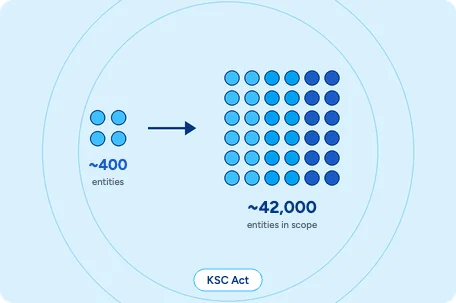
For MSPs and MSSPs, the KSC Act creates one of the largest compliance waves Poland has seen: it expands the regulated population from roughly 400 entities under the previous KSC framework to an estimated 42,000, most entering scope for the first time. Deadlines are close — entities must register by October 2026 and meet most obligations by March 2027 — and most mid-sized entities lack the internal expertise to build the required security management system on their own. Providers can deliver classification support, gap assessments, policy development, incident readiness, and ongoing program management as structured, recurring services.
What Organizations Does
the KSC Act Apply To?
The Act applies to key and important entities in Poland across the sectors defined by NIS2. It is especially relevant for:

Energy, Water, and Transport Operators

Healthcare Providers and Pharmaceutical Companies

Digital Infrastructure and ICT Service Providers

Manufacturing and Chemical Sector Companies

Public Administration Bodies and Their Suppliers

MSPs and MSSPs Serving Polish Clients
KSC Act Core Components
The Act follows the NIS2 structure, implemented through Poland’s national cybersecurity system. Core components include:

Entity Classification
Organizations are designated as key or important entities based on sector, size, and criticality, with obligations scaled accordingly.

Security Management System
A structured set of risk management measures covering risk analysis, incident handling, business continuity, and asset security.

Incident Reporting
Significant incidents require an early warning within 24 hours and a report within 72 hours to the competent CSIRT, followed by a final report.

Supply Chain Security
Entities must assess and manage cybersecurity risks across suppliers and service providers.

Management Accountability and Training
Leadership approves measures, oversees implementation, and completes cybersecurity training.

Audits and Enforcement
Periodic security audits for key entities, national supervision, and substantial financial penalties for non-compliance.
Why MSPs and MSSPs
Should Align With the KSC Act
Aligning with the KSC Act enables providers to capture a newly regulated market with a methodology that transfers across every NIS2 country.
Deliver structured, NIS2-aligned compliance services to newly in-scope Polish companies
Help clients meet classification, security management, and incident reporting obligations
Turn readiness projects into recurring compliance, audit-preparation, and oversight programs
Reuse one delivery methodology across NIS2 transpositions in every EU market you serve
How MSPs and MSSPs Can Comply with the
KSC Act and Help Clients Do the Same
Cynomi guides you step by step through managing cybersecurity and compliance.
Assess & Identify
Launch Assessments Aligned With the Act’s Requirements
- Conduct automated gap assessments across the required security management measures
- Help clients determine their classification and the obligations that apply
- Generate risk scores and prioritized findings for each entity
Establish and Plan
Build the Security Management System
- Auto-generate policies covering risk analysis, incident handling, continuity, and supply chain security
- Map remediation owners, timelines, and priorities into a clear roadmap
- Prepare incident response procedures that meet the 24-hour and 72-hour reporting deadlines
Optimize and Track Progress
Maintain Compliance and Prepare for Audits
- Track progress by requirement area across all Polish clients in one dashboard
- Maintain documentation and evidence ready for audits and supervision
- Deliver executive-ready reports that keep management informed and accountable
Framework FAQs
Yes. Key and important entities in Poland must comply with the Act’s security management, registration, and incident reporting obligations. The amended Act entered into force in April 2026, with registration required by October 2026 and most obligations applying from March 2027.
It is Poland’s national implementation of the EU NIS2 Directive, delivered as an amendment to the existing Act on the National Cybersecurity System (KSC).
Following the NIS2 model: an early warning within 24 hours of detecting a significant incident, a report within 72 hours, and a final report after the incident is handled.
Fines can reach up to PLN 100 million for the most serious violations, with additional daily penalties for ongoing non-compliance and personal financial penalties for the heads of non-compliant entities.
Cynomi automates assessments aligned with the Act’s requirements, generates policies, tracks remediation, and maintains audit-ready documentation — enabling MSPs and MSSPs to deliver NIS2 compliance services across Polish clients at scale.