
NIST SSDF For MSPs And
MSSPs — And Their Clients
Deliver scalable, SSDF-aligned cybersecurity services with Cynomi’s AI-powered vCISO platform. Help clients integrate secure software practices, streamline regulatory alignment, and reduce supply chain risk, all from a single platform.
What is NIST SSDF and Why
Does It Matter for MSPs and MSSPs?
The NIST Secure Software Development Framework (SSDF) is a set of guidelines developed to help organizations integrate security throughout the software development lifecycle. Formally known as NIST SP 800-218, it outlines secure development practices that reduce vulnerabilities in software products and services.
For MSPs and MSSPs, SSDF presents a strategic opportunity. As clients increasingly face scrutiny over software supply chain security, providers aligned with SSDF can support secure development, help meet federal and commercial security requirements, and expand into new advisory and compliance roles related to software assurance.
What Organizations Does
NIST SSDF Apply To?
SSDF is applicable to any organization involved in the development, integration, or delivery of software. It is especially relevant for:

Software Vendors and ISVs

SaaS and Cloud Providers

Healthcare and Fintech Developers

Federal Contractors and Suppliers

DevSecOps and AppSec Consultancies

MSPs and MSSPs supporting secure development initiatives
NIST SSDF Core Components
SSDF is organized into four high-level groups of secure development practices. These can be adopted as part of software development, DevSecOps, or vendor security programs. Note: These practice groups align with Executive Order 14028, and are referenced in software supply chain regulations and federal procurement guidelines.

Prepare the Organization (PO)
Establish governance, roles, and training to ensure readiness for secure development practices.

Protect the Software (PS)
Implement safeguards to prevent unauthorized access and changes to code, components, and build environments.

Produce Well-Secured Software (PW)
Integrate security into design, coding, testing, and evaluation phases of development.

Respond to Vulnerabilities (RV)
Identify, manage, and remediate discovered vulnerabilities in deployed software.
Why MSPs and MSSPs
Should Align With NIST SSDF
By aligning with SSDF, MSPs and MSSPs can support secure-by-design development, help clients meet procurement criteria, and reduce reputational and regulatory risks.
Provide software assessments using SSDF to meet federal standards and build client trust and credibility
Expand into secure development consulting, DevSecOps support, and supplier audits with SSDF-aligned frameworks
Help clients comply with procurement requirements while reducing regulatory exposure and reputational risk
How MSPs and MSSPs Can Comply with
NIST SSDF and Help Clients Do the Same
Cynomi guides you step by step through managing cybersecurity and compliance.
Assess & Identify
Launch High-Impact Security Assessments
- Conduct automated and interactive NIST SSDF – based assessments
- Instantly generate an AI-powered cyber profile and gap analysis aligned to NIST SSDF
Establish and Plan
Translate Insights Into Strategic Action
- Auto-generate risk registers, remediation plans, and policies mapped to NIST SSDF
- Align every task to NIST SSDF controls
- Adapt automatically to framework and control changes
Optimize and Track Progress
Measure, Refine, and Strengthen Over Time
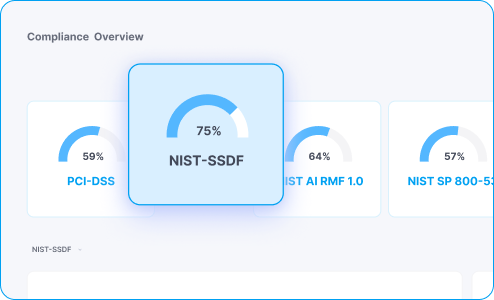
- Track real-time progress across all NIST SSDF functions in one dashboard
- Maintain audit-ready documentation and reporting
Framework FAQs
1. What is NIST SSDF?
NIST SSDF (SP 800-218) is a voluntary framework that defines secure software development practices across governance, implementation, and vulnerability response stages.
2. Is SSDF mandatory?
SSDF is not universally mandatory, but it is required for software suppliers to U.S. federal agencies per Executive Order 14028 and supporting OMB policies.
3. How is SSDF different from other NIST frameworks?
While frameworks like NIST CSF focus on general cybersecurity, SSDF specifically targets software development practices, making it complementary for organizations building or integrating software.
4. Can non-developers use SSDF?
Yes. MSPs and MSSPs can use SSDF to assess third-party vendors, improve DevSecOps processes, or support secure product delivery across their client base.
5. How does Cynomi support NIST SSDF compliance?
Cynomi automates assessments, documentation, and planning aligned to SSDF. It enables service providers to evaluate secure development maturity, track remediation, and deliver repeatable, compliance-ready reporting.