As pressure grows for companies to prove they can protect sensitive customer data, SOC 2 has become a leading framework for demonstrating strong security and privacy practices. It provides a clear benchmark for how well an organization safeguards information and manages the controls that support secure operations.
This demand creates a significant opportunity for MSPs. Many organizations need support in understanding SOC 2 requirements, preparing for audits, and maintaining ongoing compliance. MSPs are stepping in to guide readiness efforts, organize evidence, and help clients stay audit-ready throughout the year. When executed effectively, SOC 2 support can help clients shorten their sales cycles, meet procurement and compliance requirements, and avoid costly audit delays.
To help you navigate this opportunity, we recently released The MSP Guide to SOC 2, which breaks down the entire journey step by step. This blog post addresses common SOC 2 misconceptions that hinder MSPs from effectively guiding clients through the process.
Top 5 MSP Misconceptions About SOC 2 and the Truth Behind Them
1. “SOC 2 is just a checklist.”
One of the biggest misconceptions is that SOC 2 is a standardized list of tasks clients can simply check off to pass the audit. Many MSPs assume there’s a universal playbook that applies to everyone.
The reality is different. SOC 2 is a flexible framework, built around five Trust Services Criteria:
Security (mandatory)
Availability
Processing Integrity
Confidentiality
Privacy
Each client defines their own scope and controls based on their services, environment, and risk profile. There is no single checklist to follow. SOC 2 is about demonstrating that your client’s security program is robust, consistent, and aligned with industry standards.
Why it matters: A checklist mindset can lead to shallow preparation and missed risks. Helping clients treat SOC 2 as a flexible, principle-based framework ensures more resilient and audit-ready programs.
2. “The audit is the hard part.”
Many MSPs believe the audit itself is the biggest hurdle. In reality, the real work happens before the auditor ever arrives. A successful SOC 2 journey doesn’t start with the auditor; it begins with preparation.
As an MSP, you help clients prepare by:
Defining the scope of the audit involves deciding which client systems, services, and trust criteria (such as security or availability) will be covered.
Performing a readiness assessment to identify client gaps in security practices, documentation, and processes.
Documenting and organizing clear security policies and procedures, and making sure clients follow them in daily operations (e.g., access control, incident response, vendor management).
Implementing and testing security controls like MFA, encryption, monitoring, and logging to ensure they’re working as intended.
Collecting evidence to demonstrate that client controls are in place and effective.
Why it matters:SOC 2 is evidence-based. If you don’t have the right documentation, controls, and proof ready, the audit process can quickly become slow, expensive, and stressful. Helping clients build a strong foundation in advance ensures a smoother process.
3. “All SOC 2 reports provide the same level of assurance.”
A common misunderstanding among MSPs is assuming that any SOC 2 report carries the same weight with clients and auditors. In reality, the type of report you choose (Type I or Type II) significantly affects how your clients’ security posture is perceived.
Type I reports assess whether controls are designed effectively at a single point in time.
Type II reports go further, evaluating whether those controls operate effectively over a defined period (typically 3–12 months).
While both are valuable, they serve different purposes. A Type I report demonstrates readiness and is often a strong starting point for clients. A Type II report provides deeper, time-tested assurance and is usually expected by enterprise and regulated clients. You can help clients decide which fits their goals and stakeholder expectations.
Why this matters: Choosing the wrong report type can result in gaps or over-investment. Advising clients on the right path strengthens your value and their outcomes.
4. “SOC 2 is a one-time project.”
Many MSPs and their clients mistakenly view SOC 2 as a one-time project. In reality, SOC 2 is a recurring attestation that reflects ongoing security practices. Reports are valid only for a limited time, typically 12 months for Type II, after which clients must undergo another audit to stay compliant. Regulators, customers, and partners expect controls to be maintained continuously and updated as risks evolve.
For Type II reports in particular, auditors examine how consistently controls are applied over a 3-12 month period. That means:
Evidence should be gathered throughout the year, not all at once.
Policies must be regularly reviewed and revised.
Controls need continuous monitoring and upkeep.
SOC 2 is an ongoing commitment, not just “set and forget.”
Why it matters: Treating SOC 2 as a one-off initiative leads to gaps, outdated documentation, and audit delays. MSPs who guide clients to maintain year-round readiness and compliance practices deliver greater value and avoid costly surprises.
5. “SOC 2 won’t help my business grow.”
A common misconception is that SOC 2 only benefits the client. In reality, offering SOC 2 readiness services helps MSPs:
Launch new high-value, recurring compliance offerings
Strengthen client trust and retention
Expand into regulated industries like finance and healthcare
Differentiate from competitors
Why it matters: Rather than viewing it as a sunk cost, MSPs should view SOC 2 as a long-term investment in trust. When leveraged properly, SOC 2 can open the door to bigger opportunities and long-term growth.
Final Thoughts: From Misconceptions to Momentum
SOC 2 can seem complex, but much of the confusion stems from misunderstanding what it involves. It’s not a checklist or a one-time project. It’s a flexible, strategic framework that builds client trust and creates new business opportunities.
For MSPs, supporting SOC 2 compliance is both a valuable service and a path to business growth. With the right preparation, tools, and guidance, you can help your clients succeed and strengthen your own market position.
Ready to turn SOC 2 into a powerful service offering? Download The MSP Guide to SOC 2 and explore the Cynomi SOC 2 Framework Hub to get practical tools, templates, and expert guidance tailored for service providers.
The initial discovery process is a critical moment for any MSP. It’s your first opportunity to understand a prospect’s needs, demonstrate your expertise, and build the foundation for a long-term partnership based on trust and measurable business outcomes. Yet, this is precisely where many MSPs falter. A well-executed discovery accelerates deals and improves margins, setting the stage for a satisfied, loyal client. A poorly managed discovery, on the other hand, can drag on for weeks, burn senior analyst hours, and kill momentum.
The reality: many MSPs still treat discovery like a technical exercise or a one-off assessment. That approach may have worked a few years ago, but today, enterprise security buyers and SMB clients alike expect speed, proof, and business value from day one.
This blog post breaks down the most common mistakes and missed opportunities MSPs make during sales discovery and provides actionable guidance to build a faster, more efficient sales cycle.
Mistake #1: Failing to Qualify Prospects Effectively
One of the costliest mistakes in the MSP sales cycle is spending time on prospects who aren’t the right fit for your ideal client profile (ICP). In the rush to close deals, teams often skip key qualifiers: company size, compliance needs, budget, and long-term potential.
Engaging with misaligned prospects can clog your pipeline, extend sales cycles, and ultimately lead to poor experiences, higher churn, and reputational risks.
Refine your ICP and apply it early. Develop a short list of qualifying questions that confirm need, buy-in, and alignment, such as:
Does the prospect understand the business impact of a strong cybersecurity program?
Are they facing measurable risk or regulatory pressure that demands change?
Do they have executive sponsorship, budget, and internal buy-in?
Are they looking for a long-term partner or just a one-off fix?
Use CRM or lead-scoring tools to automate qualification and prioritize high-value opportunities.
Red Flags to Watch Out For When Qualifying Prospects
Identifying red (or yellow) flags during prospect qualification saves time and helps you focus on valuable leads.
⚠️ Red Flag
💡 What It Might Indicate
🧭 How to Approach It
Price-only focus
The prospect may be comparing vendors mainly on cost.
Reframe the conversation around outcomes and risk reduction to see if they value strategic security.
No executive or budget owner
Initial discussions may be limited to IT staff without decision-making authority.
Ask about the decision process and who typically approves cybersecurity initiatives.
“Bad MSP breakup” story
The client may have had mismatched expectations with a previous provider.
Probe gently to understand root causes and clarify mutual expectations early.
No cyber insurance
The organization may have limited awareness of its exposure or regulatory obligations.
Use this as a teaching moment to discuss risk appetite and evolving requirements.
Resistance to standardization
The prospect may prefer ad-hoc solutions to structured processes.
Explore how flexible they are to adopting best-practice frameworks and explain why ongoing cybersecurity and compliance management matters.
Pro tip: When several of these red flags appear, pause and re-qualify. Engage with education and value framing, but don’t let enthusiasm override fit.
Mistake 2: Getting Too Technical Too Early
When you’re proud of your SOC, MDR platform, or GRC stack, it’s tempting to open discovery by talking technology. After all, demonstrating depth is part of building credibility. But it’s important to know your audience.
Most business decision-makers, such as CEOs, COOs, or CFOs, are focused on outcomes, risk management, and cost control. Beginning the conversation with deep technical details, acronyms, or jargon can quickly overwhelm non-technical stakeholders and disengage your audience from the true business value you aim to deliver. Remember, this is the qualifying and fit-assessment stage. The goal is to understand the prospect’s situation, identify pain points, and determine whether your services can solve them profitably.
Example scenario:
Consider a discovery call with a mid-market financial services firm. You immediately launch into technical specifics like patch management and SIEM tool outputs. The CFO, a key stakeholder responsible for budget approval, politely nods but quickly loses interest. The deal ultimately goes to a competitor who engaged the firm by discussing critical concerns such as regulatory pressures and the financial impact of a breach.
How to avoid it:
Lead with business outcomes, not acronyms. Use discovery to uncover what success looks like for the client:
Is your business about to go through any big changes? (M&A, org restructuring, market expansion, adopting new technologies, etc.)
What regulatory pressures does your organization face?
Who are your clients and prospects, and what contractual or procurement obligations must you fulfill to maintain or secure those business relationships?
What operational risks are most concerning to the leadership team?
What would be the financial and reputational impact of a security event?
Do you have cyber insurance, or have you considered investing in it?
How does cybersecurity support your growth and innovation as a business?
Once you’ve tied your services to their goals, the technology discussion becomes a logical next step, not a barrier.
This approach demonstrates that you understand their business context and are committed to delivering value aligned with their priorities. As the relationship develops, you can introduce technical context, but only after you have established relevance from a business perspective.
Pro tip: Customize your discovery questions for each stakeholder type. Prepare a “business-first” discovery script for your sales teams that guides them to focus first on business outcomes, pain points, and strategic objectives before moving on to technical discussions. This sets you apart as a strategic partner, not just another vendor.
Mistake 3: Using an Inconsistent Process Across Prospects
Inconsistent discovery processes create chaos as MSPs grow, add new staff, or expand into new sectors. When each account manager uses a different questionnaire, quality control may collapse.
Without a defined, repeatable framework, you spend precious time reinventing the wheel for each prospect turned client. That means longer ramp-ups, inconsistent deliverables, and slower onboarding. Training new hires becomes a challenge, as does demonstrating value to skeptical clients or regulators.
Example scenario: Two account managers handle discovery in completely different ways. One starts with in-depth interviews, and another relies on emailed questionnaires. As a result, some clients receive robust security recommendations, while others get generic advice. When asked by leadership for performance data, the MSP struggles to compare engagements or identify improvement areas.
How to avoid it: Implement a canonical discovery funnel—a repeatable, outcome-driven flow your team can execute every time. This doesn’t require a rigid, one-size-fits-all script. Instead, build a modular framework with required checkpoints, including questions to ask, data to collect, stages for internal review, and formats for presenting results.
Practical steps:
Develop a core checklist for initial discovery, tailored for your typical verticals (finance, healthcare, manufacturing). For MSPs, that could include:
Profiling the client (industry, size, regulatory drivers, tool sprawl)
Identifying business goals
Running a mini threat snapshot (automated EASM scan and heatmap)
Building a live ROI model (risk reduction + cost savings)
Train your staff to use and document this framework in every engagement.
Regularly review and refine the framework based on feedback from both clients and your teams.
In early discovery, MSPs should deliver just enough proof to build trust and urgency, not a full audit. A light EASM snapshot or risk assessment, your own compliance evidence, and a simple ROI model are sufficient to move the deal forward quickly. Deeper technical and compliance mapping should follow in the scoping or onboarding phase.
Pro tip: Schedule internal audits of discovery engagements every quarter to benchmark and analyze your average discovery-to-deal timeline. Identify bottlenecks and invest in targeted solutions, whether it’s more automation, additional staff training, or improved communication. Top-tier MSPs have cut enterprise sales cycles by modernizing discovery.
Mistake 4: Failing to Connect Discovery Findings to a Solution
Completing a thorough discovery is only half the battle. If your final deliverable is a report that lists issues but fails to map a clear path to resolution, your prospect can feel overwhelmed.
Example scenario: An MSP delivers an initial assessment highlighting dozens of vulnerabilities but concludes the report without actionable next steps or proposed services. The client’s leadership team struggles to prioritize remediation, hesitates in approving new security investments, and decides to postpone action, despite being convinced of the underlying risk.
How to avoid it: Start with the end in mind. Structure your discovery outputs as a prioritized action plan that clearly ties risk to the specific services, projects, or remediation activities you offer. This provides clarity and elevates your status to that of a trusted advisor who solves business challenges.
Practical steps:
Summarize findings in business terms, e.g., “Remediating these three vulnerabilities will support your upcoming PCI audit and reduce overall risk exposure by 40%.”
Connect every recommendation explicitly to your service capabilities—”Using our vCISO platform, we’ll continuously assess your cybersecurity posture, prioritize risks, and provide actionable recommendations to address critical threats.”
Provide phased options, where possible, to accommodate budget or resource limitations.
Pro tip: Always close discovery meetings by walking through a proposed roadmap and next steps. Use visual aids such as charts, risk heatmaps, and maturity curves to make the proposed path tangible. Invite feedback and discussion to ensure buy-in and empower the prospect to make an informed decision.
From Discovery to Strategic Execution
By systematically avoiding these common pitfalls and implementing a streamlined, automated, and standardized discovery process, MSPs can drastically reduce delays, consistently demonstrate business value, and move prospects through the buyer’s journey with credibility. The end result: shorter deal cycles, higher close rates, improved client satisfaction, and a scalable pathway for business growth.
How Cynomi Helps You Drive Growth
Cynomi empowers MSPs and MSSPs to not only strengthen client trust but also turn that trust into tangible revenue growth. By simplifying and enhancing key processes, Cynomi enables service providers to close deals faster, demonstrate measurable value, and unlock new revenue streams. Here’s how:
Faster Client Discovery and Deal Closures
Cynomi streamlines the client discovery process by automating tasks such as risk assessments, framework mapping, and remediation planning. This allows you to deliver tailored insights and recommendations to prospects within hours, demonstrating your expertise and building credibility from the very first interaction. Faster discovery leads to quicker decisions, enabling your team to close deals more efficiently. For example, SecureCyberDefense reduced client discovery time by 90% and achieved a threefold increase in deal closure speed using Cynomi.
Measurable Value from Day One
Cynomi equips you with tools to clearly prove your value to prospects and clients alike. By showcasing anonymized dashboards, posture score improvements, and sample reports, you can offer immediate visibility into the benefits of your services. Once clients are onboarded, these resources provide ongoing transparency into risk reduction, compliance advancements, and overall cybersecurity improvements, keeping clients engaged and satisfied.
According to Jim Ambrosini, Director of Cyber Advisory Services at CompassMSP, integrating Cynomi into client pitches was a “game-changer,” significantly reducing deal cycles and boosting client retention.
Unlock Upsell Opportunities
With Cynomi, upselling becomes a seamless process. The platform analyzes evolving client risk profiles and uncovers opportunities where additional services can meet their needs. By turning insights into actionable recommendations, you not only strengthen your relationship with existing clients but also increase their lifetime value. For instance, Burwood Group reported a 50% increase in upsell conversions by leveraging Cynomi’s capability to align insights with strategic client needs.
Scalable, Profitable Service Delivery
Cynomi allows you to scale profitable, high-value offerings by automating CISO-level intelligence and streamlining workflows. This makes it easier to deliver strategic solutions like vCISO services, risk management, and compliance management efficiently and consistently. By standardizing these services, your business can attract new clients, expand recurring revenue, and achieve scalable growth—all while reinforcing your role as a trusted advisory partner. Companies like VISO have experienced 54% revenue growth by incorporating Cynomi into their service model.
Cynomi transforms the sales process into a growth engine, combining speed, transparency, and scalability to help you forge deeper client relationships and drive sustainable revenue growth.
The rapid adoption of AI tools has created a new set of complex challenges for MSPs and MSSPs. While AI offers incredible efficiencies, it also introduces significant cybersecurity risks that many organizations are unprepared to handle. Service providers are now on the front lines, tasked with guiding their clients through this unfamiliar territory.
To help you navigate this new frontier, we sat down with Cynomi’s CISO, Dror Hevlin, and Product Manager, Ayla Fineberg. They shared their insights on the rise of AI-related threats, the importance of new security frameworks, and how the Cynomi platform empowers service providers to manage these risks effectively.
This post will explore the key challenges of AI security, explain how new frameworks within Cynomi vCISO Platform provide a roadmap for governance, and demonstrate how to transform this challenge into a strategic opportunity to scale your services.
The Biggest AI Security Challenges for Service Providers
The primary challenge for MSPs and MSSPs is understanding and mapping the new landscape of AI-related risks. These risks are not always obvious and can span across an entire organization, affecting both human and technological processes.
Identifying New and Amplified Risks
According to Dror, the first and most significant hurdle is identification. “The biggest challenge is knowing how to map the AI risks because some of them are fairly new and they’re all across the board,” he explains. Service providers often struggle to determine where to integrate AI risk management into their existing processes. To identify new or amplified risks, you must first understand how AI is used within a client’s organization.
One example is data leakage. This has always been a concern, but generative AI tools can dramatically increase the risk. An employee might unknowingly paste sensitive company data into a public AI model, creating a breach. As Dror notes, AI “amplifies existing risks, potentially exposing more data than intended or revealing sensitive information.”
Lack of Awareness Among Clients’ Management
MSPs frequently encounter a critical challenge: clients’ management often lacks awareness regarding the rapidly evolving cybersecurity and compliance risks associated with AI. These aren’t static threats; new AI-related dangers emerge daily, yet many leaders remain oblivious, operating under a false sense of security. It’s the MSP’s responsibility to bridge this knowledge gap. Before any protective actions can be effectively implemented, MSPs must proactively educate management, ensuring they fully grasp the specific, dynamic risks AI introduces to their organization.
The Unpredictability of “Shadow AI”
On top of insufficient awareness to risks, a common challenge MSPs face is the disconnect between a client’s management and their employees regarding AI usage. Often, leadership may confidently assert that their organization does not use AI tools, unaware that employees are actively incorporating these tools into their daily workflows.
Just like Shadow IT, this unsanctioned use called “Shadow AI” creates a massive blind spot for security teams. “People will use it because it saves them time,” Dror says. “They’re using AI tools without the formal approval of the CISO or IT team.” This makes it nearly impossible to govern data, manage access, and protect the organization from potential threats. Detecting and controlling this hidden usage is a critical first step.
The Evolution of Security Frameworks for AI Governance
To address this new reality, global standards organizations have begun releasing frameworks specifically designed for AI security and risk management. These frameworks provide the structure needed to govern AI use effectively. Cynomi has integrated leading AI frameworks into its platform to help MSPs and MSSPs guide their clients toward compliance.
Key Frameworks MSPs Need to Know
Cynomi supports several of the most critical AI security frameworks, chosen based on partner requests and international relevance.
NIST AI Risk Management Framework (RMF): Developed by the U.S. National Institute of Standards and Technology, the NIST AI RMF is quickly becoming an international reference point for managing AI risks. It provides a structured approach to identifying, assessing, and mitigating AI-related threats.
ISO/IEC 42001: This is another key international standard that provides a framework for establishing, implementing, maintaining, and continually improving an AI Management System (AIMS).
EU AI Act: This landmark regulation is set to become a global standard. It will require organizations, even those outside the European Union, to demonstrate responsible AI practices if they serve EU customers. Its impending enforcement makes it a top priority.
As Ayla explains, “These are the most well-known, most supported frameworks that exist today.” By incorporating them, Cynomi enables service providers to stay ahead of the curve and prepare their clients for future compliance demands without adding any overhead on the MSP team.
How Cynomi Helps Operationalize AI Security
Understanding the frameworks is one thing; implementing them is another. This is where the Cynomi vCISO platform creates significant value for service providers.
Seamless Integration and Actionable Tasks
Cynomi simplifies compliance by integrating these new AI frameworks directly into its existing workflow. “It’s already part of your stack. You don’t have to do anything special for it,” says Ayla. During the normal assessment process, you can select the relevant AI frameworks. The platform then automatically maps the requirements to concrete, actionable tasks, so you follow the same workflow you and your clients are used to.
Instead of deciphering dense framework documents, you receive a practical remediation plan. “We take this information and digest it into something practical,” Ayla adds. This connects high-level compliance goals to the day-to-day tasks needed to achieve them, all within your existing risk management plan.
From Risk Identification to Management and Reporting
The platform provides a complete, end-to-end solution. It helps you:
Identify risks: Use built-in assessments to discover where and how AI is being used.
Manage compliance: Automatically align your security posture against multiple frameworks like the EU AI Act or NIST AI RMF.
Generate reports: Create clear reports that demonstrate compliance and show progress to clients and their stakeholders.
This operational approach turns a complex, daunting challenge into a structured, manageable process, allowing you to offer advanced AI compliance services as a value-add for your clients.
The Broader Impact: Building Trust and Becoming a Trusted Advisor
Effectively managing AI security is about more than just mitigating risk. It’s about building trust and demonstrating accountability. Service providers have a crucial role to play in educating their clients and guiding them responsibly.
By addressing AI risks proactively, you position yourself as a forward-thinking strategic partner, not just a technical service provider. This opens the door for more meaningful conversations with client leadership about business-level risks.
This educational role is key. Many business leaders only see the upside of AI and are unaware of the dark side. By explaining the risks and providing a clear path to manage them, you enable your clients to innovate safely. You become the trusted advisor who helps them harness the power of AI without exposing their business to unacceptable threats.
The world of AI security will continue to evolve rapidly. With tools like the Cynomi platform, you can stay ahead of the trends, strengthen client relationships, and deliver the expert guidance your clients need to thrive in the age of AI. As AI becomes increasingly prevalent in our daily lives, it is crucial for organizations to prioritize security and mitigate potential risks. With the right knowledge and tools, you can help your clients navigate the complex world of AI security and stay ahead of potential threats.
The time to act is now. Start a conversation with your clients today about AI risks and demonstrate your commitment to protecting their future. You can start by using this AI Risk Cybersecurity Hygiene Checklist.
Frequently Asked Questions
How do we protect client data when employees use AI tools like ChatGPT or Copilot?
Protecting data starts with clear usage policies and employee education. Ensure staff know which data is safe to share and which must stay confidential. Implement robust access controls, data loss prevention tools, and monitor for uploads to unsanctioned AI platforms. Regular training on AI security best practices, combined with technical controls that restrict sensitive data sharing, reduces the risk of leaks.
How can we detect and control shadow AI use in client environments?
Shadow AI can be detected by shadow IT detection tools. For example, network monitoring and endpoint security solutions can identify unusual web traffic, unauthorized app installs, or access to external AI services.
Once detected, set clear policies about allowed tools and educate employees on approved usage. Consider dedicated shadow IT/AI detection software to enhance visibility and control.
Which security or compliance frameworks should we follow for AI risk management?
The leading frameworks for AI risk management include the EU AI Act, NIST AI RMF, and ISO/IEC 42001. These frameworks address the unique risks posed by AI and are becoming international standards for compliance. Your organization may also need to follow regional or industry-specific guidelines, so assess your client base and regulatory obligations carefully.
AI frameworks keep evolving, and therefore it is recommended to work with an automated platform that continuously updates to ensure compliance with the latest standards and regulations.
How can we include AI security in our vCISO or compliance service offerings?
Integrate AI risk assessments into your standard onboarding and risk management workflows. Use platforms like Cynomi that operationalize AI-specific frameworks and provide actionable tasks for compliance. Offer continuous monitoring, staff training, policy drafting, and regular reporting on AI-related risks as part of your vCISO or compliance packages to deliver added value for clients.
What specific AI threats or attack vectors should we worry about?
Key AI threats include data leakage (e.g., sensitive data shared with public AI tools), model manipulation or poisoning (feeding bad data to AI systems), misconfigurations that lead to unauthorized access, and autonomous AI agents taking unintended actions. Shadow AI use, lack of transparency in model decisions, and adversarial attacks against AI models are also growing concerns. Address these through a combination of technical safeguards, employee education, and adherence to recognized frameworks.
Our partners are more than customers. They are true collaborators and an integral part of the Cynomi family. In my role leading partner enablement and expansion, I have the privilege of ensuring that every partner feels supported, empowered, and equipped with the tools and strategic guidance to scale their cybersecurity services.
At Cynomi, we develop partnerships that go beyond transactions: relationships built on trust, shared goals, and a commitment to mutual success. This is our DNA. Every initiative, from platform enhancements to our partner program, is designed to empower MSPs and MSSPs to strengthen their offerings and deliver superior value to their clients.
We operate on a simple principle: our partners’ success is our success.
Connecting in Person: The Cynomi Partner Meetups
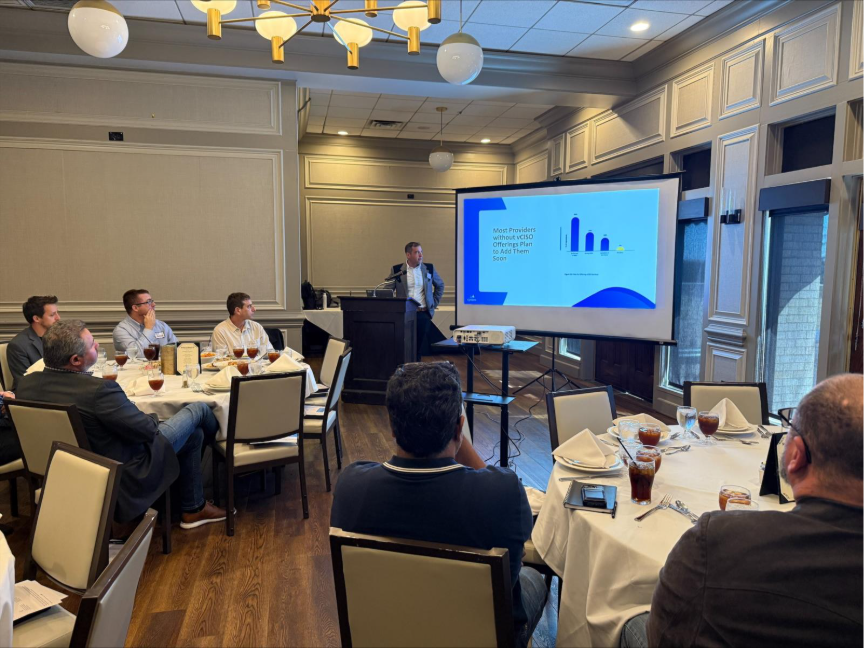
This past month, we had the pleasure of hosting our Cynomi Partner Meetups in Boston and Dallas, bringing together current and prospective partners. These events provided a valuable forum for in-person collaboration, knowledge sharing, and strategic discussions on how MSPs and MSSPs are evolving their delivery of cybersecurity and compliance services.
The conversations were energetic and authentic, focusing on the dynamic cybersecurity landscape and how Cynomi continues to help partners translate technical security work into clear, measurable business impact for their clients.
What stood out the most was the enthusiasm and collaboration in every room. In both cities, partners openly shared their experiences, discussing challenges and celebrating wins. These conversations sparked new ideas and fostered connections that will extend well beyond the meetups themselves.
These moments reinforce why we invest so deeply in partner enablement and engagement. When we come together, we create an environment where shared knowledge and strategic alignment move the entire ecosystem forward. It’s through this collective effort that we can more effectively address the security challenges facing businesses today.
Building the Future of Cybersecurity, Together
To every partner who joined us in Boston and Dallas, thank you. Your insights, energy, and dedication to partnership are what drive us forward. Your feedback is invaluable as we continue to refine our platform and program to meet your needs.
We’re excited for what lies ahead and are committed to building the future of cybersecurity services together. Stay on the lookout for more Cynomi Partner Meetups coming in 2026. We look forward to seeing you there as we continue to grow and succeed together.
The Department of Defense’s final CMMC 2.0 rule is here, and it is changing the cybersecurity landscape across the Defense Industrial Base (DIB). Beginning November 10, 2025, CMMC Level 2 requirements will start appearing in new contracts, making compliance an essential part of doing business with the DoD. According to DoD guidance and related commentary, the rollout is structured in four phases as follows:
Phase
Deadline
Requirement
Phase 1
November 10, 2025
Where applicable, all solicitations will require a Level 1 or Level 2 self-certification.
Phase 2
November 10, 2026
In addition to Phase 1 requirements, the DoD will begin to designate when Level 2 C3PAO certification will be required to be awarded a contract.
Phase 3
November 10, 2027
The DoD will continue Phase 1 and Phase 2 implementations and begin to implement Level 3 requirements.
Phase 4
November 10, 2028
This represents full implementation of the CMMC 2.0 program. All DoD contracts, solicitations, and option periods will be assigned a CMMC 2.0 program level, and all contractors will have to be fully compliant with the requirements associated with that level.
If you work with defense contractors or suppliers, your clients are already asking what this means for them and looking to you for answers. This is your opportunity to step in as a trusted advisor, helping them not only meet CMMC 2.0 expectations but do so efficiently, consistently, and at scale.
That’s why Cynomi developed enhanced CMMC Level 2 capabilities designed specifically to help MSPs deliver compliance outcomes faster and more confidently.
The Opportunity Behind the Challenge
CMMC Level 2 aligns directly with NIST SP 800-171, requiring 110 cybersecurity controls to protect Controlled Unclassified Information (CUI). Depending on the contract, organizations may need to complete a self-assessment or obtain a third-party certification (C3PAO).
For many MSPs, the complexity of mapping, documenting, and tracking these controls across multiple clients can feel overwhelming. Without a clear, standardized way to show progress or generate required documentation, even onboarding a new client pursuing DoD work can become a challenge.
With Cynomi’s new CMMC L2 features, you can eliminate that friction. The platform now automatically calculates your clients’ SPRS scores, generates POA&M and partial SSP reports in the correct formats, and gives you a single view of where each client stands on their compliance journey. You can spend less time building documents manually and more time helping your clients strengthen their security posture and win contracts.
Turning Complexity into Clarity
At the heart of Cynomi’s CMMC L2 enhancements is automation, which saves time and adds confidence:
The new SPRS score automation uses the official DoD scoring method, starting from 110 points and deducting for each unmet control under NIST SP 800-171. You can see the score visualized on-screen and also download a breakdown of how it is calculated, and when it hits 88 points, you know your client has reached the minimum readiness threshold to begin a CMMC audit.
The Plan of Action & Milestones (POA&M) report automatically turns every open gap or partially implemented control into a structured, CMMC-compliant plan, complete with owners, milestones, and target dates. What used to take hours of manual work now happens instantly, and in the format DoD assessors expect.
The System Security Plan (SSP) Control Implementation report summarizes how each control is being addressed, with supporting evidence notes. You can hand this report to a client or auditor and be assured that it tells a complete, consistent story about where things stand.
Helping You Serve Clients Better
The new CMMC L2 features are about more than compliance. They are about helping you grow. With the right automation and visibility, you can confidently take on new defense clients and deliver compliance-as-a-service in a way that is scalable and repeatable.
You will be able to onboard CMMC-focused clients faster, streamline assessments, and prove value early by showing measurable progress. The platform helps you keep clients engaged with continuous updates on their posture, not just a snapshot once a year.
For your business, that means stronger relationships, more recurring revenue, and a real competitive advantage in a sector where readiness is now a contract requirement.
The Road Ahead
Cynomi’s CMMC Level 2 capabilities go live on November 6, 2025, in time for the DoD’s rollout. Now is the time to prepare your clients and your business for the new standard and opportunities it brings.
CMMC 2.0 is not just another compliance mandate. It represents a shift in how cybersecurity maturity is measured and rewarded. With Cynomi, you have everything you need to help your clients meet the standard, stay ahead of audits, and grow your business in the process.
Ready to simplify CMMC 2.0 readiness for your clients?
Still Using Spreadsheets to Manage Cyber Risk? That’s Your First Risk
Spreadsheets may seem like a convenient way to manage cybersecurity and compliance, but for MSPs and MSSPs, they can quickly become a liability. Relying on manual tools introduces delays, increases the likelihood of errors, and makes it nearly impossible to deliver consistent, scalable results.
As client expectations grow, so does the burden of manually updating frameworks, tracking tasks, and preparing reports. What begins as a flexible approach quickly turns into an operational bottleneck that adds more risk than it reduces.
The real issue is that spreadsheets limit your ability to grow. Even with a small client base, manual processes slow down onboarding, reduce consistency, and add overhead from the start.
That’s where cybersecurity and compliance management platforms, such as Cynomi, come in. Built for MSPs, Cynomi replaces spreadsheets with automation, structure, and scalability. This blog examines the hidden costs and risks associated with spreadsheets and how Cynomi enables MSPs to scale securely, consistently, and confidently.
The Hidden Costs of Spreadsheets: Setup, Re-orientation, and Reporting
Managing cybersecurity through spreadsheets may seem straightforward and familiar, but the manual effort involved adds complexity, creates inefficiencies, and increases risk.
Manual Setup and Onboarding
Onboarding each new client requires manually setting up their unique spreadsheet. Whether you start from scratch or duplicate an existing version, each setup requires time, customization, and attention that doesn’t scale.
Time-intensive onboarding: MSPs must manually enter client data, map frameworks, and tailor assessments for each engagement.
Inconsistent starting points: Without a guided structure, each setup can look slightly different, leading to long-term inconsistency and missed requirements.
Scales poorly: What works for three clients can become unmanageable for ten or more.
Context Switching (Re-orientation)
Client spreadsheets are uniquely structured, often containing a mix of frameworks like NIST or CIS, risk assessments, remediation tasks, status updates, and meeting notes. This disparate design involves constant reorientation when switching focus between different clients.
Memory gap: It can be difficult to recall what was prioritized, why certain decisions were made, or what changes occurred, especially when there are days or weeks between sessions.
Manual recalculation: Before each meeting, MSPs must locate and review relevant sections, confirm task statuses, and reassess decisions based on current posture or new vulnerabilities.
Time drain: Reorienting can take 15–20 minutes per client. Across a growing client base, that overhead becomes a significant drain on productivity.
Lack of Standardization Across Clients
Manually built spreadsheets vary widely in structure, naming, and detail. This inconsistency makes it difficult to apply a uniform process across clients, limiting scalability and increasing the risk of oversight.
No uniformity: Clients with similar risks may receive different recommendations based solely on how their data is structured.
No determinism: Even with identical goals, outcomes vary depending on how each file tracks information. For example, one client gets MFA implemented as a top priority, while another with the same exposure doesn’t, simply because it wasn’t reflected in their spreadsheet the same way.
Manual Reporting and Communication
Manual spreadsheet-based reporting consumes time and prevents efficient, repeatable communication. For every engagement, MSPs must extract data, build charts, and format summaries by hand, often starting from scratch or heavily modifying previous reports.
Manual visualization: Charts, summaries, and dashboards are built manually and customized for each client.
Limited repeatability: While templates can be reused initially, each client’s unique risk profile requires manual customization.
Lack of automation: Spreadsheets don’t dynamically update when tasks are completed or frameworks evolve. There’s no centralized dashboard to instantly generate reports or apply changes across clients.
Inconsistent output: Reporting differs across clients, leading to inconsistent formatting and presentation, which makes it challenging to demonstrate clear, ongoing value.
These hidden costs don’t just waste time, they introduce real risk.
The Service Provider’s Guide to Automating Cybersecurity and Compliance Management
The Hidden Risks of Spreadsheets: Inconsistency, Error, and Eroded Trust
While many MSPs recognize that manual processes are time-consuming, they often overlook the significant security risks associated with managing cybersecurity using spreadsheets. Relying on manual inputs, disconnected files, and memory-based processes widens the margin for error. Small oversights can lead to compliance gaps, outdated assessments, or a loss of client confidence.
These risks include:
1. Increased Risk of Human Error and Security Oversight
Manual processes significantly increase the risk of overlooking critical updates or making decisions based on outdated information, especially under time pressure.
Missed updates: New vulnerabilities or framework changes may not be reflected in a timely manner, leading to outdated or incomplete roadmaps.
Context loss: Without proper reorientation, it’s easy to reference incorrect or outdated information during client meetings.
Compounding errors: Small data mistakes accumulate over time and can lead to misalignments in the roadmap, compliance failures, and a loss of credibility.
Risk: Decisions are made based on inaccurate assumptions rather than real-time insights, resulting in outdated recommendations, compliance gaps, and unaddressed exposures.
2. Inconsistent Execution Across Clients
Client environments change at different rates, and without a consistent process, those changes can be tracked differently in each spreadsheet. This makes it difficult to deliver a standardized approach or compare progress across clients.
Inconsistent priorities: Two clients with identical exposures may receive different recommendations, depending on how information was tracked or updated.
Lack of repeatability: Each analyst follows a different approach, resulting in varied outcomes and workflows.
Risk: Inconsistent tracking and execution lead to different levels of cybersecurity readiness across clients, varying service quality, and no reliable way to benchmark or measure progress.
3. Errors Under Time Pressure
Managing multiple clients and back-to-back meetings leaves little time to properly prepare for each client interaction.
Last-minute prep: Incomplete notes or outdated spreadsheets can lead to confusion in real time.
Incorrect recommendations: Missing context can cause roadmap missteps or priority errors that ripple into future planning.
Risk: Missteps during client interactions undermine professionalism, delay progress, and erode trust.
4. Diminished Client Trust and Perceived Value
Dense spreadsheets and inconsistent manual reports rarely inspire confidence. Clients want clarity with concise visuals, clear metrics, and visible progress. Spreadsheets often fail to deliver that.
Inconsistent reporting: Each spreadsheet has its own format and style, making it difficult to produce clear, uniform reports.
Limited transparency: Clients can’t easily see what’s been done or what’s next, weakening engagement and confidence.
Risk: Reduced client trust, diminished perceived value, and increased risk of churn when clients can’t clearly see progress or results.
Overcoming Hesitancy: Advice for MSPs Still Using Spreadsheets
For many MSPs, spreadsheets feel safe, familiar, customizable, and “good enough.” But what once worked for a handful of clients can quickly become a bottleneck as your business grows.
As Dror Hevlin, CISO at Cynomi, says: “If you’re managing cybersecurity through spreadsheets, you’re already accepting unnecessary risk. Automation isn’t about replacing your expertise, it’s about amplifying it.”
If you’re wondering whether it’s time to move beyond spreadsheets, here are some clear signs you’ve reached that point:
You spend more time managing spreadsheets than managing cyber risk. You’re stuck updating cells, mapping frameworks, and formatting reports, instead of focusing on client strategy and risk reduction.
You worry about missing updates or misaligning strategies between clients. You’re constantly scrambling to keep up with evolving frameworks, shifting threats, and client-specific changes, and it’s easy to lose track.
You’ve hit a ceiling on how many clients you can support effectively. You’re stretched thin, juggling too many spreadsheets, switching between formats, and spending more time managing files than supporting clients.
Your client reporting is inconsistent, unclear, and time-consuming. You’re rebuilding reports from scratch for every client, producing different formats and levels of detail each time, which makes it challenging to consistently show progress or value.
If spreadsheets are limiting your ability to scale, stay aligned with evolving requirements, or demonstrate value to clients, it’s time to upgrade your tools.
Why MSPs Choose Cynomi to Replace Spreadsheets
Cynomi is a cybersecurity and compliance management platform created to eliminate the pain of spreadsheets. Purpose-built for MSPs, it automates, standardizes, and scales cybersecurity management, without sacrificing quality or control.
Quick, painless onboarding: Get started in hours, not weeks. Cynomi accelerates onboarding with automated, interactive, and guided assessments tailored to each client’s industry and size. It then automatically maps responses to standard frameworks and generates prioritized remediation plans.
Cynomi accelerates onboarding with automated, interactive, and guided assessments tailored to each client’s industry and size. It then automatically maps responses to standard frameworks and generates prioritized remediation plans.
Time-saving re-orientation: A centralized dashboard shows exactly where each client stands: what’s been done, what’s next, and what’s changed. You’re always ready for the next client interaction, with no need to reorient before every meeting.
Standardized and guided workflows: Cynomi applies standardized workflows, ensuring consistent decisions and prioritization no matter how many clients you serve.
Real-time task and framework updates: When compliance frameworks evolve or new threats emerge, Cynomi instantly updates relevant tasks across all clients, keeping your guidance current and aligned.
Unified measurement and scalability: Cynomi provides a consistent cybersecurity posture metric across your client base, making it easy to track progress, benchmark improvements, and demonstrate value over time.
Scales with you: Whether you’re managing three clients or 30, Cynomi keeps your workflows consistent, efficient, and ready to grow, without adding complexity.
The Case for Moving Beyond Spreadsheets
Spreadsheets might help you start, but they can’t help you scale. What once felt flexible and manageable now creates complexity, inconsistency, and unnecessary risk. The more clients you serve, the more those hidden costs and errors compound, slowing growth, draining time, and eroding trust.
Modern cybersecurity services demand structure, accuracy, and scalability, i.e. capabilities that spreadsheets were never designed to deliver. Automated vCISO platforms like Cynomi replace manual effort with built-in intelligence, standardized workflows, and real-time visibility across all your clients.
With Cynomi, MSPs and MSSPs can focus on what matters most: delivering consistent, high-quality cybersecurity and compliance services that build trust, drive growth, and strengthen every client’s security posture.
Schedule a demoto learn how Cynomi can help you scale your cybersecurity and compliance services without spreadsheets.