For many security service providers, delivering excellent security program management is only half the battle. The other half is proving the value of that work to executive leadership. When cybersecurity value is framed purely in terms of technical activity, it rarely resonates with business leaders.
Clients care about outcomes. They want to know how their investments protect revenue, reduce risk, maintain compliance, and support business continuity. Without a clear connection between security efforts and these priorities, MSPs face stalled growth, price pressure, and disengaged clients. Even the most capable teams find themselves constantly justifying their work instead of expanding their influence.
To help service providers bridge this gap, we created the Proving Value Kit. As the second module in the Cynomi GTM Academy, this comprehensive resource library provides the tools, templates, and insights necessary to shift the conversation and position your firm as a strategic partner.
Inside the Proving Value Kit
The Proving Value Kit equips you with the actionable resources needed to deliver security guidance with confidence and consistency. We built these materials to help you standardize your approach across every client, at every maturity level.
Downloadable guides and frameworks
Translating Security into Proven Business Value guide: A practical guide to align security with business goals and show clear ROI.
Proving Cybersecurity Value with Cynomi guide: A focused guide to using the Security Growth Platform to demonstrate progress, business impact, and ROI.
Actionable templates and calculators
QBR template: Run more strategic client reviews with a clear structure for risk, metrics, and next steps.
Client case study template: Capture security wins in a simple, outcome-focused format.
Client testimonial request email: Request client feedback and endorsements with a ready-to-use draft.
Remediation roadmap workbook: Map security improvements into clear, phased action plans. Check out the companion blog for how to use it.
ROI calculator workbook: Link client risk to financial impact and support stronger ROI conversations. Check out the companion blog for how to use it.
Quick-reference cheat sheets
Executive reporting cheat sheet: Standardize reporting around business goals and security progress.
Cybersecurity business translation sheet: Turn security terms into clear business language for stronger decisions.
Learn From Industry Experts
Alongside the written assets, the Proving Value Kit features a robust video series. We sat down with industry leaders to capture their proven playbooks for communicating value, navigating tough client conversations, and running effective strategic reviews.
Nett Lynch
Nett Lynch delivers a masterclass in differentiation and building successful client relationships based on trust and strategic alignment. Her sessions highlight:
Differentiation, AI trends, and why authenticity wins in a crowded market.
Proving value to prospective clients and winning new logos without racing to the bottom on price.
The four pillars of an effective vCISO and what separates a genuine cyber advisor from a simple tool reseller.
Matt Schiavetta
Matt Schiavetta explores how top sellers prove value from initial discovery all the way to account expansion. His sessions cover:
Proving value that actually lands with executives.
Navigating buyer indecision and knowing exactly when to walk away from a bad fit.
Executing QBRs, account expansion, and multi-threading the right way.
Avoiding the top mistakes sellers make that weaken value conversations.
Tim Coach and Jack Thompson
Tim Coach and Jack Thompson break down the dynamics of the initial sale and ongoing risk management. Their interviews detail:
The buyer and seller perspectives on value, highlighting what buyers actually want and what sellers frequently get wrong.
Best practices for making a first contact that earns a meaningful response.
Techniques for natural transitions from small talk to serious business dialogue.
Strategies for navigating budget cycles, proofs of concept, and playing the long game.
Turn Security Expertise Into a Competitive Advantage
Stop justifying your work and start expanding your influence. The Proving Value Kit provides the wisdom and direction required to help your partners reach their growth destinations. By utilizing these assets, your team will communicate clearly in business language, provide steady direction during reviews, and showcase how your security program management enables revenue growth.
You already have the technical expertise. Now, equip your team with the tools to translate that success into a strategic business advantage.
The managed security services market is projected to grow from $38.31 billion in 2025 to $69.16 billion by 20301, and cybersecurity remains the fastest-growing segment of MSP services2. However, many providers are leaving significant revenue on the table because their go-to-market strategy doesn’t connect with how business leaders make decisions.
Technical teams focus on frameworks and vulnerabilities, while business decision-makers invest in outcomes: risk reduction, successful compliance audits, and business continuity. When sales and marketing messaging fails to bridge that gap, prospects see cybersecurity as a cost center rather than a strategic priority, and deals stall.
The structural challenges compound the problem. 77% of MSPs cite a lack of client urgency as a major sales challenge3, while 66% of SMBs identify cost as their top obstacle to adopting stronger security4. Buying decisions now involve multiple stakeholders across functions, including executives, finance, IT, and operational leaders, making alignment and clarity essential to every deal.
The providers winning in this market have built the go-to-market discipline that matches the quality of their service delivery. Consistent execution across selling, pricing, packaging, and marketing is what converts rising market demand into scalable revenue.
Introducing the Go-to-Market Academy
MSP growth starts with go-to-market excellence. That’s why we created the Cynomi Go-to-Market (GTM) Academy, an enablement program designed to help MSPs and MSSPs bring cybersecurity services to market and build profitable revenue streams.
The GTM Academy focuses on the practical side of selling, proving value, packaging, pricing, and marketing security services. It delivers operator-led training through modular kits covering the entire go-to-market lifecycle, drawing on experience from Cynomi’s leadership, trusted partners, and seasoned industry veterans. Each module is built to give you something you can use right away.
Inside the kits, you’ll find:
Guides and playbooks to provide quick-reference content that sharpens your knowledge
On-demand workshops to deliver in-depth strategies from industry leaders
Video series to feature short, tactical sessions covering the full go-to-market cycle
Hands-on tools and templates to streamline your processes and put strategies into immediate practice
Every resource reflects how experienced MSP operators actually think and sell, so the learning curve is short and the impact is immediate.
The GTM Academy Sales Kit
The first module we’ve released, The Complete Sales Kit, provides the foundation for confidently selling cybersecurity and compliance services. It helps your team close more deals and build a repeatable sales engine by covering every critical stage of the sales lifecycle.
The Sales Kit spans guides, cheat sheets, templates, worksheets, and training videos organized around five core areas:
Client targeting and engagement: Define your ideal client profile with the ICP Strategic Framework and leverage scripts and email templates to position cybersecurity as a growth driver.
Revenue growth and relationship-building: Use the Upselling and Cross-Selling Guide and Getting to YES: The Anti-Sales Guide to expand existing accounts and strengthen client trust.
Objection handling and deal qualification: Overcome common objections and prioritize your highest-value deals with cheat sheets and scoring worksheets focused on business impact and ROI.
Sales process and pipeline optimization: Assess and improve your qualification discipline and pipeline health to build a predictable, scalable revenue engine.
Sales leadership: Build a high-performing team with practical guidance on hiring, compensation, CRM best practices, and communication.
When your team works from a shared set of tools and frameworks, execution becomes more consistent across every rep, call, and deal. Sales cycles shorten, objection handling improves, and new team members ramp faster because the playbook exists. The Complete Sales Kit gives you that foundation, built by cybersecurity leaders and experienced GTM practitioners who’ve applied these frameworks in the field.
Go From Vendor to Strategic Advisor
Refining your go-to-market strategy impacts more than your win rate. When your messaging aligns with actual business outcomes, client relationships shift, and you become the advisor guiding their strategy rather than the vendor pitching another tool. The GTM Academy’s frameworks give you a clear way to articulate the financial and reputational risks of inaction, helping clients make faster, better-informed decisions.
The practices that win deals are the same ones that ensure clients adopt the protections they actually need. Your growth and their security move together.
Join the Academy and Download the Sales Kit
Cybersecurity growth doesn’t happen by accident. Building a profitable, scalable practice requires a deliberate approach to how you package, price, and sell your services.
Download the GTM Academy Sales Kit to put proven sales strategies into immediate action. With a systematic sales motion, winning more deals becomes a matter of process and predictability, not luck.
——-
[1] Fortune Business Insights. (2024). Cyber security managed services market size, share & industry analysis. [2] Channel Futures. (2024). Cybersecurity dominates the 2024 MSP 501. [3] Infrascale. (2025). MSPs selling more cybersecurity: Statistics and trends in the U.S. [4] CrowdStrike. (2025). SMB cybersecurity study.
Share
Voices of Leadership: The Women Shaping the Future of Cyber Advisory
Women’s History Month is an opportunity to recognize the leaders shaping industries through innovation, resilience, and vision. In cybersecurity, that leadership is especially critical.
While women represent 22% of the global cybersecurity workforce (according to ISC2), parity remains elusive, especially at senior levels. However, a powerful wave of women leaders is driving transformation in cyber advisory, setting new standards for expertise, advocacy, and impact.
For Women’s History Month, we are spotlighting five Cynomi partners and industry leaders who are at the forefront of this transformation. They understand that cybersecurity is a business discipline, and their insights offer a roadmap for technical excellence, strategic vision, and inclusive leadership.
Shannan De Witt, Founder, Flex Consulting
Bridging Operations and Security Architecture
Shannan De Witt is the founder of FLEX Consulting, where she serves as a strategic advisor and global security lead. She manages complex digital transformations and security roadmaps for international enterprises, handling budgets exceeding $950 million. Her work focuses on bridging the gap between business operations and elite security architecture. She specializes in NIST, CMMC transitions, global identity and access management integrations, audit assurance, and the automation of governance, risk, and compliance.
De Witt provides executive-level guidance to C-suite leadership and boards of directors, using a hands-on approach to ensure large-scale AI and SaaS platform rollouts maintain strict adherence to regulatory standards.
Strategic advice for navigating a complex landscape
With over 20 years of experience leading global SaaS, cybersecurity, and AI transformations, De Witt has watched the industry evolve from technical gatekeeping to strategic business enablement. Her approach relies on a core set of principles:
Master the intersection: True leadership happens where AI governance and global data governance meet core security.
The multi-framework mindset: Compliance is about building strategic ROI roadmaps across various compliance and regulatory frameworks, rather than just checking boxes.
Forensic rigor: Lead with a data-driven approach, leveraging forensic investigations to establish authority in high-stakes environments.
Continuous excellence: Elite credentials represent the gold standard for GRC expertise.
Operational vision: Focus on the strategic reasoning to drive initiatives that move the business forward.
Beyond the data center, De Witt’s background coaching football and serving as a firefighter and paramedic taught her that technical skill requires seamless teamwork. She brings that high-pressure, collaborative approach to cybersecurity, knowing that the strength of any crisis response depends on team unity.
When it comes to women in leadership, De Witt emphasized, “While we’ve made incredible strides, we must continue pushing for progress in mentorship pipelines and representation for women in cybersecurity, infrastructure, and AI.”
Ann Westerheim, Founder & President, Ekaru
Strengthening the Foundation for Small Businesses
Ann Westerheim is the founder and president of Ekaru, a technology consulting firm focused on strengthening the technology foundation and cybersecurity posture of small businesses. She helps organizations build the resilience they need to operate securely and efficiently.
Stepping into high-impact roles
Westerheim sees cybersecurity as one of the most interesting and high-impact careers in technology, offering far more opportunity than available talent. However, she notes a persistent gap in representation.
When attending technical sessions at industry conferences, Westerheim observes that the rooms remain overwhelmingly male. She advocates for more women to step into both technical and leadership roles, emphasizing that cybersecurity is a field where dedicated professionals can make a tangible difference for their clients and their communities.
Donna Gallaher, President & CEO, New Oceans Enterprises, LLC
Translating Cyber Risk into Business Impact
Donna Gallaher is the president and CEO of New Oceans Enterprises, a cybersecurity consulting firm specializing in data privacy and AI governance programs. Her firm provides fractional CISO services to organizations across healthcare, financial services, manufacturing, retail, energy, and education. She helps clients across healthcare, financial services, manufacturing, retail, energy, and education industries translate complex cyber and privacy risks into direct business impacts, empowering executives to make informed, strategic security decisions.
Leading with business acumen
Gallaher advises women entering cybersecurity leadership to focus on the broader business context. Cybersecurity is ultimately a business risk discipline, and leaders who rise quickly are those who speak the language of the boardroom.
She encourages emerging leaders not to feel intimidated if they aren’t deeply technical in every area. Leadership centers on enabling others to achieve their goals. Gallaher emphasizes the importance of rejecting self-doubt and ignoring critics who focus on perceived shortcomings. “Don’t let anyone use your self-doubt against you, because that tactic only works if you allow it,” she said. “Nobody is an expert at everything, including those who may criticize you.”
Instead, she recommends finding partners and collaborators who complement your strengths, building each other up, and never mistaking a knowledge gap for a leadership gap.
Nett Lynch, CISO, Kraft & Kennedy
Driving Strategy and Building Team Culture
Nett Lynch serves as the CISO at Kraft Kennedy, a technology consulting firm dedicated to the legal industry. She leads the firm’s cybersecurity strategy, compliance programs, and client advisory work. She also leads Legion, their left-of-boom cybersecurity advising division built for MSP partnerships. For Lynch, building a strong team culture is an operational priority equal to the security work itself.
Moving from mentorship to sponsorship
Having worked in the field for 30 years, Lynch has seen significant shifts. Early in her career, women in the C-suite (let alone the CISO seat) were the exception, not the rule. Today, she sees more women leading security programs, driving compliance frameworks, and earning seats at the executive table. However, she notes that progress does not mean the work is finished.
Lynch identifies a critical need to close the gap in sponsorship, not just mentorship. Women need advocates who will actively put their names behind new opportunities, rather than just offering guidance.
“There isn’t just one seat at the table for women in cybersecurity, and we have to act like it,” said Lynch.
She stresses that inclusion is not a zero-sum game. True progress requires men to act as genuine allies and women to actively champion one another and create space. That cultural shift, more than any single policy, is where she believes our next real progress lives.
Paige Goss, Founder & CEO, Point Solutions Security
Putting People First in Security Solutions
Paige Goss is the founder and CEO of Point Solutions Security. She focuses on building a company that prioritizes people, supporting both her clients and her internal team. Her role centers on growing the business, strengthening relationships, and ensuring that delivered security solutions genuinely protect and support the humans behind the mission.
Embracing vulnerability and continuous learning
Goss advises women stepping into leadership roles to lead with confidence, curiosity, and a willingness to stay uncomfortable. The cybersecurity industry changes rapidly, and successful leaders are those who continuously learn, push their own boundaries, and step into spaces where they may not feel fully ready.
She views vulnerability as a leadership strength. Being open about what you do not know, asking targeted questions, and surrounding yourself with people who challenge you will make you better and stronger over time.
“Cybersecurity is about far more than technology. At its core, it is about protecting people, organizations, and communities. When you stay grounded in that mission and lead with authenticity, your impact will go much further than you think,” said Goss.
Moving Forward: The Next Steps for Industry Inclusion
The insights from these five leaders make one thing clear: technical expertise must be paired with business acumen, strategic vision, and a strong team culture to deliver real outcomes. To continue building a robust cybersecurity workforce, the industry must move beyond passive mentorship.
We need active sponsorship, clear pathways to leadership, and a commitment to championing diverse voices at every maturity level. By creating space for women to lead, collaborate, and innovate, we build a future that is more secure, resilient, and ready for whatever challenges come next.
If you know a cybersecurity advisory leader who is making a significant impact on the industry and delivering exceptional results for their clients, we encourage you to recognize their contributions. Nominate them for our Cyber Advisory Excellence Awards today.
Share
The MSSP’s Edge: Scaling Security Services with AI and Automation
The divide between the legacy service provider and the modern MSSP has widened into a canyon. For years, the industry was suffocated by the spreadsheet death spiral, a manual grind of exhaustive on-site visits, rows of compliance checkboxes, and a reactive posture that never quite kept pace with threats. During that time, the “heavy lift” of manual assessments made scaling nearly impossible.
It’s safe to say that the spreadsheet era is officially over. Today, the roles of the MSP and MSSP have shifted from basic IT and security maintenance providers to high-level strategic partners. In an environment where state-level threats have trickled down to the mid-market, the differentiator isn’t just what you know, but how effectively you automate that knowledge.
In a recent webinar with The Hacker News, titled “The MSSP’s Edge in 2026,” we explored this transformation with industry experts. Chad Robinson, CISO at Secure Cyber Defense, and David Primor, CEO at Cynomi, shared how automated CISO intelligence and AI enable providers to deliver expert security guidance at scale, regardless of client size or maturity.
If you missed the session, don’t worry. We’ve distilled the key takeaways into this blog to help you prepare your business for the future of security management.
From “Excel Hell” to Exponential Scale: A Partner Story
In the current market, speed is a competitive weapon. Robinson of Secure Cyber Defense shared a candid look at his firm’s journey before adopting a Security Growth Platform that leverages AI and automation. Like many advisory practices, their process was heavily manual.
“Before, everything was manual,” Robinson explained. “We were coming in with spreadsheets, we were coming in with forms, and we were really guiding a client through a risk assessment… it was a heavy lift.”
This approach created bottlenecks. Senior staff had to be involved in every step of the discovery process, asking clients questions they often didn’t understand. It was difficult to scale advisory services because the human capital required was too high.
Standardizing discovery and delivery
One of the most powerful applications of AI is automating the heavy lifting of assessments.
When you automate the initial discovery phase, like generating policies, identifying risks, and mapping gaps to compliance frameworks, you free up your senior staff to provide strategic advice.
As David highlighted, “We understand that every company needs some subset of these things.” By using AI to assess a client’s specific maturity level, MSPs can tailor their services instantly. You can offer a “lighter” advisory service for a smaller client who just needs a risk baseline, or a full-suite GRC package for a critical infrastructure client needing rigorous compliance management.
By integrating Cynomi, Secure Cyber Defense standardized its discovery process. Instead of interrogating clients about complex technical controls they might not understand, the team could use the platform to pose simple, targeted questions about access or generative AI usage.
This shift allowed them to:
Reduce manual work: Automating the initial assessment phase saves hours of consulting time per client.
Tier services: Structuring advisory services into clear tiers offers self-driven programs for smaller clients and fully guided options for larger ones.
Speed up sales cycles: Achieving a 3Xfaster deal closing time by showing prospects their own data in a live demo, rather than a static proposal.
According to Robinson, “They can see the value right away because as soon as you complete that first onboarding assessment… you see the task list being built out… and they feel good about that.”
This creates a critical psychological shift. The client experiences immediate relief as they see a path toward their security posture score going up. By moving from custom manual work to a standardized automated engine, you move the prospect from uncertainty to a signed contract in record time.
Cracking the code on critical infrastructure
One of the most compelling use cases shared was Secure Cyber Defense’s expansion into critical infrastructure. Following the passing of Ohio House Bill 96, which mandates cybersecurity compliance for government entities accepting public funds, local governments and utilities found themselves scrambling.
Many of these organizations, particularly in water and wastewater management, operate on infrastructure that is decades old. They lack the internal security mindset or skill set to navigate complex frameworks like NIST or CIS.
Using Cynomi, Robinson’s team was able to pivot from serving small businesses to helping critical infrastructure providers align with state mandates. The platform allowed them to translate complex regulatory requirements into actionable tasks, enabling local governments to see exactly where they stood and how to improve.
Practical AI and Automation: Beyond the Hype
While “AI” is often thrown around as a buzzword, its practical application in security program management is specific and measurable. It’s about embedding CISO Intelligence into the platform so that any team member can deliver expert guidance.
Empowering the entire team
A major challenge for MSSPs is the talent shortage. There simply aren’t enough senior security practitioners to go around.
Automation changes the labor equation. With high-level security knowledge embedded into the platform, MSSPs can assign junior staff to handle data collection, report generation, and basic remediation tasks. This frees up senior advisory leaders to focus on high-level strategy and client relationships.
“We empower junior staff to provide expert-level service,” Robinson noted, highlighting how the platform guides the team through the necessary steps for compliance and risk analysis.
The webinar highlighted how real-time dashboards transform this dynamic. Instead of a static PDF that becomes obsolete the moment it’s printed, clients can see their risk score improve in real-time as tasks are completed.
“You see that in real time,” Robinson said. “That’s something tangible that people can take away… like, ‘Hey, we’re making progress,’ versus ‘Yeah, I got through 25 more rows in my spreadsheet.'”
The Future of Security Program Management
Looking toward the future, the role of AI in cybersecurity management is set to evolve from passive analysis to active participation.
David teased the upcoming shift toward agentic capabilities within the Cynomi platform. This moves beyond just reporting on risks to actually helping fix them.
The future of security management with Cynomi will involve:
Agent library: AI-driven agents that can execute tasks autonomously, further reducing the manual load on MSP teams.
Deeper integration: Open APIs that allow security data to flow seamlessly between ticketing systems (PSAs) and security tools, creating a unified ecosystem.
Service flexibility: The ability to offer lighter, entry-level security packages for clients who aren’t ready for full compliance engagements but need basic resilience.
Tactical Takeaways for MSPs and MSSPs
If you want to secure your competitive edge, here are the top takeaways to keep in mind:
Shift to automated workflows: Identify every manual step in your current risk assessment process. If you are still using spreadsheets to track compliance, you are behind. Transition to platforms that automate policy generation and risk mapping.
Tier your services: Don’t offer a one-size-fits-all cybersecurity package. Build different service levels based on client maturity, from basic cyber resilience for SMBs to full compliance management for regulated enterprises.
Focus on outcomes, not hours: Stop selling your time and start selling the result (e.g., “Compliance Readiness” vs. “10 hours of consulting”). AI helps you deliver that result faster, increasing your margins.
Embrace the “CISO Copilot”: Use AI tools to augment your team’s capabilities, allowing junior analysts to handle data collection while senior staff focus on strategy and client relationships.
Watch the Full Discussion
To hear the full conversation between Primor and Robinson, including a deep dive into how Secure Cyber Defense grew their advisory practice and a live look at the Cynomi platform, watch the webinar replay.
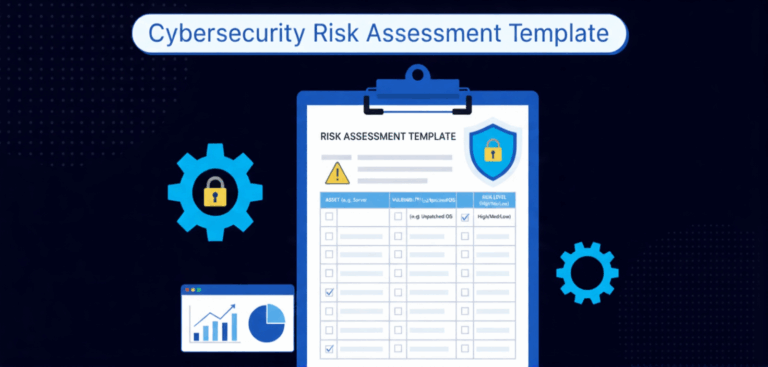
A cybersecurity risk assessment template is a structured, repeatable framework that guides organizations through identifying, analyzing, and prioritizing risks to their data, systems, and digital operations. Rather than starting from scratch or relying on scattered spreadsheets, it provides a consistent way to evaluate threats, document vulnerabilities, and determine how to best mitigate them.
Unlike traditional IT risk assessments, which tend to focus narrowly on technical systems, a cybersecurity risk assessment goes broader. It encompasses not only infrastructure and applications but also human factors, policies, and third-party dependencies – everything that can impact an organization’s security posture.
This article explores the core components of an effective cybersecurity risk assessment template and explains how to use it.
For MSPs and MSSPs managing multiple clients, manually assessing each environment from scratch is unsustainable. A cybersecurity risk assessment template brings structure and speed to this process, transforming complex evaluations into repeatable, scalable workflows.
The template provides a centralized, data-driven method to identify vulnerabilities, score risk levels, and define mitigation priorities. That consistency not only improves accuracy but also strengthens client trust. Every assessment looks professional, aligns with recognized frameworks, and clearly shows progress over time.
For service providers, this shift delivers tangible business outcomes:
Efficiency at scale – Reduce assessment time from days to hours by standardizing questions, scoring models, and report formats.
Faster onboarding – Apply a proven structure to new clients immediately, without re-creating documentation or workflows.
Clear, quantifiable results – Leverage uniform scoring and risk matrices to benchmark and track improvement.
Compliance readiness – Map findings directly to frameworks like NIST, ISO 27001, SOC 2, HIPAA, and CIS Controls, eliminating manual cross-referencing.
Client confidence – Deliver reports that highlight risk exposure and remediation progress in an easy-to-digest visual format.
Key Elements of an Effective Cyber Risk Assessment Template
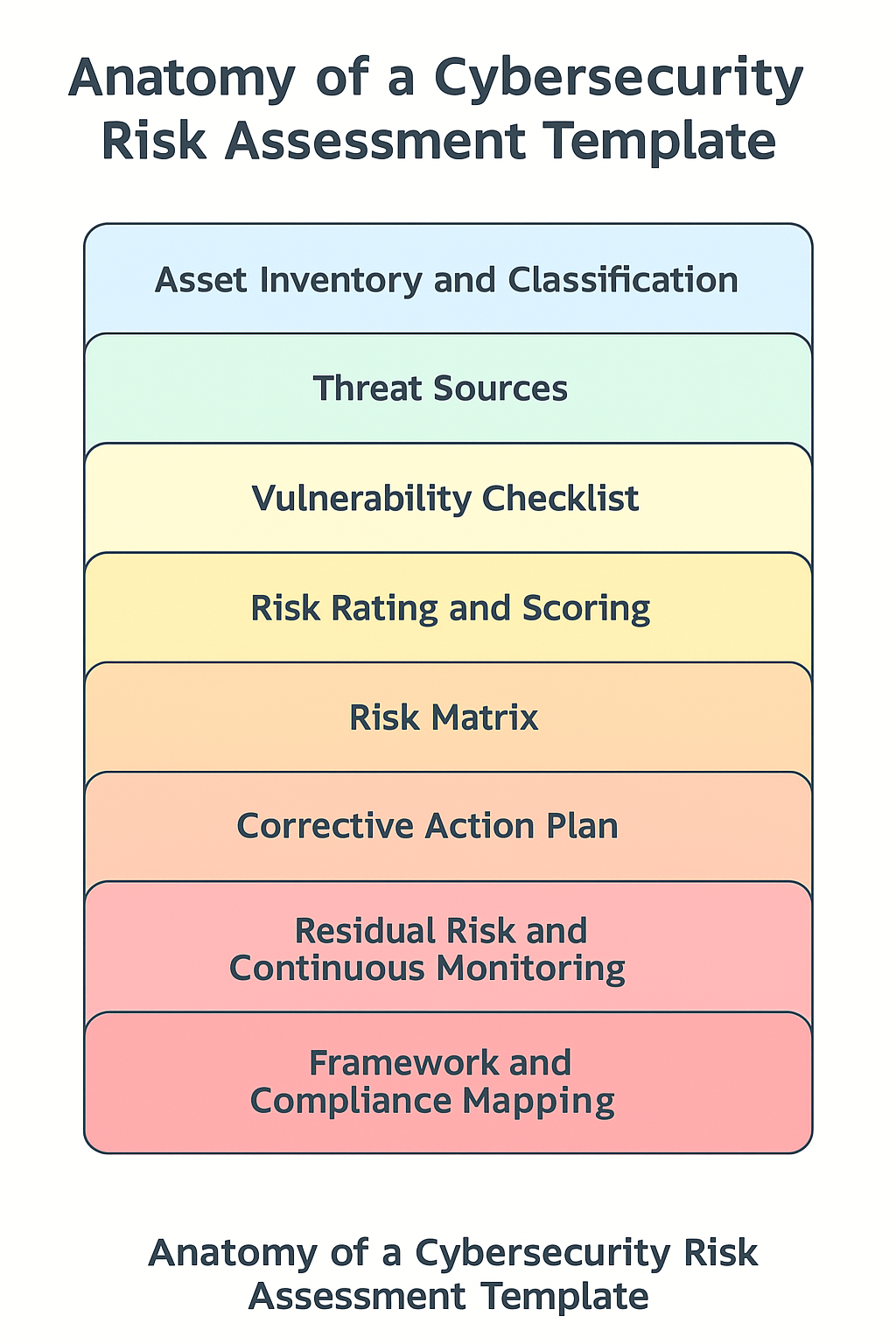
A strong cyber risk assessment template turns complex cybersecurity analysis into a clear, structured process. It ensures that every important element, from asset inventory to remediation, is captured in one consistent format. Download our full Risk Assessment Template.
Whether you’re an MSP performing assessments for multiple clients or an internal security team reviewing your own environment, these are the essential components every effective cybersecurity risk assessment template should include:
1. Asset Inventory and Classification
Every risk assessment starts with knowing what you’re protecting. This section lists all critical assets: data, devices, software applications, servers, networks, and even users. Including asset classification (e.g., critical, important, non-critical) helps prioritize resources and focus the rest of the assessment on what matters most.
2. Threat Sources
Identify the potential origins of attacks or incidents, both malicious (hackers, insiders, ransomware groups) and non-malicious (system failures, misconfigurations, human error). Mapping each threat to relevant assets provides context for later risk scoring.
3. Vulnerability Checklist
A practical cybersecurity risk assessment template includes a checklist of vulnerabilities, from outdated software and weak passwords to missing policies or misconfigured firewalls. This makes the evaluation consistent across clients and reduces human bias.
4. Risk Rating and Scoring
Once threats and vulnerabilities are linked to assets, each risk is rated by likelihood and impact. Many templates use a 1-5 scale or a qualitative matrix (e.g., low/medium/high). The resulting score quantifies the organization’s exposure and highlights areas requiring urgent attention.
5. Risk Matrix
Visualizing risk is key for communication. A color-coded matrix (often 5×5) maps each risk by likelihood and impact, helping stakeholders instantly grasp which issues pose the greatest danger. This matrix becomes a powerful discussion and reporting tool.
6. Corrective Action Plan
The goal of any cybersecurity risk assessment is to identify risks as well as address them. This section outlines the remediation strategy for each risk, including:
Recommended control or mitigation action
Assigned owner or responsible team
Timeline and priority level
Status tracking (planned, in progress, completed)
Using standard risk handling options: accept, mitigate, transfer, or avoid, keeps decision-making consistent.
7. Residual Risk and Continuous Monitoring
After controls are implemented, reassess the remaining risk to determine whether it’s now acceptable. Including this section helps demonstrate continuous improvement and compliance alignment over time.
8. Framework and Compliance Mapping
A valuable cybersecurity risk assessment example will include a mapping table that connects each identified risk to relevant regulatory or framework requirements. For example, linking “unencrypted backups” to NIST PR.DS-1 or ISO 27001 A.10.1.1 ensures assessments support compliance documentation and audit readiness.
Cybersecurity Risk Assessment Template Examples
There’s no single, universal cybersecurity risk assessment template that fits every organization or use case. While the basic structure: identifying assets, evaluating threats, and planning mitigation, remains consistent, templates differ in purpose, scope, and required detail depending on the frameworks and industries they’re built for.
The terminology, data fields, and evidence requirements vary between organizations focused on compliance readiness, technical defense, or vendor oversight. Understanding these differences helps you choose or adapt the right cybersecurity risk assessment template for your specific needs.
When selecting or designing your cybersecurity risk assessment template, consider these factors:
Your primary goals, such as compliance, technical protection, or third-party assurance
The frameworks you must align with (NIST, ISO, HIPAA, SOC 2)
The audience – whether it’s an internal IT team, auditors, or executive stakeholders
The desired frequency and scalability – from one-time engagements to continuous monitoring
Below are three common cybersecurity risk assessment template examples to demonstrate how templates can differ in structure and focus:
This type of cybersecurity risk assessment example is based on the NIST Cybersecurity Framework (CSF) and SP 800-30 guidelines, widely adopted across government and regulated industries. It emphasizes structured categorization and alignment with security controls, and works best for organizations that must demonstrate regulatory compliance and maintain traceable, auditable documentation.
In this case, the template typically includes:
Categorization of systems and assets by criticality and sensitivity
Mapping to NIST CSF functions: Identify, Protect, Detect, Respond, Recover
Control assessment fields tied to NIST 800-53 control families
Likelihood and impact scoring tied to defined impact levels (low, moderate, high)
Documentation of residual risk and corrective actions
Continuous monitoring and a periodic reassessment schedule
2. IT and Infrastructure Focused Risk Assessment Template
An IT-focused cyber risk assessment template zeroes in on technology assets: servers, endpoints, networks, and cloud environments. It’s a practical tool for internal IT teams or service providers who need to identify, track, and prioritize risks tied directly to the technical environment. It supports continuous technical risk management and helps MSPs/MSSPs quickly show clients where technology gaps exist and how they’re being addressed.
This template generally includes:
Asset and configuration inventories for hardware, software, and cloud services
Threat categories such as malware, configuration drift, access misuse, or data loss
Vulnerability tracking linked to patching status or scanner results
A business impact column to weigh downtime, data compromise, or service interruption
Control ownership and remediation tracking fields
Optional integration with asset discovery or vulnerability management tools
3. Compliance and Third-Party Focused Risk Assessment Template
Many organizations today must evaluate both internal risks and those stemming from their vendors, partners, or cloud providers. A compliance-oriented cybersecurity risk assessment extends the core template with sections designed to manage regulatory and third-party exposure. This type of assessment is often used by MSPs and MSSPs offering managed compliance or vendor risk services, where demonstrating due diligence is just as important as maintaining technical security.
This version often includes:
Framework mapping for SOC 2, ISO 27001, HIPAA, or PCI DSS controls
Fields for vendor name, data access level, and criticality tier
Questionnaires covering certifications, SLAs, and breach history
Risk rating scales specific to third-party performance and data protection
Mitigation tracking with shared responsibilities between internal and external stakeholders
Evidence attachments for audits and compliance reports
How to Get the Most from Using A Cybersecurity Risk Assessment Template
A cybersecurity risk assessment template is a framework for continuous improvement. To maximize its impact, it needs to become part of your regular cybersecurity workflow, not a one-off project. Here’s how to make it work in practice.
Integrate It Into Your Existing Processes
Don’t treat the template as a standalone document. Embed it within your onboarding, audit-readiness, or managed security review processes. For MSPs and MSSPs, using the same cyber risk assessment template across all clients ensures a consistent experience and comparable results.
Tailor It to Your Frameworks and Industries
Different industries face different compliance obligations. Customize the cybersecurity risk assessment template by aligning its controls and scoring fields with the frameworks most relevant to your clients. This simple adjustment ensures assessments directly support your compliance deliverables.
Use It as a Communication Tool
A well-structured cybersecurity risk assessment helps bridge the gap between technical and business stakeholders. Visual elements such as the risk matrix and scoring summaries make it easier to discuss priorities with executives and boards, turning technical findings into business-level insight.
Leverage It for Recurring Value
Rather than performing one assessment and archiving it, revisit and update the template regularly. Comparing results over time highlights trends, measures risk reduction, and proves the ROI of ongoing cybersecurity investments.
Automate Where Possible
Manual data entry slows everything down. Automating asset discovery, scoring, and reporting can reduce human error and accelerate results. Modern platforms like Cynomi take the same cybersecurity assessment template logic and digitize it, transforming a static spreadsheet into a dynamic, living system for continuous risk management.
By applying these practices, your cybersecurity risk assessment template becomes much more than documentation, evolving into a strategic mechanism for standardization, transparency, and growth.
How Cynomi Digitizes and Automates Cybersecurity Risk Assessment Templates
Completing a cybersecurity risk assessment template manually can take days, especially when managing multiple clients, tracking updates, and aligning results with frameworks like NIST or ISO 27001. Cynomi, built specifically for MSPs and MSSPs, transforms this process.
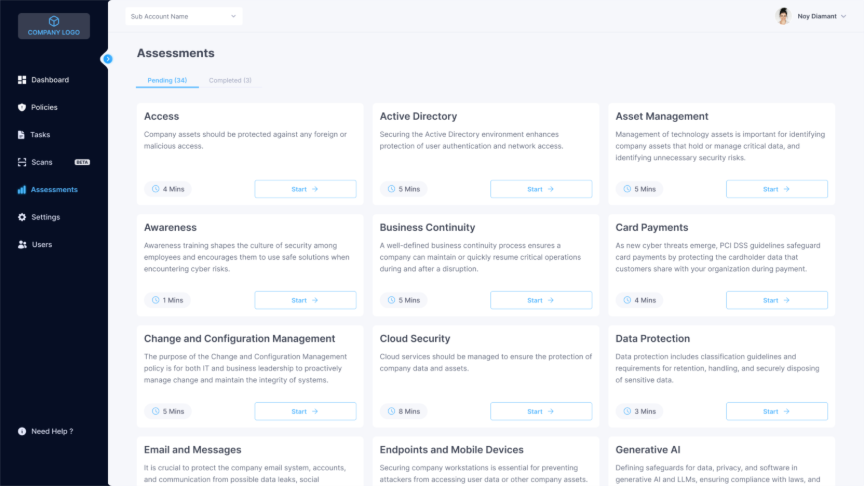
Cynomi’s vCISO platform automates and elevates every part of the traditional cyber security risk assessment template workflow. Instead of working through static spreadsheets, service providers use an intelligent, AI-powered platform that acts as a CISO Copilot, guiding users through assessments, scoring, reporting, and remediation planning, all within a single dashboard.
Here’s how Cynomi streamlines and enhances the process:
1. Automated Risk Identification and Scoring
Cynomi automatically analyzes client environments, assets, and configurations to identify potential risks. It applies built-in scoring models to instantly calculate likelihood and impact, generating dynamic heatmaps and dashboards, replacing the manual scoring tables found in most cyber risk assessment templates.
2. Built-In Framework Alignment
The platform is pre-mapped to leading frameworks, including ISO 27001, SOC 2, HIPAA, and CIS Controls. Each finding in the assessment is automatically tied to relevant control categories, ensuring compliance alignment without extra manual work.
3. Instant Remediation Planning
Once risks are identified, Cynomi generates an automated corrective action plan, prioritized by severity and impact. Each task includes guidance based on seasoned CISO knowledge, ensuring that even less experienced team members can deliver expert-level remediation recommendations.
4. Continuous Monitoring and Updates
Unlike static templates, Cynomi maintains a living risk register that evolves with each client environment. Changes in configurations, policies, or compliance requirements automatically trigger reassessments and updated risk scores, helping service providers deliver continuous visibility.
5. Multi-Client Management and Reporting
Through its multi-tenant architecture, Cynomi lets providers manage all client assessments in one place. Standardized dashboards, client-specific reports, and automated updates make it easy to scale without sacrificing quality or accuracy.
Most organizations should conduct a cybersecurity risk assessment at least once a year, or even more frequently if they experience major operational or infrastructure changes.
An IT risk assessment focuses primarily on technology systems: servers, endpoints, and network components. A cybersecurity risk assessment, by contrast, has a broader scope. It includes human behavior, policies, data governance, and third-party risks in addition to technical factors.
No single template fits every need. A healthcare provider aligning with HIPAA requires different evidence and controls than a SaaS company following SOC 2. The key is to start with a flexible cyber risk assessment template and customize it based on frameworks, data types, and compliance requirements.
A well-structured cybersecurity risk assessment template maps risks directly to framework controls such as NIST CSF, ISO 27001, HIPAA, or PCI DSS. This ensures every identified risk corresponds to a compliance requirement, simplifying audits and demonstrating ongoing due diligence.
For service providers, a standardized cybersecurity assessment template helps deliver consistent, measurable results across all clients.
Automation removes the manual burden of data entry, scoring, and reporting. With AI-powered tools like Cynomi, providers streamline workflows, reduce inconsistencies, and maintain continuous visibility into evolving risks. Automated scoring and framework mapping (NIST, ISO 27001, etc.) keep assessments current, helping MSPs and MSSPs serve more clients efficiently while maintaining expert-level quality.
Share
Turn Sec Ops Chaos into Clarity: How Cynomi Streamlines Service Delivery for MSPs
For MSPs and MSSPs, managing cybersecurity across multiple clients can feel like orchestrating chaos. Your team juggles dozens of tasks, from running risk assessments and tracking vulnerabilities to building client reports and planning remediation. These activities often happen in disconnected silos—a spreadsheet for compliance, a separate tool for ticketing, and manual processes for just about everything in between. This ad-hoc approach is inefficient and a direct threat to your scalability, profitability, and service quality.
When workflows are fragmented, crucial details get lost. Technical experts waste valuable hours on redundant data entry and manual report generation, pulling them away from strategic security work. This operational drag leads to inconsistent service delivery, a higher risk of human error, and an inability to provide clients with a clear, unified view of their security posture. The result is a constant state of reactive firefighting that prevents your MSP from growing effectively.
The solution is not to work harder. This article explains how a centralized platform like Cynomi transforms chaotic, manual processes into clear, repeatable, and automated workflows. We’ll explore how unifying assessments, remediation planning, and reporting creates a foundation for efficiency, accuracy, and superior client outcomes.
The Problem: The High Cost of Manual Processes
Before diving into the solution, it’s critical to understand the tangible business problems caused by manual, fragmented cybersecurity management. When your team operates without a unified system, you face several distinct challenges that can directly impact your bottom line and client satisfaction.
Operational Inefficiency: Security experts spend an inordinate amount of time toggling between different tools, manually correlating data, and building reports from scratch. This administrative burden limits their capacity and diverts their focus from high-value tasks like threat analysis and strategic planning.
Increased Risk of Error: Manual data entry and copy-pasting information between systems are recipes for mistakes. An incorrect vulnerability score, a missed compliance requirement, or an inaccurate client report can have serious consequences, eroding trust and potentially exposing clients to risk.
Inconsistent Service Delivery: Without a standardized process, the quality of service can vary significantly from one client to another, or even from one security professional to another. This lack of consistency makes it difficult to guarantee service levels and provide a uniform client experience.
Inability to Scale: Onboarding and managing new clients becomes a monumental, time-consuming effort. Each new client requires a manual setup across multiple platforms, creating a bottleneck that directly constrains your MSP’s growth potential.
These issues create a cycle of inefficiency that prevents you from building a mature, profitable cybersecurity practice. The only way to break this cycle is to implement a system that brings order to chaos.
1. Centralizing Assessments: The Foundation of Clarity
Every effective cybersecurity program begins with a clear understanding of risk. However, for many MSPs, conducting risk assessments is a cumbersome, manual process involving checklists, spreadsheets, and hours of analysis. This approach is not only slow but also subjective, making it difficult to produce consistent and actionable results.
Cynomi transforms this foundational step by automating the entire risk assessment process within a single, centralized platform. It moves you from subjective guesswork to objective, data-driven analysis.
How Cynomi Structures Assessments:
Automated Data Collection: The platform gathers information across a client’s environment to identify vulnerabilities, misconfigurations, and security gaps.
Standardized Frameworks: Assessments are benchmarked against established industry standards like NIST CSF, CIS Controls, and ISO 27001. This provides an objective measure of the client’s security posture and compliance status.
AI-Powered Analysis: Powered by AI and infused with CISO knowledge, Cynomi analyzes the collected data to prioritize risks based on their potential business impact. This ensures you and your client focus on what matters most.
By structuring assessments this way, Cynomi creates a single source of truth for each client’s risk profile. The output is no longer a static spreadsheet but a dynamic, prioritized list of findings that serves as the blueprint for all subsequent security activities.
2. Streamlining Remediation: From Plan to Action
Identifying risks is only half the battle. The next critical step is creating and executing a plan to fix them. In a disconnected environment, this process is often disjointed. Remediation tasks are tracked in separate ticketing systems, project management tools, or even via email, with no clear link back to the original risk assessment.
Cynomi bridges this gap by integrating remediation planning directly into the workflow. It acts as a CISO copilot, guiding you from risk identification to resolution within the same interface.
How Cynomi Structures Remediation:
Automated Remediation Plans: Based on the risk assessment findings, Cynomi automatically generates a detailed, prioritized remediation plan. Each task includes clear instructions and guidance, saving your team hours of planning.
Task Management and Tracking: The platform allows you to assign tasks, set deadlines, and monitor progress in real-time. This eliminates the need for external project management tools and ensures that no remediation task falls through the cracks.
Connecting Risks to Solutions: Cynomi enables you to map your MSP’s services directly to the remediation tasks. When the plan calls for implementing MFA, you can link it to your Identity and Access Management service. This creates a natural and seamless path for upselling and demonstrating how your offerings directly solve the client’s documented problems.
This integrated approach ensures a closed-loop process where every identified risk has a corresponding action plan, tracked to completion in a single, transparent system.
3. Automating Reporting: From Data Dumps to Value Demonstration
Reporting is where many MSPs stumble. Manually compiling data from multiple security tools into a client-friendly report is tedious and error-prone. The final product is often a static PDF filled with technical jargon that fails to communicate the value of your services to business leaders.
Cynomi revolutionizes this process by automating the creation of value-driven, executive-ready reports. It transforms reporting from a time-consuming chore into a powerful tool for building trust and proving your worth.
How Cynomi Streamlines Reporting:
Centralized Data Aggregation: The platform automatically pulls data from assessments, remediation progress, and compliance tracking into a unified dashboard.
Executive-Level Dashboards: Cynomi presents information through clear, visual dashboards that translate technical metrics into business context. Clients can see their risk score trending down, their compliance posture improving, and the ROI on their security investment.
On-Demand, Client-Ready Reports: With a few clicks, you can generate comprehensive reports that are professional, branded, and easy for non-technical stakeholders to understand. This eliminates hours of manual work and ensures consistency across all clients.
By structuring reporting this way, Cynomi empowers you to clearly and consistently demonstrate the impact of your work, solidifying your position as an indispensable strategic partner.
The Outcome: A Scalable, Profitable, and Mature Security Practice
By moving from chaos to clarity, MSPs can achieve profound business outcomes. Structuring your cybersecurity workflows with a centralized platform like Cynomi is not just an operational improvement; it’s a strategic transformation.
The benefits are clear:
Improved Efficiency: Automation and standardized workflows drastically reduce the manual labor required to manage client security, freeing up your team to focus on growth and strategic initiatives.
Enhanced Service Quality: Consistency and accuracy become the norm, ensuring every client receives the same high level of service.
Greater Profitability: Reduced operational overhead, combined with seamless upselling opportunities, directly improves your margins.
Effortless Scalability: A repeatable, efficient process for onboarding and management allows you to grow your client base without a proportional increase in headcount.
Cynomi’s Service Provider Growth Enablement Engine provides the essential framework to make this transition. It is the central hub that connects your people, processes, and technology, enabling you to deliver more effective cybersecurity services to more clients in a fraction of the time. Stop wrestling with fragmented tools and start building a structured, scalable security practice that drives both protection and profit.
Learn more about how Cynomi can help unify your efforts.
Share
The Hidden Cost of Disconnected Cybersecurity Workflows for MSPs
For many MSPs, the daily reality of managing cybersecurity is a constant struggle against fragmented, manual processes. Your team relies on a patchwork of disconnected tools: one for ticketing, another for risk assessments, spreadsheets for compliance tracking, and separate platforms for client reporting. Each tool operates in its own silo, forcing manual handoffs, redundant data entry, and a constant battle to maintain a source of truth. While this approach may seem manageable at first, it creates significant costs that can silently erode efficiency, profitability, and client trust.
This reliance on inconsistent, manual processes is an operational headache and a strategic liability. The time wasted toggling between screens, chasing down information, and manually compiling reports could be better spent on high-value activities like strategic advising and threat mitigation. Disconnected workflows can lead directly to missed SLAs, frustrated technicians performing constant rework, and revenue leakage that quietly eats away at your margins.
This blog uncovers the true, often-overlooked costs of disconnected cybersecurity workflows. We will break down how fragmented tools and manual handoffs directly impact your bottom line and why unifying your processes into a centralized hub is a strategic imperative for scalable growth and service excellence.
Key Takeaways
Disconnected cybersecurity workflows create hidden costs through inefficiency, errors, and missed opportunities.
Manual handoffs between siloed tools can delay SLAs and increase operational overhead, leading to client dissatisfaction.
Fragmented processes lead to significant revenue leakage due to unbilled work, project delays, and the inability to scale services effectively.
Adopting a unified, centralized platform is essential for MSPs to eliminate these costs, standardize service delivery, and position themselves for profitable growth.
1. The Domino Effect of Missed SLAs
Service Level Agreements are the bedrock of client trust. They formalize your commitment to performance, reliability, and responsiveness. Yet in a disconnected operational environment, consistently meeting those commitments becomes increasingly difficult.
When a security alert is triggered, the clock starts immediately. In theory, the process should be linear and well-orchestrated: detect, validate, remediate, and report. In practice, each step often lives in a different system. An alert may originate in a SIEM, while the corresponding incident is logged in a separate PSA platform. A security analyst assigned to the incident may need to reference a spreadsheet or document repository to understand the client’s compliance posture, then log into yet another tool to execute a remediation action or containment workflow.
Each manual handoff introduces friction and risk. Critical context is scattered across emails, chat threads, and ticket notes. Information is duplicated, outdated, or lost entirely. Without a centralized, real-time view of the incident, security operations teams struggle to track status, ownership, and progress with confidence.
The result is predictable: response times lengthen, remediation is delayed, and SLA thresholds are missed. While a single SLA breach may appear minor in isolation, repeated delays quickly undermine client confidence. Over time, these failures signal operational disorganization and a lack of control, prompting clients to question the service’s value and seek partners with more mature, reliable security operations.
How to Bridge the Gap
A centralized workflow automates the handoffs that cause these delays. When an alert is triggered, a unified platform can automatically create a ticket, populate it with all relevant client and asset information, assign it based on predefined rules, and track its progress through to resolution in one place. This not only ensures that SLAs are met consistently but also provides a complete, auditable trail for every action taken, reinforcing your value and professionalism.
2. The Unseen Tax of Rework and Inefficiency
How much time does your team spend on rework? The answer is likely far more than you think. In a siloed environment, inefficiency becomes the default state. Consider the manual effort involved in preparing a Quarterly Business Review (QBR) report. A service delivery lead might have to pull data from the RMM, the backup solution, the antivirus portal, and a vulnerability scanner. They then spend hours manually consolidating this data, formatting it, and attempting to create visuals that a non-technical executive can understand.
This process is not only incredibly time-consuming but also highly susceptible to human error. When the client spots an inconsistency, your team is forced to go back, find the error, and redo the entire report. This is the hidden tax of disconnected workflows: valuable engineering time is wasted on low-value administrative tasks and correcting preventable mistakes. This operational drag limits your team’s capacity, leading to burnout and preventing them from focusing on proactive, strategic initiatives that drive real security outcomes.
Reclaiming Lost Hours Through Centralization
A unified cybersecurity management platform eliminates this “manual tax.” Instead of pulling data from a dozen sources, your team can generate comprehensive, client-ready reports with a few clicks. The platform automatically aggregates data from various security domains, including risk assessments, compliance status, remediation progress, and more, and presents it in a clear, intuitive dashboard. This automation not only saves hundreds of hours per month but also ensures the data is always accurate and consistent. It frees your top talent from the drudgery of report-building and empowers them to act as true security advisors.
3. The Silent Drain of Revenue Leakage
Disconnected workflows don’t just cost you time. They cost you money. This revenue leakage happens in several subtle but significant ways.
First, there’s the issue of unbilled work. When processes are manual and tracked across multiple systems, it’s easy for ad-hoc tasks and small remediation efforts to fall through the cracks. A quick fix performed by a technician might never get logged as billable time, especially if it doesn’t fit neatly into an existing project ticket. Over time, these small, unbilled tasks accumulate into a substantial loss of revenue.
Second, inefficient processes directly impact your ability to scale. Onboarding a new client in a fragmented environment is a heavy lift, requiring manual setup across multiple tools. This slows down your time-to-value and limits the number of clients you can effectively manage without hiring more staff. Your growth becomes constrained not by market demand, but by your own operational bottlenecks.
An Operational Maturity Level (OML) review can help identify precisely where these bottlenecks exist within your processes. By conducting an in-depth analysis of your workflows, systems, and overall operations, an OML review highlights inefficiencies and areas for improvement. This structured evaluation pinpoints the root causes of the delays and provides actionable insights to streamline your operations, enabling your business to scale more effectively and profitably.
Finally, the inability to clearly demonstrate value hinders upselling and cross-selling opportunities. When your reporting is a messy collection of technical data points, it’s difficult to build a compelling business case for additional services. You can’t easily show a client how their risk score has improved over time or how your services have helped them achieve a specific compliance goal. Without this clear, data-driven narrative, your attempts to expand the engagement are based on persuasion rather than proof, making them far less likely to succeed.
Plugging the Leaks with a Unified Strategy
A centralized platform provides the structure needed to capture all billable activities and streamline client onboarding. By integrating with PSA tools, it ensures that every task, from assessment to remediation, is tracked and accounted for. This creates a source of truth for billing, eliminating revenue leakage from unlogged work.
Moreover, by standardizing workflows, you create a repeatable, efficient process for onboarding and managing clients. This operational efficiency is the key to scalable growth, allowing you to expand your client base without a proportional increase in headcount. Finally, the platform’s ability to generate value-centric reports gives you the powerful ROI evidence needed to justify your services and successfully upsell clients on the next stage of their security journey.
From Chaos to Control: The Strategic Imperative of Unification
Continuing to operate with disconnected workflows is a choice to accept inefficiency, risk, and margin erosion as the cost of doing business. It holds your MSP back, trapping your team in a cycle of reactive firefighting and administrative overhead. To break free and build a truly scalable and profitable security practice, you must move from a fragmented collection of tools to a unified command center.
Unifying your cybersecurity workflows is not just about finding a better tool; it’s a strategic shift that transforms how you deliver services. It replaces manual chaos with automated precision, siloed data with centralized intelligence, and hidden costs with transparent value. This move is an investment in efficiency, scalability, and the long-term health of your client relationships.
Cynomi’s vCISO platform was designed to be this central hub. It acts as a CISO Copilot, unifying risk assessments, policy management, compliance tracking, remediation planning, and client reporting into a single, cohesive workflow. By automating time-consuming tasks and providing a structured framework for service delivery, Cynomi empowers MSPs to eliminate the hidden costs of disconnected processes. You can finally stop wrestling with siloed tools and start focusing on what matters most: delivering exceptional cybersecurity services that protect your clients and drive your growth.
Share
How MSPs Can Win By Showing Value, Not Just Delivering Services
Many MSPs deliver strong cybersecurity services but still face challenges demonstrating their business value. Even with solid protection in place, clients often push back on pricing, delay renewals, or treat cybersecurity as a cost rather than a business enabler. The issue is not with the quality of service, but with how it is communicated, perceived, and linked to what clients care about most.
That’s why we created The MSPs Guide to Translating Security into a Proven Business Value. This guide shows MSPs how to shift the conversation away from technical tasks and toward measurable business outcomes. It outlines a practical framework to help you align with your clients’ goals, speak their language, and position your services as essential to growth, continuity, and compliance.
This blog highlights the key ideas from the guide to help you start moving beyond deliverables and toward demonstrable impact, so you can earn deeper trust, strengthen relationships, and grow your business.
Why Many MSPs Struggle to Demonstrate Value
The guide identifies fundamental disconnects that prevent MSPs from being appreciated for the full value they bring. Among them:
A limited understanding of the client’s business causes security services to feel detached from revenue or growth goals.
Metrics and reporting that remain stuck in technical language, such as vulnerability counts and alert volumes, rather than translating into business impact.
Weak communication and relationship practices leave clients uninformed or disengaged.
A reactive, defensive posture where the MSP is always explaining what’s been done rather than proactively showing where you’re taking the business.
Recognizing these challenges is the first step. The next step is taking action to address them.
Six Ways to Prove Cybersecurity Value
These six strategic moves help MSPs shift perception, elevate conversations, and prove cybersecurity’s value in terms that resonate with business leaders.
Align security to business goals The foundation is understanding how your client creates value. What drives their growth? What would threaten it? Asking smart business-focused questions at onboarding and periodically thereafter shifts the conversation.
Communicate in business language Instead of sharing “500 phishing attempts blocked,” you can frame it as “we prevented the potential loss of X% of revenue by stopping these attacks.” The goal is to talk in terms that executive leadership understands, such as risk, revenue, and uptime, rather than just firewalls and patches.
Report what matters, with metrics that show business impact Structured reporting should tell a clear business story. This includes one-page executive summaries, quarterly reviews for leadership, and detailed dashboards for technical teams. The right metrics focus on outcomes such as security posture scores, incident response times, improvements in business continuity, and trends in vendor risk. For a full in-depth breakdown of which reports to use and how to structure them effectively, download the guide.
Demonstrate financial impact This is where you take the business language and add numbers: “If we hadn’t acted, we estimate the company would have faced two days of downtime costing $40,000 in lost productivity and sales.” It includes practical models like the Return on Security Investment (ROSI) formula to help quantify the financial impact of cybersecurity efforts.
Conduct Strategic Business Reviews (SBRs) Rather than monthly technical status updates, hold quarterly or semi‑annual strategic sessions. Review business changes, risk exposures, and action plans, and tie them to business priorities, such as expansion plans, regulatory shifts, and product launches. Use the review to reinforce your role as a strategic advisor, not just a service vendor.
Tailor communication to each stakeholder Different stakeholders have different concerns. A CEO cares about cost, risk, and growth. A compliance officer cares about readiness and audit posture. A department head cares about continuity and productivity. Customize your message, format, and level of detail accordingly.
These six areas form the foundation of the transformation, shifting from reactive to embedded in business strategy. For more valuable insights and actionable guidance, download The MSPs Guide to Translating Security into a Proven Business Value.
How This Changes the Game for Your MSP Practice
If you adopt the approach outlined in the guide, you’ll open several new opportunities:
Stronger client relationships: When you demonstrate alignment with a client’s business priorities, you become a trusted advisor, not just the vendor who manages alerts.
Greater pricing power and retention: When value is clearly visible and tied to business outcomes, it’s easier to justify higher fees, closer renewal conversations, and expansion into adjacent services.
Better internal efficiency and clarity: When metrics, reporting, and stakeholder communications are standardized around business value, you reduce ambiguity and gain leverage in differentiation.
New service lines and upsell opportunities: When your client sees you as a partner in continuity and growth, you can introduce services such as vendor risk management, compliance readiness, and strategic risk advisory.
In short, security evolves from being seen as a technical necessity to becoming a strategic driver of business value and growth.
Why the Right Platform is Essential for Proving Value
While strategy is essential, tools and platforms are just as important to support this shift. Your MSP practice needs solutions that consolidate risk data, posture insights, reporting, and analysis into outputs that speak the language of business. The right platform turns raw metrics into executive-level summaries, tracks progress over time, and clearly demonstrates results.
Platforms that include features like posture scores, automated dashboards, and business-focused reporting help MSPs present their value in a tangible, consistent, and compelling way. Cynomi enables this by transforming complex cybersecurity data into clear, actionable insights that align with your clients’ business goals and showcase the true impact of your services.
From Technical Provider to Strategic Partner: The Time is Now
The market for cybersecurity services is evolving rapidly. Clients are less willing to accept “we blocked X attacks” as sufficient proof of value. They want strategic partners who help them manage risk, protect revenue streams, maintain compliance, and support business continuity.
If you’re still operating in a purely technical or reactive frame, you risk becoming commoditized, facing pricing pressure with limited renewal potential. To learn how to shift from vague service delivery to clearly demonstrated value, and from vendor to strategic partner, download The MSPs Guide to Translating Security into a Proven Business Value.
Share
The MSP’s Secret Weapon for Upselling Cybersecurity Services
For many MSPs, upselling cybersecurity services can feel like an uphill battle. You know your clients need more robust protection, yet convincing them to invest can be challenging. Business leaders often view cybersecurity as a cost center, not a business driver, making it difficult to communicate the value of services beyond basic antivirus and firewall management. This perceived value gap can leave even your best-intentioned upsell efforts falling flat, even when risks are real and urgent.
The barrier isn’t the quality of your services. Instead, it’s how effectively you demonstrate their relevance and impact. Pitching security solutions without a clear, data-informed context often fails to resonate, especially when clients or prospects don’t recognize or understand their actual exposure. To succeed, MSPs must shift from transactional selling to consultative advising. This transition elevates the security conversation from “buy more” to “achieve more.” Adopting this approach requires a different mindset. Rather than focusing on the transaction, it is important to inform, educate, and connect technical risks to business outcomes for every client.
This guide uncovers the MSP’s secret weapon for turning tough sales conversations into natural, high-value opportunities for growth. We’ll examine how modern MSPs can leverage structured risk assessments, executive value reporting, and a curated Solution Showcase—together forming a repeatable system that wins client trust, earns renewals, and fuels expansion.
Why Upselling Cybersecurity Services Can Be Difficult
The cybersecurity landscape is evolving faster than most businesses can keep up. Regulatory demands, ransomware, supply chain risk, and growing digital footprints mean that security is never “one and done.” Yet most SMB clients lack deep technical expertise and struggle to keep pace with threats, leaving them vulnerable to gaps they don’t fully understand.
From an MSP’s perspective, this creates a two-pronged challenge:
Communication: Explaining advanced cybersecurity concepts to non-technical stakeholders, while demonstrating tangible business value.
Positioning: Transitioning from an operational partner (who manages tickets and alerts) to a strategic advisor (who drives resilience and business outcomes).
Without mastering both, it is challenging to drive business growth. MSPs who address the value communication problem gain the position of trusted partners. They benefit from stronger, longer-lasting, and more profitable client relationships. The following three steps can help you move from product-centered selling to value-driven advisory.
1. Start with the “Why”
Data-Driven Risk Assessments
You can’t effectively sell a solution until the client fully understands the scope of the problem. Many business owners operate with a false sense of security, assuming their existing measures suffice. Your first step is to replace those assumptions with clear, objective data. A comprehensive, standards-based risk assessment can be an effective way to provide this clarity.
Why Assessments Matter:
A formal risk assessment moves the conversation from “what could happen” to “what’s happening right now.” Instead of simply warning clients about generic threats, you can use real evidence to show them where their specific vulnerabilities lie. Aligning these findings with frameworks such as NIST, ISO, or CIS not only establishes credibility but also resonates with any clients subject to regulatory or insurance scrutiny.
How This Supports Upsell:
Creates objective proof: Assessment findings, such as non-compliance with critical controls or overlooked vulnerabilities, provide undeniable proof of business risk and immediate needs.
Builds credibility: A professional, structured discovery demonstrates your methodology, showing that your recommendations are grounded in best practice.
Structures the roadmap: The output, typically a risk register or gap analysis, forms the backbone of an actionable remediation plan, paving the way for specific service upsells.
Example in Practice: An MSP recently worked with a mid-sized healthcare client using Cynomi’s automated risk assessment tool. The assessment didn’t just uncover gaps in endpoint protection; it produced a visual risk score and prioritized remediation plan mapped against HIPAA controls. Presenting these findings to leadership allowed for a focused conversation on urgency, scope, and business impact, leading directly to an upgrade in managed detection and ongoing compliance support.
Automate for Scale: Conducting regular assessments across multiple clients was once a manual, inconsistent process that often led to oversights. Platforms like Cynomi streamline each step of the process. With these tools, you can generate clear remediation plans within hours rather than weeks. This efficiency enables MSPs to scale the trusted advisor role across their entire book of business.
2. Consistently Prove Your Impact: Executive Value Reporting
Once a client invests in enhanced security, the story should continue. Without clear and consistent reporting on your progress, clients may question the value of their investment, which can erode trust and jeopardize future upselling opportunities. Traditional reporting methods, which are often filled with jargon and technical language, rarely connect with business audiences. Instead, focus on shifting from tactical “activity logs” to strategic, business-focused value reporting.
Challenges with Traditional Security Reporting:
Technical overload: Listing tickets addressed or threats blocked is meaningless to most executives.
No business context: Without linking actions to business value, like downtime and risk reduction, compliance progress, or insurance qualification, reports may go unread, and investments unrecognized.
Static PDFs: One-off, hard-to-digest deliverables do little to build credibility over time.
How Modern Reporting Fuels Upsell:
Demonstrates progress: Track and highlight improvement areas such as reduction in risk scores, improvement in compliance readiness, or remediation of critical findings, visualized in simple charts and trend lines.
Quantifies ROI: Show, for instance, how better security reduced audit effort, unlocked new market opportunities, or cut insurance premiums.
Drives strategic dialogue: Use reporting cycles (e.g., QBRs) to revisit evolving risks and map forward-looking service proposals, positioning yourself not just as a vendor, but as an embedded part of the client’s strategy.
Practical Example: After implementing a suite of protective controls, an MSP uses Cynomi’s reporting dashboard to show a client’s growing maturity over three quarters. Risk scores improved by 34%, the number of identified high-priority vulnerabilities dropped from 11 to 2, and regulatory gaps were closed. These results enabled the MSP to justify expanding monitoring services and deploying phishing simulation training. The opportunities emerged from data, not from assumptions.
3. Connect the Dots: The Solution Showcase
The final piece involves transforming assessment and reporting into clear business actions. After you identify risks and demonstrate progress, you need a cohesive, easy-to-understand system for presenting your upsell offerings. This is where the Solution Showcase comes in.
A Solution Showcase is more than a standard service catalog. It’s a curated, highly relevant set of recommendations, mapped directly to what matters most for your prospect: addressing their unique gaps and business goals. By aligning your recommended services with each identified risk or initiative, you make upselling intuitive and logical instead of pushy.
What Makes a Strong Solution Showcase?
Personalization: It surfaces only what’s relevant, tying service recommendations (e.g., managed detection, incident response, advanced compliance) directly to uncovered deficiencies.
Roadmap alignment: It forms part of a phased, multi-step program, not a laundry list of products. Clients can see how each investment fits a broader security journey.
Clear outcomes: Each proposed service is linked to an outcome, such as reducing regulatory exposure, lowering insurance costs, or closing third-party risk.
Scenario in action: An SMB prospect’s initial Cynomi assessment highlights a lack of employee security training, outdated endpoint controls, and unmonitored privileged accounts. Rather than offering generic “upsell” proposals, the MSP presents a Solution Showcase designed to directly address each issue. The showcase features 1) managed employee awareness training, 2) advanced EDR, and 3) privileged access management, all aimed at systematically closing those specific gaps. Projected impacts include fewer phishing incidents and improved audit scores.
Cynomi automates this process, making it easy for MSPs to quickly align findings with packaged solutions and articulate value in business terms. This enables your team to focus on advisory conversations rather than materials preparation.
Building a Repeatable, Scalable Engine for Upselling
Implementing this three-step framework, assessment, value reporting, and solution showcase, turns the upsell process into a strategic approach rather than a reactive one. By applying this model, you shift into the role of a business partner who actively guides client organizations up the cybersecurity maturity curve.
Steps to Operationalize This Approach
Standardize assessment: Use AI-powered tools like Cynomi to automate risk discovery and reporting, ensuring consistency and scalability.
Schedule strategic reviews: Establish quarterly or biannual business reviews that focus on risk trends, ROI, and evolving business priorities.
Curate solution showcases: Develop packaged offerings and success stories tied to client risk profiles and industry challenges.
Measure & refine: Regularly gather feedback from clients to refine how value is demonstrated and how services are packaged.
Key Benefits
Strengthens client trust and stickiness by proving value at every stage.
Opens up new revenue streams by surfacing real client pain points with data.
Frees up sales and technical resources by streamlining proposal and reporting workflows.
Turning Upselling from a Chore into a Strategy
Upselling cybersecurity services does not need to be a continual challenge. When you shift away from reactive sales tactics and apply a strategic, consultative framework, you can establish a repeatable process that delivers consistent growth.
The secret is using risk assessments, value-driven reporting, and a curated Solution Showcase in concert. This approach allows you to:
Educate clients on their unique risks with clear, objective data.
Demonstrate ongoing value with business-centric insights and reporting.
Guide them step-by-step to solutions aligned with real-world outcomes.
When you operationalize this model, you are no longer seen as just a basic service provider. Instead, you become a pivotal business partner. This shift deepens client trust, increases average contract value, and helps prevent churn. At the same time, your clients benefit from stronger and more resilient protection.
Cynomi’s vCISO platform is purpose-built to help MSPs activate this strategy at scale. It automates risk assessments, generates client-ready value reports, and aligns solution showcases directly with prioritized remediation plans. With Cynomi, you can confidently prove your worth, deliver demonstrable and differentiated value for every client, accelerate growth, and elevate your impact.
Share
Getting to Yes: Why MSPs Win More Deals When They Stop “Selling”
Most MSPs struggle to explain cybersecurity to prospects in a way that resonates. Too often, sales conversations stall because prospects are overwhelmed, skeptical, or tired of fear-based messaging. Many MSPs try to overcome that hesitation by pushing harder, which usually creates even more resistance.
This is the reason we created “Getting to Yes”: An Anti-Sales Guide for MSPs. It introduces a way to engage prospects that shifts the focus from persuasion to partnership. Instead of trying to secure a quick agreement, this approach helps MSPs build confidence, simplify decisions, and guide clients toward long-term security maturity through a consultative selling approach.
This blog walks through the guide’s core concepts to spark more productive, trust-centered conversations.
Why Traditional Cybersecurity Sales Strategies Don’t Work
Most SMBs care deeply about cybersecurity, and many consider it a top business priority. They’ve heard the statistics, seen the headlines, and understand what’s at stake. However, many remain uncertain about how it fits within their business, overwhelmed by the available options, and unsure of the criteria for evaluating providers. Others may be intimidated by cost or still hold the outdated notion that they are too small to be hacked.
To take it a step further, many of these hesitations are rooted in confusion, uncertainty, and fatigue from years of fear-based messaging. There is a significant gap in trust and understanding. When prospects are met with technical explanations they can’t understand, or if every provider appears indistinguishable to them, they tend to hesitate and delay their decision.
What prospects want is clarity:
How will this protect my business?
Will it boost revenue or prevent financial losses?
Can it minimize downtime and ensure continuous operations?
Your job as an MSP is to connect the dots between security tasks and business outcomes. And that starts with understanding why prospects object in the first place.
Below are five of the most common objections MSPs hear from prospects, and how to turn each one into an opportunity to educate and build trust.
Top 5 Cybersecurity Sales Objections
Every MSP has heard these concerns. The key is recognizing the real issue behind each one and reframing the conversation in a way that drives progress. For the full list of the top 10 objections and strategies to overcome them, download the complete “Getting to Yes” guide.
“It’s too expensive.”
“We’re already protected.”
“We’re too small to be a target.”
“It’s too complicated.”
“We don’t have time for this.”
Each objection opens the door to educate, clarify, and build trust.
The Trust‑First Framework
The trust-first framework is a practical model for turning prospect conversations into collaborative business discussions built on three core pillars.
1. Empathy: Seek to understand before advising Start by listening. Identify what the client values most, such as growth, uptime, reputation, or stability. Connect your recommendations to those priorities.
2. Education: Translate risk into business impact Use clear, value-focused language. Show how cybersecurity supports continuity, compliance, and long-term revenue without leaning on fear.
3. Evidence: Use proof to build confidence Strengthen credibility through client results, transparent reporting, and measurable progress.
With these pillars in place, MSPs can shift naturally into a partnership mindset during every sales conversation.
Turning Selling Into Partnership
The strongest MSPs guide sales conversations that feel like collaborative problem-solving. They do this by:
Asking discovery questions that shift the dialogue from technical issues to core business outcomes
Reframing objections such as “It’s too expensive,” “We’re too small,” or “We’re already compliant” into opportunities for joint exploration
Using structured tools like the Cyber Advisor’s First-Call Checklist to support clear, trust-focused discussions (the checklist is available inside the full “Getting to Yes” guide)
Making progress visible from the first interaction through clear goals, measurable milestones, and regular business reviews
When every client is approached as a partner rather than a prospect, the path to “yes” becomes far smoother and more predictable. For more in-depth tips and practical examples, download the complete Getting to Yes guide.
Proving the Partnership: Demonstrating Value and Differentiation
Once you reframe cybersecurity around business value, the next step is proving it. MSPs that win consistently are the ones that make their impact clear, measurable, and directly tied to client goals.
When cybersecurity is tied to business value, it becomes easier for prospects to say yes. The most effective MSPs highlight four key proof points: enterprise-grade protection without enterprise cost, security programs tailored to the client’s business and growth, simplified compliance and audit readiness, and enhanced financial resilience through stronger insurability. These pillars show that cybersecurity is a strategic business enabler.
To make this value tangible, leading MSPs focus on showing results rather than just promising them. They share relevant outcomes, set clear expectations, align services with trusted frameworks, and use dashboards to visualize progress. These tactics build credibility and trust while reinforcing the MSP’s role as a long-term partner. For a deeper look at how to apply these strategies, download the full Getting to Yes guide.
With a clear proof of value in place, the next challenge is maintaining consistency, ensuring that every client interaction reinforces trust, clarity, and measurable progress. This is where automation becomes essential.
Putting Trust Into Action with Automation
Automation can transform consistent trust-building into a scalable, repeatable process. The right platform helps MSPs streamline delivery and stay focused on high-value client engagement.
Automated platforms such as Cynomi help providers:
Accelerate discovery through quick assessments
Prove value instantly with posture dashboards and measurable progress reports
Identify upsell opportunities by uncovering gaps and emerging needs
Standardize delivery across accounts with repeatable, data-driven workflows
By combining automation with human expertise, MSPs gain the structure, visibility, and credibility to scale their cybersecurity practice and build lasting trust.
The Secret Was Never About Selling
Successful MSPs win by guiding with clarity and confidence. They act as trusted advisors, helping clients understand how risk affects their business and how effective security measures support growth.
They pair their expertise with automated tools that simplify assessments, visualize progress, and highlight value at every stage. By focusing on education, transparency, and measurable outcomes, they create conversations centered on resilience and long-term partnership.
The “Getting to Yes” Guide for MSPs provides a clear and practical roadmap for leveraging trust and automation as your most powerful growth driver.
The initial discovery process is a critical moment for any MSP. It’s your first opportunity to understand a prospect’s needs, demonstrate your expertise, and build the foundation for a long-term partnership based on trust and measurable business outcomes. Yet, this is precisely where many MSPs falter. A well-executed discovery accelerates deals and improves margins, setting the stage for a satisfied, loyal client. A poorly managed discovery, on the other hand, can drag on for weeks, burn senior analyst hours, and kill momentum.
The reality: many MSPs still treat discovery like a technical exercise or a one-off assessment. That approach may have worked a few years ago, but today, enterprise security buyers and SMB clients alike expect speed, proof, and business value from day one.
This blog post breaks down the most common mistakes and missed opportunities MSPs make during sales discovery and provides actionable guidance to build a faster, more efficient sales cycle.
Mistake #1: Failing to Qualify Prospects Effectively
One of the costliest mistakes in the MSP sales cycle is spending time on prospects who aren’t the right fit for your ideal client profile (ICP). In the rush to close deals, teams often skip key qualifiers: company size, compliance needs, budget, and long-term potential.
Engaging with misaligned prospects can clog your pipeline, extend sales cycles, and ultimately lead to poor experiences, higher churn, and reputational risks.
Refine your ICP and apply it early. Develop a short list of qualifying questions that confirm need, buy-in, and alignment, such as:
Does the prospect understand the business impact of a strong cybersecurity program?
Are they facing measurable risk or regulatory pressure that demands change?
Do they have executive sponsorship, budget, and internal buy-in?
Are they looking for a long-term partner or just a one-off fix?
Use CRM or lead-scoring tools to automate qualification and prioritize high-value opportunities.
Red Flags to Watch Out For When Qualifying Prospects
Identifying red (or yellow) flags during prospect qualification saves time and helps you focus on valuable leads.
⚠️ Red Flag
? What It Might Indicate
? How to Approach It
Price-only focus
The prospect may be comparing vendors mainly on cost.
Reframe the conversation around outcomes and risk reduction to see if they value strategic security.
No executive or budget owner
Initial discussions may be limited to IT staff without decision-making authority.
Ask about the decision process and who typically approves cybersecurity initiatives.
“Bad MSP breakup” story
The client may have had mismatched expectations with a previous provider.
Probe gently to understand root causes and clarify mutual expectations early.
No cyber insurance
The organization may have limited awareness of its exposure or regulatory obligations.
Use this as a teaching moment to discuss risk appetite and evolving requirements.
Resistance to standardization
The prospect may prefer ad-hoc solutions to structured processes.
Explore how flexible they are to adopting best-practice frameworks and explain why ongoing cybersecurity and compliance management matters.
Pro tip: When several of these red flags appear, pause and re-qualify. Engage with education and value framing, but don’t let enthusiasm override fit.
Mistake 2: Getting Too Technical Too Early
When you’re proud of your SOC, MDR platform, or GRC stack, it’s tempting to open discovery by talking technology. After all, demonstrating depth is part of building credibility. But it’s important to know your audience.
Most business decision-makers, such as CEOs, COOs, or CFOs, are focused on outcomes, risk management, and cost control. Beginning the conversation with deep technical details, acronyms, or jargon can quickly overwhelm non-technical stakeholders and disengage your audience from the true business value you aim to deliver. Remember, this is the qualifying and fit-assessment stage. The goal is to understand the prospect’s situation, identify pain points, and determine whether your services can solve them profitably.
Example scenario:
Consider a discovery call with a mid-market financial services firm. You immediately launch into technical specifics like patch management and SIEM tool outputs. The CFO, a key stakeholder responsible for budget approval, politely nods but quickly loses interest. The deal ultimately goes to a competitor who engaged the firm by discussing critical concerns such as regulatory pressures and the financial impact of a breach.
How to avoid it:
Lead with business outcomes, not acronyms. Use discovery to uncover what success looks like for the client:
Is your business about to go through any big changes? (M&A, org restructuring, market expansion, adopting new technologies, etc.)
What regulatory pressures does your organization face?
Who are your clients and prospects, and what contractual or procurement obligations must you fulfill to maintain or secure those business relationships?
What operational risks are most concerning to the leadership team?
What would be the financial and reputational impact of a security event?
Do you have cyber insurance, or have you considered investing in it?
How does cybersecurity support your growth and innovation as a business?
Once you’ve tied your services to their goals, the technology discussion becomes a logical next step, not a barrier.
This approach demonstrates that you understand their business context and are committed to delivering value aligned with their priorities. As the relationship develops, you can introduce technical context, but only after you have established relevance from a business perspective.
Pro tip: Customize your discovery questions for each stakeholder type. Prepare a “business-first” discovery script for your sales teams that guides them to focus first on business outcomes, pain points, and strategic objectives before moving on to technical discussions. This sets you apart as a strategic partner, not just another vendor.
Mistake 3: Using an Inconsistent Process Across Prospects
Inconsistent discovery processes create chaos as MSPs grow, add new staff, or expand into new sectors. When each account manager uses a different questionnaire, quality control may collapse.
Without a defined, repeatable framework, you spend precious time reinventing the wheel for each prospect turned client. That means longer ramp-ups, inconsistent deliverables, and slower onboarding. Training new hires becomes a challenge, as does demonstrating value to skeptical clients or regulators.
Example scenario: Two account managers handle discovery in completely different ways. One starts with in-depth interviews, and another relies on emailed questionnaires. As a result, some clients receive robust security recommendations, while others get generic advice. When asked by leadership for performance data, the MSP struggles to compare engagements or identify improvement areas.
How to avoid it: Implement a canonical discovery funnel—a repeatable, outcome-driven flow your team can execute every time. This doesn’t require a rigid, one-size-fits-all script. Instead, build a modular framework with required checkpoints, including questions to ask, data to collect, stages for internal review, and formats for presenting results.
Practical steps:
Develop a core checklist for initial discovery, tailored for your typical verticals (finance, healthcare, manufacturing). For MSPs, that could include:
Profiling the client (industry, size, regulatory drivers, tool sprawl)
Identifying business goals
Running a mini threat snapshot (automated EASM scan and heatmap)
Building a live ROI model (risk reduction + cost savings)
Train your staff to use and document this framework in every engagement.
Regularly review and refine the framework based on feedback from both clients and your teams.
In early discovery, MSPs should deliver just enough proof to build trust and urgency, not a full audit. A light EASM snapshot or risk assessment, your own compliance evidence, and a simple ROI model are sufficient to move the deal forward quickly. Deeper technical and compliance mapping should follow in the scoping or onboarding phase.
Pro tip: Schedule internal audits of discovery engagements every quarter to benchmark and analyze your average discovery-to-deal timeline. Identify bottlenecks and invest in targeted solutions, whether it’s more automation, additional staff training, or improved communication. Top-tier MSPs have cut enterprise sales cycles by modernizing discovery.
Mistake 4: Failing to Connect Discovery Findings to a Solution
Completing a thorough discovery is only half the battle. If your final deliverable is a report that lists issues but fails to map a clear path to resolution, your prospect can feel overwhelmed.
Example scenario: An MSP delivers an initial assessment highlighting dozens of vulnerabilities but concludes the report without actionable next steps or proposed services. The client’s leadership team struggles to prioritize remediation, hesitates in approving new security investments, and decides to postpone action, despite being convinced of the underlying risk.
How to avoid it: Start with the end in mind. Structure your discovery outputs as a prioritized action plan that clearly ties risk to the specific services, projects, or remediation activities you offer. This provides clarity and elevates your status to that of a trusted advisor who solves business challenges.
Practical steps:
Summarize findings in business terms, e.g., “Remediating these three vulnerabilities will support your upcoming PCI audit and reduce overall risk exposure by 40%.”
Connect every recommendation explicitly to your service capabilities—”Using our vCISO platform, we’ll continuously assess your cybersecurity posture, prioritize risks, and provide actionable recommendations to address critical threats.”
Provide phased options, where possible, to accommodate budget or resource limitations.
Pro tip: Always close discovery meetings by walking through a proposed roadmap and next steps. Use visual aids such as charts, risk heatmaps, and maturity curves to make the proposed path tangible. Invite feedback and discussion to ensure buy-in and empower the prospect to make an informed decision.
From Discovery to Strategic Execution
By systematically avoiding these common pitfalls and implementing a streamlined, automated, and standardized discovery process, MSPs can drastically reduce delays, consistently demonstrate business value, and move prospects through the buyer’s journey with credibility. The end result: shorter deal cycles, higher close rates, improved client satisfaction, and a scalable pathway for business growth.
How Cynomi Helps You Drive Growth
Cynomi empowers MSPs and MSSPs to not only strengthen client trust but also turn that trust into tangible revenue growth. By simplifying and enhancing key processes, Cynomi enables service providers to close deals faster, demonstrate measurable value, and unlock new revenue streams. Here’s how:
Faster Client Discovery and Deal Closures
Cynomi streamlines the client discovery process by automating tasks such as risk assessments, framework mapping, and remediation planning. This allows you to deliver tailored insights and recommendations to prospects within hours, demonstrating your expertise and building credibility from the very first interaction. Faster discovery leads to quicker decisions, enabling your team to close deals more efficiently. For example, SecureCyberDefense reduced client discovery time by 90% and achieved a threefold increase in deal closure speed using Cynomi.
Measurable Value from Day One
Cynomi equips you with tools to clearly prove your value to prospects and clients alike. By showcasing anonymized dashboards, posture score improvements, and sample reports, you can offer immediate visibility into the benefits of your services. Once clients are onboarded, these resources provide ongoing transparency into risk reduction, compliance advancements, and overall cybersecurity improvements, keeping clients engaged and satisfied.
According to Jim Ambrosini, Director of Cyber Advisory Services at CompassMSP, integrating Cynomi into client pitches was a “game-changer,” significantly reducing deal cycles and boosting client retention.
Unlock Upsell Opportunities
With Cynomi, upselling becomes a seamless process. The platform analyzes evolving client risk profiles and uncovers opportunities where additional services can meet their needs. By turning insights into actionable recommendations, you not only strengthen your relationship with existing clients but also increase their lifetime value. For instance, Burwood Group reported a 50% increase in upsell conversions by leveraging Cynomi’s capability to align insights with strategic client needs.
Scalable, Profitable Service Delivery
Cynomi allows you to scale profitable, high-value offerings by automating CISO-level intelligence and streamlining workflows. This makes it easier to deliver strategic solutions like vCISO services, risk management, and compliance management efficiently and consistently. By standardizing these services, your business can attract new clients, expand recurring revenue, and achieve scalable growth—all while reinforcing your role as a trusted advisory partner. Companies like VISO have experienced 54% revenue growth by incorporating Cynomi into their service model.
Cynomi transforms the sales process into a growth engine, combining speed, transparency, and scalability to help you forge deeper client relationships and drive sustainable revenue growth.
Share
The ROI Challenge: How Successful Security Leaders Prove Cybersecurity Value
For many MSPs and MSSPs, delivering strong cybersecurity outcomes is only half the battle. The other half is proving the business value of those outcomes in ways that resonate with clients’ executives and boards. Blocking threats, patching vulnerabilities, and monitoring systems may indicate technical excellence, but executives and boards care about impact and how these actions translate into revenue preservation, operational resilience, and sustained performance.
Security leaders frequently face this disconnect: You know your clients’ programs are advancing, yet the business doesn’t always see (or understand) the progress. Without a clear, data-driven narrative, even meaningful achievements can go unnoticed. When the value isn’t visible, cybersecurity is too easily viewed as a cost center.
This blog shares practical ways security leaders can quantify and communicate the business impact of cybersecurity. By connecting technical outcomes to financial and operational results, you can demonstrate measurable progress, build executive trust, and position your organization as a strategic partner in resilience and growth.
The Communication Gap: Why Even Good Security Can Go Unnoticed
It’s not that MSPs aren’t doing meaningful work. It’s that the message often misses the mark.
Business stakeholders think differently
Security teams talk in technical metrics: number of threats blocked, vulnerabilities addressed, hours of monitoring. But executives, finance leaders, and business owners are tuned to business outcomes: cost savings, revenue preservation, operational uptime, reputational resilience. When the message is too technical, the connection to what drives decisions and budget can be lost in translation.
Progress isn’t always visible until you make it visible
Strong cybersecurity programs deliver continuous improvements: reduced exposure, better detection times, smoother compliance cycles, and higher resilience. But unless these advancements are clearly communicated, they may remain abstract. Clients and stakeholders need to see that the business is safer, more efficient, and better prepared than before, not just told that systems are “secure.”
Show tangible progress
Instead of reporting on isolated events or avoided incidents, frame your work as measurable, ongoing progress. Show the journey: how your efforts strengthen security posture month over month and tie directly to business priorities such as uptime, compliance, and cost efficiency.
Key takeaway: The real opportunity isn’t to explain what didn’t happen. It’s to clearly demonstrate how your actions are moving the business forward.
Shift the Mindset: From Security Metrics to Business Outcomes
If you want to prove value, you must shift the conversation.
Translate what you do into what the business cares about
Security Metric
Business Translation
Example Outcome
% of critical vulnerabilities patched
Reduced breach exposure and remediation cost
“We reduced your potential incident cost by $1.2M.”
Phishing click rate
Lower risk of business disruption and remediation
“Your team is 90% less likely to trigger a breach through phishing.”
Hours of downtime prevented
Revenue preserved, customer trust maintained
“You saved ~$500K in uninterrupted sales hours.”
Speak the language of leadership
Security leaders must become translators, taking technical outcomes and reframing them as risk reduction, cost avoidance, operational efficiency, and business enablement. Stop leading with “We blocked 12,000 malware attempts.” Start with: “Our continuous protection prevented operational disruptions and unnecessary recovery costs, saving clients an average of $500K annually while maintaining 99% service uptime and consistent business operations.”
Focus on progress, not just snapshots
Rather than just delivering a monthly report, craft a narrative of where you started, where you are now, and where you’re headed. Progress builds trust and reinforces that your service is not static. It continues to evolve with the threat and business landscape.
Structured Approach to Quantify Cybersecurity Value
Here are practical ways MSPs can quantify and communicate cybersecurity value for both current clients and prospective ones evaluating your services.
Calculate Return on Security Investment
Even if you can’t claim exact numbers, frameworks like Return on Security Investment (ROSI) provide useful structure:
For instance, if you estimate a firewall prevented $200K in losses annually and your investment is $50K, ROSI = 3 (meaning $3 saved for every $1 spent).
However, ROSI is just one model. In new-business conversations, where hard client data may not yet exist, MSPs can lean on complementary frameworks that emphasize strategic and operational ROI rather than pure cost avoidance.
Alternative Frameworks to ROSI
FAIR Model (Factor Analysis of Information Risk)
FAIR is an industry-recognized quantitative risk assessment model used to evaluate cybersecurity in financial terms. It helps translate technical risk into business-relevant monetary values, answering: “How much risk are we reducing, and what’s it worth?”
Practical application:
For new business, use FAIR modeling to estimate potential risk reduction and demonstrate financial impact even before engagement.
For current clients, use FAIR to show measurable progress over time by comparing previous and current risk exposures in financial terms.
FAIR helps communicate how cybersecurity improvements directly reduce financial exposure, validate business decisions, and exhibit measurable ROI.
Example in context: “Using FAIR-based modeling, we estimate that reducing ransomware likelihood by just 10% could prevent roughly $1.5M in annual potential losses for an organization of your size.”
Total Economic Impact (TEI) Model
Popularized by Forrester, TEI evaluates cybersecurity investments through four pillars of value: 1. Cost (savings from avoided breaches, downtime, or inefficiencies) 2. Benefit (new revenue opportunities, faster compliance readiness) 3. Flexibility (improved team productivity and streamlined processes) 4. Risk (reduced probability of loss events)
Practical application:
For new business, use TEI to demonstrate both financial and strategic value, helping decision-makers understand how cybersecurity investments drive growth.
For current clients, use it to quantify total business impact, combining cost savings, performance gains, and reduced risk over time.
TEI is ideal for executive briefings and renewals, where you need to show comprehensive ROI and alignment with business outcomes.
Example in context: “Based on a TEI approach, similar clients saw a 35% reduction in security incident costs and a 20% faster time-to-compliance, improving their ability to win regulated industry contracts.”
Risk Reduction ROI (RROI)
RROI measures the percentage of risk reduction achieved relative to investment, a simple, custom metric to express risk reduction relative to investment and define your scoring method and assumptions up front.
For new business, use RROI to visualize projected improvements in risk posture and establish early expectations for measurable impact.
For current clients, track RROI to demonstrate how continued investment delivers compounding reductions in risk exposure and ongoing ROI.
RROI works well in visual dashboards and executive summaries that highlight measurable progress and business-aligned outcomes.
Example in context: “By closing the top five critical vulnerabilities identified in your initial assessment, you could reduce your overall cyber risk exposure by 40%, a 4x return on your current prevention spend.”
How to Use These Frameworks in New Business Conversations
When speaking to prospects, your goal is to paint a picture of predictable, data-backed outcomes rather than hypothetical threats.
Model potential impact: Use frameworks like FAIR or RROI to estimate likely outcomes based on industry benchmarks and company size.
Show maturity maps: Share anonymized before/after risk posture graphs from existing clients to illustrate tangible results.
Highlight industry relevance: Align your examples with vertical pain points, such as compliance ROI for healthcare, uptime assurance for manufacturing, or insurance savings for finance.
Lead with transparency: Offer clear visibility into how you measure success from day one to establish trust early.
Position value early: Frame your service as a measurable business enabler, not a technical expense. This helps decision-makers see ROI potential even before they sign.
How to Use These Frameworks for Current Clients
For existing clients, the goal shifts from potential value to demonstrated value and progress over time. Use ROI frameworks to reinforce outcomes, validate strategic direction, and set the stage for renewal or expansion.
Show progress trends: Use ROSI or RROI to visualize how risk exposure and cost savings have improved quarter over quarter.
Tie outcomes to business goals: Map progress to initiatives like faster compliance, reduced downtime, or improved audit readiness.
Incorporate benchmarks: Compare the client’s performance to industry standards to highlight competitive advantage.
Quantify long-term benefits: Show recurring value from automation, process efficiency, and security maturity improvements.
Support renewal conversations: Turn framework data into executive summaries that emphasize ROI and readiness for next-phase initiatives.
Bringing It All Together: Turning Metrics Into a Story
Numbers are important, but they don’t live in isolation. Security leaders and their clients connect when numbers are backed by stories that feel relevant.
Use a narrative structure: Past → Present → Future
Where we were — Baseline: e.g., “High risk exposure due to limited visibility into vulnerabilities and inconsistent employee awareness training.”
Where we are now — Current state: e.g., “Risk exposure reduced by 45%, compliance readiness achieved across key frameworks, and employee security awareness scores improved by 70%.”
Where we’re going — Roadmap: e.g., “Next 12 months: further automate risk reporting, expand MDR coverage, and align with ISO 27001 for competitive advantage.”
Relate to business consequences
Example: “When you reduce your phishing click rate from 24% to 4%, you can reduce the likelihood of a business-interrupting incident, preserving an estimated $700K in revenue annually and protecting your brand during peak sales cycles.”
Provide executive-ready visuals
Simple dashboards with high-level metrics and color codes (green / yellow / red).
Trend-line graphs of risk score improvement over time.
Roadmap milestones tied to business strategic goals (market expansion, M&A, compliance).
And most importantly: avoid overwhelming your audience with “800 threats blocked” type detail. Focus on what it means for revenue, uptime, and reputation.
How Cynomi Helps MSPs and Their Clients Demonstrate Value
At Cynomi, we understand the challenge of translating security work into measurable, meaningful business outcomes. Our vCISO platform is designed with the security leader’s narrative in mind.
Cynomi:
Automates risk assessments and maps remediation actions to frameworks like NIST CSF and CIS Controls, making it easier to show maturity growth.
Generates dashboards and executive-ready reports your client’s board or CISO will understand, not just technical staff.
Tracks progress over time, enabling you to show evolving value, not just point-in-time deliverables.
Makes the invisible visible, positioning your MSP as a strategic business partner, not just a vendor.
By aligning every recommendation and action plan with tangible outcomes, such as lowered risk exposure, faster compliance readiness, and measurable improvements in cyber resilience, Cynomi empowers MSPs to move beyond the “trust me” narrative. Instead, security professionals can demonstrate continuous value backed by credible data and professional-grade reporting that resonates with both technical and executive stakeholders.
With Cynomi, proving cybersecurity value isn’t just possible, it’s built into the way you deliver and communicate your services. Schedule a demo to learn more.
Final Thoughts: Elevate Your Value Conversation
When cybersecurity outcomes aren’t linked to business value, even strong programs can fade into the background. But when MSPs translate protection into business performance, they earn strategic credibility— the kind that puts them in the boardroom, not the budget line.
Key takeaways:
Frame security outcomes in business terms: risk avoided, revenue protected, efficiency gained.
Build a narrative of progress: baseline → improvement → next phase.
Speak the language of leadership, not just IT.
Use tools and dashboards to visualize and sustain that story.
When you do this well, cybersecurity isn’t just a line item. It becomes a differentiator, a growth enabler, and a source of trust.
Ready to show the difference you make? Let’s rewrite the story of cybersecurity together.
Check out these resources to learn more about how to demonstrate cybersecurity value:
For Managed Service Providers (MSPs), transitioning from a reactive break/fix model to a more strategic, structured service approach is a key milestone. Managing tickets and daily IT operations will always be a critical part of the job, but advancing your practice means pairing operational excellence with proactive planning and resilience.
This is where Business Impact Analysis (BIA) and Business Continuity Planning (BCP) come in. These are core components that strengthen service delivery and position your MSP to better protect and support your clients.
As your operational maturity grows, so does your ability to deliver greater value, earn lasting client trust, and create new revenue opportunities. This post explains how to integrate BIA and BCP into your offerings, why they matter, and how to package and price these services effectively.
The Foundation: Understanding BIA and BCP
Before you can offer BIA and BCP services, it’s crucial to understand how they work together. They are distinct but deeply connected processes that form the backbone of any resilience strategy.
Business Impact Analysis (BIA) is the discovery phase. Its purpose is to identify and prioritize an organization’s critical business functions and processes. A BIA answers the question: “What are the most important things we do, and what would happen if we couldn’t do them?”
Key components of a BIA include:
Identifying Critical Functions: Pinpointing the processes essential for the organization to operate (e.g., manufacturing, billing, client support).
Impact Assessment: Quantifying the potential financial and operational losses if a function is disrupted.
Establishing Recovery Objectives: Defining the Recovery Time Objective (RTO)—how quickly a function must be restored—and the Recovery Point Objective (RPO)—the maximum acceptable amount of data loss.
Business Continuity Planning (BCP) is the action phase. It uses the insights from the BIA to create a detailed roadmap for responding to and recovering from a disruptive incident. A BCP answers the question: “Now that we know what’s most important, how do we protect it and get it back online after a disaster?”
The BCP outlines specific procedures, timelines, roles, and responsibilities to ensure that critical functions identified in the BIA can resume within their established RTOs.
A common misconception is that having backups is the same as having a BCP. While a backup and disaster recovery (BDR) solution is a component of a BCP, it isn’t the whole plan. A true BCP is a comprehensive strategy built on the prioritization work done during the BIA. Without a BIA, you’re just guessing what to recover first.
Advancing Your MSP: Operational Excellence Meets Strategic Vision
For many growing MSPs, operations are focused on day-to-day survival. You’re busy managing tickets, patching systems, and responding to alerts. Successful MSPs balance tactical operations in the present with strategic planning for the future. BIA and BCP help bridge these two, ensuring today’s actions support tomorrow’s resilience. Integrating BIA and BCP services is a deliberate step toward a more mature, proactive business model.
This shift allows you to:
Standardize processes: BIA and BCP introduce a consistent, methodical approach to resilience across your entire client base. You move from ad-hoc responses to a documented, repeatable system for managing risk.
Mature your thinking: Instead of waiting for a client’s server to fail, you proactively identify its importance, assess the impact of its failure, and build a plan to mitigate downtime.
Deepen client relationships: The BIA process requires in-depth conversations with clients to uncover key priorities and business processes. By aligning IT/security services directly with their core business goals, your relationship can shift from vendor to trusted strategic partner.
Core Components of a BIA/BCP Program
Launching a BIA/BCP service can seem daunting, but it doesn’t have to be. The key is to start with a structured approach.
1. Perform a Business Impact Analysis (BIA)
The first step is always the BIA. You cannot create a meaningful continuity plan without first understanding what you need to protect. The process typically involves:
Interviews and Questionnaires: Sit down with client stakeholders to identify all business processes and the technology that supports them. Use this Stakeholder Interview Questionnaire to guide structured, efficient conversations with business leaders.
Prioritization: Work with the client to rank these processes based on their criticality. For example, a payroll system might be a top priority at the end of the month, while a development server might be less critical.
Impact Analysis: Determine the tangible and intangible impacts of a disruption to each process. This includes lost revenue, regulatory fines, reputational damage, and operational costs. Download ourBIA Template to document and prioritize these processes consistently.
For more guidance on conducting a thorough risk assessment, explore our vCISO Academy course: Introduction to Risk Management.
2. Develop the Business Continuity Plan (BCP)
Once the BIA is complete, you can build the BCP. This plan should be tailored to the priorities uncovered in the BIA. It includes:
Recovery Strategies: Define the specific steps to recover each critical system. This could involve spinning up a virtual machine from a backup appliance, failing over to a secondary site, or switching to a manual workaround.
Roles and Responsibilities: Clearly assign who is responsible for what during an incident.
Communication Plan: Outline how you will communicate with employees, clients, and other stakeholders during a disruption.
3. Test and Maintain the Plan
A BCP is not a “set it and forget it” document. It’s a living plan that must be tested and updated regularly. Technology and business priorities change, and the plan must evolve with them. Best practice is to review and test plans at least quarterly. A plan that hasn’t been reviewed in over a year is likely outdated and may require starting from scratch.
How to Package and Price BIA/BCP Services
One of the biggest questions MSPs ask is how to monetize BIA and BCP. There are several effective models, and the right choice depends on your market and the maturity of your clients.
1. The Project-Based Approach
For new clients or existing clients without a plan, offering BIA/BCP as a one-time project is a great starting point.
What it is: A defined engagement to conduct a full BIA and develop an initial BCP.
Pricing: Charge a fixed project fee. This fee should be based on the estimated labor required to conduct interviews, document processes, and write the plan. Remember to “eat your own dog food” first, i.e., perform a BIA/BCP on your own business to understand the time and effort involved. This will help you price the service accurately.
Best for: MSPs just starting to offer BIA/BCP services or for clients who need to establish a baseline.
2. The Recurring Service Model
Once the initial plan is in place, it needs to be maintained. This creates an opportunity for a recurring revenue stream.
What it is: An ongoing service that includes quarterly or semi-annual plan reviews, testing exercises (like tabletop simulations), and updates to the BIA/BCP.
Pricing: Charge a monthly retainer. This positions BIA/BCP as an essential, ongoing part of their overall security and IT management. For mature MSPs, this service is often bundled into their core managed services offering.
Best for: MSPs looking to build predictable revenue and demonstrate continuous value.
A Note on Pricing
Pricing for BIA/BCP services varies significantly by market. A project that costs $10,000 in New York City might only command $3,000 in a rural area. Avoid giving blanket price ranges. Instead, determine your pricing based on:
Your Market: What can your local market bear?
Client Size and Complexity: A 20-person office will be far less complex than a 150-person manufacturing company.
The Value You Deliver: Calculate your price based on the internal effort required and the immense value of resilience you are providing to the client.
Streamlining BIA/BCP with Cynomi
The biggest challenge in implementing BIA/BCP services is the labor involved. The process is traditionally manual, time-consuming, and prone to human error. Creating documentation from scratch, ensuring you’ve covered all critical areas, and keeping plans updated can quickly become overwhelming.
This is where a platform like Cynomi can help. Cynomi’s vCISO platform is a central hub for cybersecurity and compliance management, automating and standardizing the BIA and BCP processes.
Powered by AI and infused with CISO knowledge, Cynomi streamlines these traditionally manual tasks with:
Guided Templates: Instead of starting from a blank page, Cynomi provides guided questionnaires and templates for both BIA and BCP. This ensures you ask the right questions and cover all necessary components, reducing the risk of overlooking critical details.
Automated Documentation: The platform automates the creation of professional, client-ready BIA reports and BCP documents. This dramatically cuts down on the manual effort required, freeing up your team to focus on strategic guidance.
Efficiency and Scalability: By standardizing the workflow, Cynomi allows you to deliver consistent, high-quality BIA/BCP services across all your clients without adding headcount. You can support a larger client base more efficiently, boosting profitability and scalability
By leveraging Cynomi, you can streamline the process and reduce the time it takes to deliver these services, ensuring a structured, comprehensive approach every time. Learn more about Cynomi’s BIA/BCP capabilities here.
Your First Step: Implement Internally
The best advice for any MSP looking to add BIA/BCP to their portfolio is to start with yourself. Conduct a full BIA and BCP for your own organization. This process will not only make your own business more resilient but will also give you invaluable insight into the challenges, time commitment, and nuances of the service. Once you’ve been through it yourself, you’ll be far better prepared to guide your clients and price your offerings accurately.
Integrating BIA and BCP is more than just adding another line item to your service catalog. It’s a fundamental shift in how you operate, positioning your MSP as a proactive, strategic leader in business resilience. This approach raises operational maturity for both your organization and your clients.
Share
How Cynomi Helps MSPs Turn Cybersecurity Into a High-Margin Service
Cybersecurity has become one of the most significant growth opportunities for MSPs, AND one of the hardest to deliver profitably. Clients expect strategic guidance, measurable risk reduction, and compliance leadership, not just protection. To meet that demand, many MSPs are expanding into services like vCISO services, compliance advisory, and third-party risk programs. Yet, while demand continues to rise, profitability hasn’t kept pace.
Margins continue to shrink as MSPs face rising delivery costs, a shortage of skilled cybersecurity talent, and pressure to offer enterprise-level expertise at fixed prices. Many still rely on manual workflows, disconnected tools, and one-off client projects that make it hard to scale efficiently. Each new engagement demands more time, more people, and higher costs, eroding profitability and limiting growth.
The numbers tell the story. According to the 2025 State of the vCISO report, 79% of MSPs and MSSPs report strong demand for vCISO services, but 35% say profitability is their top concern. The culprit is clear: without automation and structure, even the most valuable cybersecurity services become slow, inconsistent, and expensive to deliver.
Demand for key cybersecurity services among MSPs, according to the 2025 State of the vCISO report
Cynomi changes that equation in two powerful ways:
It increases margins by making cybersecurity delivery dramatically more efficient.
It expands revenue by enabling MSPs to offer advanced, recurring cybersecurity services without adding headcount.
The result is a scalable, profitable cybersecurity practice that delivers expert-level service without draining internal resources.
The Efficiency Challenge: Manual Work Hurts Margins
Too many MSPs are still relying on outdated, manual workflows, including spreadsheets, Word docs, endless emails, and a mess of disconnected tools. It’s a model built on effort, not efficiency.
The State of the Virtual CISO 2023 Report outlines several recurring responsibilities for service providers, along with estimated time requirements for completing each task manually.
These include:
Task
Estimated Manual Hours
Conducting risk and compliance assessments
13.9 hours
Developing security policies
14.3 hours
Mapping compliance and security frameworks
13.6 hours
Building a remediation plan
14.7 hours
Preparing reports for leadership and board review
14.3 hours
Estimated manual hours for key vCISO tasks according to the State of Virtual CISO 2023 Report
Multiply that by just a few clients, and your team’s buried in time-consuming work.
Cynomi flips the script, streamlining the entire cybersecurity process so you can deliver more, faster, with fewer resources.
Cynomi: Purpose-Built for MSP Profitability
Cynomi was designed with one goal in mind: to help MSPs turn cybersecurity into a high-margin, scalable service. It achieves this through automation and standardization.
Automating Delivery: Do More with Less
Cynomiremoves the manual overhead from cybersecurity delivery. Its AI-powered vCISO platform automates repetitive, time-consuming tasks, freeing up your team to focus on higher-value strategy and client engagement.
Partners report up to a 70% reduction in manual work, translating to faster turnaround times, lower costs, and better margins.
Time savings through automation: Manual vs. automated task completion with Cynomi
With Cynomi, you can:
Automate client onboarding and risk assessments with guided, intelligent workflows
Instantly generate policies tailored to each client’s size, industry, and compliance needs
Create risk-based remediation plans with prioritized tasks and timelines
Monitor compliance in real time across frameworks like NIST, ISO, and HIPAA
Produce client-branded, board-ready reports with just a few clicks
As Chad Robinson, CISO and VP of Advisory at Secure Cyber Defense, put it: “Cynomi transformed our client discovery process. What used to take weeks now takes just four hours. It streamlined our vCISO practice, allowing us to focus on meaningful security improvements.”
Standardized and Guided Services: Deliver Consistently at Scale
Automation is only part of the equation. Cynomi also brings structure and consistency to your cybersecurity services.
With built-in frameworks, templates, and CISO-level guidance, Cynomi acts as your CISO copilot, ensuring every client gets a consistent, high-quality experience, whether the work is done by a seasoned expert or a junior team member.
Cynomi helps you:
Apply a consistent, repeatable process across all clients for scalable, high-quality cybersecurity service delivery
Equip junior team members to deliver like senior-level experts
Reduce variability in output and increase service quality
Ensure alignment with industry standards and compliance frameworks
As John Matis, Practice Leader of CISO Advisory Services at DeepSeas, shared: “We’ve been able to standardize the practice while still maintaining a high level of flexibility across our different customers.”
Standardization creates predictability in quality, time, and cost. And that’s the key to scaling without adding more headcount.
From Efficiency to Growth
Cynomi doesn’t just increase efficiency and expand margins, it creates a foundation for sustainable, scalable growth. With streamlined, repeatable delivery in place, you can shift focus from execution to expansion, growing your service portfolio, building stronger client relationships, and driving recurring revenue.
Unlocking Revenue: Expanding Cybersecurity Offerings with Cynomi
Once delivery is optimized, Cynomi enables MSPs to expand into new, high-value services. The platform not only supports entirely new cybersecurity offerings but also helps you identify and capture upsell opportunities within existing accounts, turning service delivery into a consistent source of expansion and recurring revenue.
With Cynomi, you can introduce new, high-value services such as:
vCISO-as-a-Service
Compliance Management
Risk Management
Third Party Risk Management
These offerings open new revenue streams and position your firm as a true strategic partner, not just another technical vendor.
Cynomi also makes upselling easier. With the built-in Solution Showcase, you can:
Identify and recommend additional services that align with client goals
Turn security insights into actionable business opportunities
Strengthen strategic relationships by proactively guiding clients toward improvement
Position themselves as trusted advisors who drive resilience, not just protection
Cynomi is helping MSPs transform their cybersecurity services into scalable, high-margin growth engines.
ECI: Increased Margins by 30% and Cut Assessment Times in Half
ECI, a leading MSP and MSSP, adopted Cynomi to modernize and scale its vCISO and GRC services. By automating assessments, policy development, and reporting, the company reduced manual effort across engagements and gained significant delivery efficiencies.
“Cynomi has transformed how we deliver vCISO services. It’s easy to use, allows us to serve more clients with fewer resources, and has had a direct impact on our profitability. We’ve significantly reduced time spent on assessments and increased our margins, all while delivering a high-quality service.” – Chad Fullerton, Vice President of Information Security, ECI
With Cynomi as the backbone of its cybersecurity offering, ECI increased service margins by 30% while improving scalability and client satisfaction.
Burwood Group: Driving 50 Percent More Upsell Conversions
Burwood used Cynomi to launch a two-day Cyber Risk Workshop, replacing manual workflows with structured, automated assessments. This approach cut delivery time from five days to two and positioned Burwood to drive strategic conversations with clients. Built-in frameworks, automated reporting, and standardized workflows enabled them to scale services while maintaining high margins.
The impact: over 50% of assessments now convert to vCISO contracts, unlocking recurring revenue and strengthening client relationships.
“Our risk assessments are the first step in an ongoing client relationship, both for our cybersecurity and other professional services practices, and over 50% of those clients convert to vCISO. It’s been a game changer – creating a clear, scalable path to grow our practice, all powered by Cynomi.” – Thomas Bergman, Sr. Cybersecurity Consultant, Burwood
Together, these success stories demonstrate the power of Cynomi as the foundation for a modern cybersecurity practice, one that scales efficiently, operates profitably, and grows strategically.
Cynomi helps MSPs break out of the manual delivery trap and build a cybersecurity practice that scales.
By combining automation, standardization, and built-in CISO expertise, Cynomi helps you streamline operations, reduce manual work, and consistently deliver expert-level service, without adding resources. This operational efficiency lays the groundwork for profitable growth and long-term client value.
Cynomi enables MSPs to:
Streamline service delivery and improve profitability
Deliver consistent, high-quality cybersecurity outcomes at scale
Launch and grow recurring revenue streams without expanding your team
Strengthen client relationships and position your business as a strategic partner
For a cybersecurity provider, those two words should signal a resounding success. An attack was thwarted, a data breach was prevented, and business continued uninterrupted. Yet, for the client, “nothing happened” can feel like paying for a service that does nothing. This is the central paradox for MSPs and MSSPs: most of your greatest successes are invisible.
When the phone doesn’t ring with a crisis, you’ve done your job. But how do you demonstrate the value of a non-event? How do you prove that your vigilance, technology, and expertise are the reasons for the quiet, not just a lack of threats?
Many providers struggle to answer these questions. They get caught in a cycle of defending their invoices, trying to justify their existence with technical jargon that leaves clients confused and unconvinced. This disconnect creates churn, puts downward pressure on pricing, and makes it difficult to grow.
This blog post examines why proving cybersecurity value is challenging and provides concrete, business-focused strategies to bridge the communication gap. We’ll show you how to shift the conversation from cost to value, turning invisible wins into tangible business benefits.
The Core Challenge: Selling an Intangible
The fundamental problem is that you sell an outcome that is difficult to see and quantify. Unlike an IT project that results in a new server or a software rollout, effective cybersecurity should result in the absence of disaster. This creates several specific pain points for providers.
The Success Paradox
Your team works around the clock, updating firewalls, patching vulnerabilities, and neutralizing threats before they can do harm. The client sees none of this. They only see the monthly bill. This creates a dangerous perception gap. Without a crisis to validate your service, clients may begin to wonder if the threat was ever real or if their investment is essential.
The Language Barrier: Geeks vs. Suits
Cybersecurity is an intensely technical field. Your team lives and breathes acronyms like EDR, SIEM, and SOAR. They discuss threat vectors, attack surfaces, and zero-day exploits. Your client stakeholders who sign the checks, however, are typically business leaders. They speak the language of ROI, EBITDA, and operational efficiency.
When you try to prove value by presenting a report filled with “5.2 million packets blocked” or “3,487 phishing emails quarantined,” their eyes glaze over. These metrics are meaningless without business context. It’s like a mechanic telling a car owner about the precise torque settings they used, when all the owner wants to know is if the car is safe to drive.
The Problem of Proving a Negative
How do you prove a breach would have occurred without your intervention? You can’t A/B test a client’s security. This makes it challenging to establish a direct, causal link between your services and their ongoing operational stability. You know that a single blocked ransomware attempt saved them millions, but proving that hypothetical scenario is a significant communication hurdle. The result is that your service can feel like an insurance policy people are reluctant to pay for until after their house has already burned down.
From Invisible Expense to Invaluable Partner: How to Fix It
Overcoming these challenges requires a strategic shift. You must move from being a technical vendor to a strategic business partner. This involves understanding your audience, communicating in business language, reframing your value proposition, and making your invisible work visible.
Know Your Audience
To demonstrate your value, you first need to understand who you’re talking to. Unlike IT roles that primarily interact with company staff on technical issues, successful security service providers communicate extensively with their clients’ key stakeholders and executive management.
This involves conveying complex cybersecurity issues in a manner that is understandable to non-technical audiences. During client onboarding, it’s crucial to understand both the organization and the communication preferences of its executives. Determine what information they need and how they prefer to receive it.
When communicating with executives and board members, focus on the big picture, encompassing business impact, reputation risk, financial implications, and regulatory and compliance considerations. They prefer concise, high-level summaries with clear progress and recommendations. It’s important to adapt your approach to the audience. A CFO may be more financially and insurance motivated, while a CEO may want to hear more about the security impact on business services, longevity, and revenue protection.
The most critical step is to connect your security activities to tangible business impact. Stop reporting on what you did and start reporting on what it means for the client. Frame achievements in terms of cost savings, risk reduction, and operational continuity. For example:
Vulnerability Management: “We patched 15 critical vulnerabilities this month. Preventing just one breach could have saved an estimated $1.2M in recovery costs, regulatory fines, and downtime (averaging 21 days).”
Business Impact Analysis: Instead of “completed a BIA report,” say, “identified critical business functions and reduced potential downtime by 40%, ensuring continuity during disruptions.”
Continuity Planning: Replace “created a business continuity plan” with “developed a recovery strategy that minimizes downtime to under two hours, reducing potential revenue loss by $100,000 per incident.”
Disaster Recovery Testing: Rather than “conducted annual disaster recovery test,” say, “validated the ability to recover 100% of critical systems within four hours, ensuring uninterrupted customer service.”
Risk Mitigation: Instead of “assessed risks for key departments,” communicate, “prioritized mitigation strategies for high-risk areas, reducing potential financial impact by 60% during a disaster.”
Third-Party Risks: Replace “evaluated vendor risks” with “ensured 95% of key suppliers have business continuity plans, reducing supply chain disruption risks by 70%.”
Implement Executive-Level Reporting
Executives don’t need technical logs, they need actionable insights that are concise, focused, and directly tied to business outcomes. As an MSP, your ability to present security reports in a way that resonates with decision-makers is key to demonstrating value and building trust.
Here’s how to structure an impactful executive report:
Security Posture Score: Use a simple, color-coded system (e.g., green, yellow, red) to summarize the client’s overall security status. Show how your efforts have improved this score over time with clear before-and-after comparisons. This visual, straightforward metric enables executives to quickly grasp their current position.
Key Performance Indicators (KPIs): Focus on high-level metrics that don’t just show what you’ve done, but why it matters to their business objectives. Highlight progress in areas such as:
Risk reduction and its tangible business impact
Business continuity and resilience improvements
Incident response rates and time-to-remediation
Compliance status
Vendor risk management progress
Benchmarking: Provide industry comparisons to give context to their security posture. Demonstrate how they compare to peers and competitors, highlighting areas where they excel.
Strategic Recommendations: Offer targeted, business-aligned priorities with clear next steps. Use language that connects security to their goals. For example:
“To support your European market expansion, we recommend implementing X to ensure GDPR compliance.”
“To reduce downtime risk during peak sales periods, we suggest enhancing Y with Z technology.”
This approach makes your recommendations actionable and relevant to their strategy AND positions you as a strategic partner invested in their success.
For more resources on executive and board-level reporting, check out:
A monthly PDF report is not enough. You need face-to-face (or video) time with decision-makers. Schedule quarterly Strategic Business Reviews that are not about technical minutiae but about the intersection of security and business strategy.
Use this time to:
Review business goals: Start by asking about their business. Are they launching a new product? Entering a new market? Hiring rapidly?
Align security with their goals: Connect your security roadmap directly to their business objectives. Show them how your services enable, rather than hinder, their growth.
Tell stories: Humans connect with stories, not data points. Share a sanitized story of how you stopped an attack for another client (without naming them). For example, “Last month, a similar company in your industry was targeted by a ransomware group. Here’s how the attack unfolded and how our systems stopped it at stage two. Your own systems blocked the same threat, protecting you from what could have been a major disruption.”
Simulate an incident: Run a tabletop exercise. Walk them through a hypothetical breach scenario and show them, step by step, how your team would respond. This makes the threat real and your value undeniable.
Monetize Your Value
Whenever possible, attach a dollar figure to your services. This is the most powerful way to speak a business leader’s language. Use industry-standard data to build a value calculator.
Key data points to use include:
Average cost of a data breach: Use figures from reputable sources, segmented by industry and company size.
Cost of downtime: Work with the client to calculate their revenue per hour to make this figure specific and impactful.
Cost of non-compliance: Research the fines associated with regulations like GDPR, HIPAA, or CCPA.
When presenting your SBR, include a slide that says, “Estimated ROI on Security Investment.” Show them the total cost of your service versus the estimated value of the disasters you helped them avoid. Even if the numbers are estimates, they can provide a powerful financial justification for your partnership.
Shifting from Defense to Offense
Struggling to prove your value puts you in a constant defensive posture, always justifying your cost. By reframing the conversation around business risk, impact, and ROI, you go on the offensive. You stop being the “IT security guys” and become the strategic partner who protects revenue, enables growth, and ensures business resilience.
When your client understands that the quiet is a direct result of your expert work (and that the value of that quiet is measured in the millions), your invoice is no longer an expense. It’s one of the best investments they can make.
Unlocking Value with Cynomi’s Reporting Features
To demonstrate your value quickly and seamlessly, utilize automated tools like Cynomi that simplify the reporting process, allowing you to spend less time on formatting and more time advising. Cynomi’s dynamic dashboards transform complex cybersecurity activity into clear, business-focused reports your clients will instantly grasp.
Industry Benchmarking: Show clients how their security stacks up, positioning your services as essential.
Actionable Roadmaps: Provide prioritized recommendations and transparent views of ongoing work, reinforcing your role as a strategic advisor.
By automating your client communications with Cynomi’s reporting, you’ll bridge the gap between technical performance and business outcomes, proving your indispensable value in every conversation.
Book a demoto learn more about Cynomi’s reporting features.
Share
How MSPs Use AI-Powered Risk Management to Scale Cybersecurity Services
In today’s competitive cybersecurity landscape, managed service providers (MSPs) are under constant pressure to scale their offerings, deepen client relationships, and increase recurring revenue. But delivering more services alone doesn’t guarantee growth. To truly expand, MSPs must adopt a model that provides ongoing, measurable value while maintaining efficient operations.
Risk-based cybersecurity is the foundation for that model. By focusing on a client’s risk posture rather than just technical fixes, MSPs can shift from reactive engagements to proactive, strategic partnerships. The result? More consistent service delivery, better client retention, and higher-margin opportunities.
This blog explores how risk-based cybersecurity drives scalable growth for MSPs, why AI-powered platforms are essential for delivering it efficiently, what features to look for in a modern platform, and how Cynomi helps MSPs consistently deliver high-impact services and build stronger client relationships. To dive deeper into specific tactics and tools, read our full MSP Growth Guide: How MSPs Use AI-Powered Risk Management to Scale Their Cybersecurity Programs.
Why Risk-Based Cybersecurity Drives Growth
Many MSPs provide critical cybersecurity services—from firewall management to compliance support. However, these services often focus on isolated issues or one-time needs, which can limit opportunities for recurring revenue and long-term client engagement.
A risk-based approach changes that. Rather than focusing solely on tools or technical tasks, it enables MSPs to take a broader view of the client’s overall risk landscape. This allows providers to align cybersecurity efforts with business objectives and deliver outcomes that matter at the leadership level.
By identifying and prioritizing the most pressing risks, MSPs deliver more relevant, business-aligned protection. Clients benefit from improved resilience, while MSPs unlock new opportunities to offer recurring services, align with compliance mandates, and position themselves as trusted advisors.
When MSPs adopt a risk-first model, they:
Shift from reactive fixes to proactive planning
Move from one-off projects to ongoing engagements
Present cybersecurity in business terms, not just technical language
Unlock new revenue by identifying additional services based on risk gaps
Learn more about the fundamentals and methodologies of risk management in our latest vCISO Academy course.
From Strategy to Scale: Six Risk Management Challenges AI Solves for MSPs
Risk-based service models offer major advantages, but executing them manually is slow and inconsistent. That’s where AI-powered risk management platforms come in. They automate the most complex and time-consuming parts of risk management, enabling MSPs to scale efficiently without compromising quality.
Here are six core obstacles MSPs face in delivering risk-based cybersecurity and what to look for in a platform to overcome them:
Manual, Time-Consuming Risk Assessments: Manual assessments take too long and delay client value.
What to Look For: Automated workflows that deliver prioritized results quickly.
Unclear Remediation Plans: Many MSPs struggle to turn assessment results into clear, prioritized action.
What to Look For: Structured, task-based plans aligned with business needs and compliance goals.
Proving Value to Clients: Business leaders don’t speak in technical jargon.
What to Look For: Reports that translate technical risk into clear business impact.
Staying Compliant: Aligning risk management with compliance frameworks is a labor-intensive process
What to Look For: Built-in automation that maps risks to frameworks.
Limited Cyber Talent: Skilled cybersecurity experts are scarce.
What to Look For: Platforms that embed virtual CISO-level expertise into every assessment, enabling consistent, expert-quality service delivery at scale without increasing headcount.
Unmanaged Third-Party Risk: Vendor and partner risks are often overlooked, creating vulnerabilities and compliance gaps.
What to Look For: Centralized assessments that automate scoring and integrate third-party risks into overall security programs.
Choosing the Right AI-Powered Risk Management Platform
To scale cybersecurity services effectively, MSPs need a platform that performs core risk management functions, such as assessment, remediation planning, and compliance mapping, while also streamlining operations, simplifying reporting, and uncovering upsell opportunities.
Key features to look out for include:
Automated Risk Assessments: Deliver faster results with fewer resources
Dynamic Risk Registers: Prioritize threats using heatmaps and scoring
Actionable Remediation Plans: Turn insights into business-aligned action
Customizable Risk Tolerances: Adapt to each client’s goals and appetite for risk
Compliance Mapping: Link tasks directly to frameworks like ISO 27001, NIST, SOC 2
Integrated Workflows: Connect with existing tools to eliminate manual handoffs
Third-Party Risk Management: Identify and score vendor risks to strengthen overall security and compliance
Executive Reporting: Communicate in operational and financial terms
With these capabilities, MSPs can move faster, deliver more value, and confidently grow their client base. For more detailed information on how to choose the right Risk Management Platform, read our MSP Growth Guide: How MSPs Use AI-Powered Risk Management to Scale Their Cybersecurity Programs.
How Cynomi Powers MSP Growth
Cynomi is an AI-powered risk management platform purpose-built for MSPs and MSSPs. It combines automation, embedded expertise, and business-aligned reporting to help providers scale efficiently and deliver exceptional results.
With Cynomi, MSPs can:
Run AI-guided risk assessments in minutes
Import technical scan data and translate it into clear business impact
Generate auto-mapped risk registers and compliance-aligned remediation plans
Track posture changes over time with continuous monitoring
Manage third-party risks with centralized, automated assessments and scoring
Produce branded, executive-ready reports that resonate with decision-makers
Customer Spotlight: How CompassMSP Modernized Risk Management with Cynomi
CompassMSP adopted Cynomi to modernize its risk management services and streamline delivery. By replacing spreadsheets with dynamic tools, they now:
Close deals 5x faster using Cynomi dashboard and risk scores during client meetings
Run guided, multi-framework assessments effortlessly
Ingest scan data from tools like Microsoft 365 Secure Score
Deliver visual risk registers with heatmaps and clear prioritization
Align every action with client risk tolerance and compliance goals
According to Jim Ambrosini, Director of Cyber Advisory Services, “One of my favorite pieces of Cynomi is the risk register. Risk is the language of executives and using that tool to deliver a risk report, we can track and manage risk to the appropriate tolerance of the organization.”
Unlock Scalable Growth with AI-Powered Risk Management
For MSPs ready to scale, risk-based cybersecurity is the model and AI is the engine. With the right platform, you can streamline operations, deliver greater value, and strengthen every client relationship.
Explore how AI-powered risk management helps MSPs like yours grow smarter, faster, and with more impact in our MSP Growth Guide: How MSPs Use AI-Powered Risk Management to Scale Their Cybersecurity Programs.
MSPs and MSSPs are at the forefront of protecting businesses from cyber threats. However, they face a critical challenge: the growing cyber skills gap. The demand for skilled cybersecurity professionals has skyrocketed, but the supply simply hasn’t kept pace. ISC²’s 2024 Workforce Study reports a global shortage of about 4.8 million cybersecurity workers. But the problem doesn’t end there. It’s not just the shortage of labor, but also the shortage of the right talent that can leave cybersecurity teams overstretched, clients at risk, and businesses struggling to find the expertise they need to stay secure.
To thrive in this environment, MSPs must proactively address the talent gap and get creative. This blog explores why the cyber skill gap exists, the risks of ignoring it, and actionable steps MSPs can take to overcome this challenge.
Why is there a cyber skills gap?
The cybersecurity talent gap stems from several critical factors, making it increasingly difficult for service providers to hire and retain skilled professionals. Understanding these challenges is key to addressing them effectively.
The Critical Need for Specialized Cybersecurity Skills
A 2025 global study from SANS and GIAC revealed that 52% of cybersecurity leaders say the real issue is not the number of people but a lack of the right people with the right skills. As cyber threats become more sophisticated, attack surfaces expand, and technology evolves, cybersecurity professionals must possess a diverse and ever-evolving skillset, including expertise in network security, cloud environments, threat intelligence, vulnerability management, and compliance frameworks.
The same study highlighted a significant shift in hiring priorities. Technical capability now ranks as the top criterion for candidates, surpassing work experience. Notably, certifications have become the second most important qualification during the hiring process.
This creates a moving target for recruiters, as the qualifications needed today may shift tomorrow. Finding candidates who possess the right mix of technical skills and adaptability can be a significant hurdle for MSPs.
2025 Cybersecurity Workforce Research Report by SANS | GIAC
Security Professionals Are Expensive and Hard to Find
The ongoing shortage of qualified cybersecurity professionals has significantly increased competition for talent. As demand rises, so do salaries, making it difficult for MSPs, particularly smaller providers, to attract and retain the expertise needed to deliver comprehensive security services. This talent gap can lead to higher operational costs, delays in service delivery, and added pressure on existing teams, ultimately impacting the quality and scalability of cybersecurity offerings.
Big Companies Attract Top Talent
Tech giants and large enterprises often have the resources to offer enticing salaries, generous benefits, and high-profile career opportunities. These factors make it difficult for MSPs to compete for top-tier cybersecurity talent. Skilled professionals are often drawn to the prestige and financial security of working for major corporations, leaving small to mid-sized MSPs with fewer options when it comes to hiring experienced staff.
The Burnout Factor
The cybersecurity field is notorious for its high-pressure environment. Professionals are often tasked with protecting critical systems under tight deadlines, responding to incidents, and staying up to date on the latest threat vectors and regulatory changes. This intense workload can lead to burnout, causing frequent turnover and creating a revolving door of talent. For MSPs, this means not only struggling to fill open roles but also dealing with the ongoing challenge of retaining their existing team members.
What are the risks of ignoring the shortage?
Failing to address the cyber skills shortage can have serious consequences for MSPs, their clients, and their overall growth potential. These risks include:
Overstretched Teams: When staffing is insufficient, existing team members may be forced to take on more work, increasing the likelihood of mistakes, reduced efficiency, which can eventually lead to employee burnout.
Missed Growth Opportunities: Limited staffing capacity can prevent MSPs from taking on new clients or expanding their service offerings. This hinders business growth and leaves money on the table.
Erosion of Client Trust and Business Loss: A shortage of skilled professionals could compromise an MSP’s capacity to deliver high-quality cybersecurity services. The inability to adequately protect client environments can lead to security incidents, resulting in significant loss of client trust, reputational damage, and client churn.
To avoid these outcomes, MSPs must take proactive steps to address the talent gap and build resilient teams capable of meeting the demands of modern cybersecurity.
5 Strategies to Overcome the Cyber Skills Gap
Addressing the cyber skills gap requires a multifaceted approach (and a little creativity) that taps a good balance of investing in people and adopting platforms and processes that let MSPs scale their expertise efficiently.
Here are five strategies MSPs can implement to close the gap and strengthen their cybersecurity capabilities:
1. Leverage Automation and AI
Automation and AI tools can dramatically lighten the load on cybersecurity teams by streamlining repetitive tasks, eliminating inefficiencies, and enabling consistency across clients. By adopting AI-powered cybersecurity tools, service providers can operationalize best practices and do more with their existing team, reducing the pressure to find senior-level talent.
2. Standardize Service Delivery with a vCISO Services
Beyond task automation, implementing a comprehensive vCISO platform like Cynomi provides a structured vCISO services framework that standardizes your entire cybersecurity and compliance portfolio and workflow. With Cynomi’s “CISO Copilot” guiding every action, junior-level staff can confidently execute complex cybersecurity and compliance tasks, ensuring consistent, high-quality service delivery. This reduces reliance on senior-level talent for day-to-day operations and frees them up to focus on strategic initiatives.
3. Invest in Training and Development
Upskilling the existing workforce is one of the most effective ways to address the talent shortage. MSPs should offer ongoing training and support employees in pursuing certification programs to ensure their team members stay ahead of emerging threats and technologies. Certifications such as CompTIA Security+, Certified Information Systems Security Professional (CISSP), and Certified Ethical Hacker (CEH) are highly valuable in the cybersecurity field. In addition to formal training, MSPs can establish mentorship programs, pairing experienced team members with newer employees to accelerate skill development. By prioritizing education and growth, MSPs can build a highly skilled team from within.
Cynomi’svCISO Academy is a free, professional learning platform that can further support this effort by equipping team members with structured, CISO-level knowledge and practical skills.
4. Build a Strong Company Culture
There is a relatively high voluntary employee turnover rate in the cybersecurity industry, so maintaining a positive and supportive company culture is a powerful tool for attracting and retaining talent. MSPs should strive to create an environment where employees feel valued, respected, and empowered to grow. This starts with fostering open communication, encouraging collaboration, and recognizing individual contributions. Employees who feel connected to their workplace and aligned with its mission are far more likely to remain loyal, reducing turnover and building a more stable team. MSPs should continuously monitor turnover rates within their cybersecurity teams to better understand employee retention and attrition trends.
5. Showcase Career Growth Opportunities
Cybersecurity professionals are often ambitious and driven to advance their careers. MSPs can appeal to this mindset by clearly outlining career progression paths within the organization. For instance, an entry-level analyst might have the opportunity to grow into roles such as security engineer, incident responder, or even vCISO.
Platforms like Cynomi can facilitate this growth by exposing team members to strategic CISO-level functions, such as compliance management and strategic planning, helping them build the skills needed for senior roles. When professionals see a clear path to growth, they are more likely to choose (and remain with) an MSP that invests in their future.
Should MSPs Outsource or Scale Differently?
For many MSPs, outsourcing security roles may seem like a quick fix. While outsourcing can provide immediate expertise, it often comes with challenges: lack of consistency, dependency on external resources, and limited integration with your long-term strategy.
Instead, MSPs can turn to platforms like Cynomi that embed CISO-level expertise directly into their team’s daily workflows. Cynomi enables MSPs to empower junior staff to perform at a senior level and maintain control of service delivery without the high cost or complexity of recruiting and hiring senior experts or managing third parties.
Proactively Build a Resilient Future
The cybersecurity skills gap is a long-term challenge that MSPs must address head-on. By adopting proactive strategies, MSPs can overcome this obstacle and position themselves for sustainable growth. Investing in training, fostering a strong company culture, embracing automation, and leveraging platforms that operationalize expertise are all steps that can help MSPs build resilient teams and deliver exceptional security services.
By taking these measures, MSPs can protect their clients more effectively, gain their trust, and drive business success, even in the face of a challenging talent market.
See Cynomi in Action: Book a Demo
With Cynomi, MSPs can expand their cybersecurity and compliance offerings, reduce the burden on overstretched teams, and meet client expectations, all without the struggle of filling hard-to-hire roles. Cynomi acts as your CISO Copilot, extending your team’s capabilities and helping you thrive despite the industry-wide talent shortage.
Third-party vendors are essential to the operations of nearly every organization today. From cloud service providers to HR platforms, businesses increasingly rely on a growing web of external vendors to operate efficiently and scale rapidly. This reliance, however, introduces significant risk.
In 2024, 61% of companies experienced a data breach caused by a third-party vendor, marking a 49% increase from the previous year. At the same time, 77% of organizations reported lacking full visibility into their third-party vendor risks. This combination of increased dependency on vendors with reduced oversight has created a significant blind spot in many cybersecurity programs, opening the door for MSPs and MSSPs to expand into Third-Party Risk Management (TPRM) services. However, offering TPRM services introduces its own set of challenges, especially when managed manually. Traditional methods like spreadsheets, ad hoc surveys, or siloed GRC tools can quickly become time-consuming, inconsistent, and difficult to scale.
Fortunately, new purpose-built platforms are emerging that empower MSPs to streamline TPRM workflows, increase efficiency, and scale these services across multiple clients with ease. By embracing the right tools, MSPs can turn TPRM into a scalable and profitable offering.
The Booming TPRM Market: Opportunities for Growth
Organizations today face intense scrutiny from regulators, customers, and partners, as they strive to demonstrate that they are effectively managing third-party risk. Many compliance standards require evidence of vendor due diligence, and clients are under growing pressure to validate the security posture of their vendors.
MSPs and MSSPs are well-positioned to extend their value by offering TPRM services. This natural extension complements existing offerings like vCISO services, internal risk management, and regulatory compliance support. TPRM services can be packaged as premium offerings, opening new revenue streams. These services can enhance client trust and differentiate providers in a competitive market.
Revenue opportunities go beyond initial vendor risk assessments. The results often uncover new service needs, such as implementing security controls, addressing compliance gaps, or remediating specific issues, all of which can translate into billable projects.
Market trends reinforce this shift. The global TPRM market is projected to increase from $7.42 billion to over $20.5 billion by 2030, reflecting a compound annual growth rate of 15.7%. As vendor ecosystems become increasingly complex, organizations are turning to MSSPs to help them efficiently navigate risk. Those that offer structured, scalable TPRM services will be at the forefront.
As demand for TPRM services grows, MSPs and MSSPs must also be prepared to navigate the operational and strategic challenges that come with delivering these offerings at scale.
Overcoming Common Challenges in TPRM Adoption
Balancing Depth with Scalability
One of the most significant barriers to adopting TPRM is the time required for manual assessments, often ranging from 7 to 16 hours per vendor. For MSPs managing dozens or even hundreds of vendors across multiple clients, this quickly becomes unsustainable.
A scalable solution is to implement a tiered approach, applying comprehensive assessments to high-risk vendors while using more streamlined methods for lower-risk ones. Automation makes this possible by accelerating data collection, standardizing scoring, and simplifying reporting. With the right tools, MSPs can maintain accuracy and depth where needed, while dramatically reducing the time and effort required across the board.
Client Education and Buy-In
Some clients may not immediately see the value in vendor risk management, especially if they haven’t yet experienced an incident. Instead of focusing on negative outcomes, emphasize how TPRM supports strategic goals like maintaining operational resilience, meeting regulatory requirements, and building trust with their own customers and partners.
Another effective approach is to frame TPRM as a competitive advantage. By proactively managing vendor risks, clients can streamline procurement processes, accelerate compliance audits, and demonstrate maturity in their cybersecurity programs, all of which strengthen business relationships and support growth.
Integrating TPRM into Broader Cybersecurity Programs
Managing vendor risk in isolation can lead to silos and limit visibility into the full scope of risk. One way to address this is by aligning vendor risk assessments with internal security programs, offering clients a unified, strategic view that strengthens overall resilience and supports compliance readiness.
Navigating the Complexity of Vendor Ecosystems
Most clients underestimate the number of vendors they work with and how those vendors are interconnected. Even a low-risk vendor could introduce vulnerabilities through its relationships with other high-risk partners. To address this, MSPs should start by mapping vendor ecosystems to understand relationships and dependencies. This approach reveals the real-world impact of interconnected risks.
A Roadmap for MSPs to Get Started with TPRM
The Core Components of TPRM Services
Delivering effective TPRM involves building a comprehensive, repeatable process that clients can rely on for ongoing insights. The components of TPRM services include:
Component
Description
Benefit for MSPs and clients
Program Governance & Framework
Establishing policies, procedures, roles and responsibilities, defining risk tiers, and aligning with relevant standards/regulations. Ensuring oversight from leadership and a clear decision‑making structure.
Establishes a consistent, auditable foundation that supports compliance and client trust.
Maintaining a centralized, up‑to‑date inventory of all third parties, and classifying vendors by risk (data sensitivity, access, criticality, country, geopolitical, financial stability, etc.).
Enables smarter resource allocation by focusing effort on the highest-risk vendors.
Risk Assessments & Due Diligence
Conducting formal, standardized assessments to evaluate vendor risk before onboarding and throughout the vendor relationship. This includes reviewing security questionnaires, audit reports, and key controls across cybersecurity, data protection, operational resilience, financial stability, and compliance.
Reduces risk exposure by validating vendor security and compliance postures on an ongoing basis
Contract & SLA Review
Advising on the inclusion of key risk controls, SLAs, and exit/offboarding clauses in vendor contracts to ensure clear accountability for performance, security, and resilience.
Ensures vendors are contractually accountable for performance and security.
Continuous Monitoring
Monitoring vendor performance, security posture, events, regulatory changes, and financial stability, among other factors, using automated tools where possible, and triggering escalations or reassessments when risk levels change.
Detects emerging vendor risks early without overburdening your team.
Incident & Breach Response
Reviewing vendor procedures for reporting, escalation, and remediation to ensure they align with client needs and regulatory standards. This can include coordinating communication, validating remediation, and, in some cases, conducting tabletop exercises with critical vendors. Depending on the service offering, service providers may act as a first responder if a vendor-related incident occurs, coordinating between the vendor and the client for investigation, remediation, and regulatory reporting, and providing post-incident reports.
Ensures that incidents are addressed quickly and effectively.
Reporting & Metrics
Demonstrating value and progress to clients or internal key stakeholders with dashboards, risk heatmaps, scorecards, and regular reports. Tracks key performance indicators such as the number of high-risk vendors, time to remediate, percentage of vendors under continuous monitoring, and incidents flagged. It can support audit readiness and maintain clear evidence trails.
Builds credibility and client trust by demonstrating progress and program effectiveness.
Advisory & Education
Training clients and internal teams about vendor risk, sharing best practices, helping clients understand what makes a vendor high or low risk, advising on improvements, and staying current with regulatory changes and the risk landscape.
Strengthens client relationships by positioning the MSP as a strategic advisor.
Phased Implementation Guide: Launching and Growing TPRM Services for MSPs
Starting a TPRM offering does not require a complete business overhaul. A structured, phased approach allows MSPs to build, refine, and scale their vendor risk services efficiently while delivering value early.
Phase
Key activities
Phase 1: Assess Current Capabilities and Identify Gaps
Evaluate your current tools, skills, and processes for TPRM advisory, reporting, vendor risk assessments, risk profiling, continuous monitoring, etc.Identify any gaps in how vendor data is tracked, monitored, and managedDefine the policies, procedures, and governance structures you want to implementStart thinking about the business case: why clients should invest in a TPRM program and why your MSP is well-suited to deliver the service Insight: Map the key vendors of your top clients to gain a clear picture of the challenge and opportunity.
Phase 2: Select the Right TPRM Tools and Platforms
Avoid general tools that require custom buildsChoose purpose-built platforms specifically designed for MSPs and MSSPs, such as CynomiPrioritize automation, multitenancy, and templated workflowsPrioritize platforms that provide executive-friendly dashboards and customizable reporting (heatmaps, scorecards, risk registers)Look for platforms that provide scalable license modelsValidate the tool’s own security posture and certifications
Insight: Look for platforms that integrate internal and external risk views into a single dashboard.
Phase 3: Define the Scope of TPRM Services
Decide whether to offer TPRM as a standalone service or bundle it with other services, such as vCISO, GRC, compliance readiness, MDR, and strategic advisory services.Outline deliverables and service tiers, and align service levels with client maturity and risk profileBegin reviewing client vendor contracts and SLAs to identify missing or weak risk-related clausesDevelop standard language and templates to include breach notification, security requirements, and audit rights Insight: Create tiered service levels to align with client needs, for example, basic assessments for compliance, and advanced packages for continuous monitoring.
Phase 4: Train Staff and Build Expertise
Invest in training across technical and business areas of vendor riskDevelop playbooks and standard workflowsAssign ownership for vendor risk delivery and oversightDefine internal and client-facing procedures for vendor-related incidents and breach responseTrain staff on roles, communication plans, and escalation protocols Insight: Consider partnering with TPRM experts to jumpstart your offering and accelerate time to value. Having clear breach response procedures in place reduces confusion during incidents and builds client trust.
Phase 5: Pilot the Service with Select Clients
Select pilot clients with existing compliance needsDeliver assessments and reportsBuild client-facing dashboards, reports, and communication templatesTrack performance and collect feedbackIdentify improvement areas before full rollout Insight: Use pilot projects to refine your workflows and generate case studies or testimonials.
Phase 6: Scale and Market the Service
Promote TPRM in client-facing proposals and renewalsOffer advisory support to help clients act on assessment results and improve vendor controlsExpand client reporting to include KPIs, heatmaps, and executive summariesUse consistent communication to demonstrate value and drive renewalsEducate clients on the risks and benefits of vendor risk managementBuild marketing assets that highlight outcomes and differentiators Insight: Emphasize value in terms of reduced risk, improved compliance, and operational savings.
A New Way Forward: Cynomi’s TPRM Module for MSPs
Cynomi’s intelligent vCISO platform includes a fully embedded TPRM module designed for MSP and MSSP workflows. Instead of juggling spreadsheets or separate tools, MSPs can manage both internal and vendor risk from a single system—cutting assessment time by up to 79% and boosting profit margins by 30%, enabling them to scale services more profitably.
Key capabilities include:
Step-by-Step Guidance: Guided workflows and CISO-aligned scoring help navigate vendor risk assessments with clarity.
Vendor Risk Assessments: Reusable templates and configurable impact scoring help standardize and accelerate vendor assessments.
Customizable Frameworks: Align impact and security evaluations with each client’s policies and regulatory requirements.
Shared Vendor Management: Create vendor records once and reuse across clients, eliminating duplication and improving audit-readiness.
Unified Risk Visibility: View vendor and internal risk scores side-by-side to strengthen client-level risk posture insights.
Efficient Reporting: Simply export vendor risk data for quick client reporting.
Integrated Remediation: Vendor risks can be incorporated into client remediation workflows.
Upsell Opportunities: Cynomi TPRM highlights gaps and weaknesses that open doors for additional services.
Cynomi’s vCISO platform is a cybersecurity and compliance management platform that empowers service providers to scale their services by standardizing processes and automating time-consuming tasks. Powered by AI and infused with CISO knowledge, Cynomi enables service providers to efficiently manage cybersecurity for more clients — saving time, boosting productivity, and enhancing service quality.
Vendor Risk is the New Competitive Edge
TPRM represents a significant opportunity for MSPs to expand their services, increase efficiency, and build stronger client relationships. By integrating structured and automated third-party risk management into your offering, you can help clients meet regulatory requirements and position your business as a trusted advisor in an increasingly complex threat landscape.
Now is the time for MSPs to take the first step. Begin by exploring the right platforms and piloting TPRM with select clients to showcase value quickly. As you expand, highlight the efficiency, profitability, and peace of mind these services bring.
Cynomi’s TPRM module is available now as an add-on to the vCISO platform. Use it and start delivering scalable, high-margin vendor risk management today.
DeepSeas, a full-service cybersecurity firm, faced a growing challenge: how to scale its CISO advisory practice to meet rising demand from startups and mid-sized businesses. Even with in-house expertise, it faced several operational and strategic challenges that hindered its ability to grow.
Enter Cynomi. By integrating Cynomi’s cybersecurity and compliance management platform, DeepSeas revamped its operations, establishing a standardized yet flexible delivery model.
The results? In less than two years, DeepSeas scaled its advisory practice to serve over 100 clients without significantly expanding headcount. Client engagement flourished, retention rates rose, and communications became more impactful than ever.
This blog shares how Cynomi enabled DeepSeas to launch high-impact CISO advisory services. Check out the full case study to learn more!
The Challenge: Overcoming the Barriers to Scalable CISO Advisory Services
As DeepSeas set out to expand its CISO advisory practice, it recognized that it needed a more efficient model to deliver services across a diverse and expanding client base.
Manual onboarding and risk discovery processes often took weeks to complete, slowing progress and making it difficult to build momentum early in client relationships.
DeepSeas works with organizations of all sizes, from early-stage startups to large enterprises. Delivering high-quality advisory services efficiently across such a diverse range was challenging without a structured and repeatable process.
Reporting was another source of friction. Executive updates and board-level reports had to be created from scratch for each client, consuming valuable consultant time and delaying important communications.
And perhaps most critically, cybersecurity conversations rarely resonated with business leaders. Risk felt abstract, and without clear, actionable narratives, engagement from non-technical stakeholders remained limited.
The Solution: Transforming Delivery with Cynomi
“I use Cynomi on just about every call I’m on with every client that I have… it’s just extremely valuable to what we do day in, day out.”
– John Matis, vCISO Practice Leader at DeepSeas
To address these challenges head-on, DeepSeas implemented Cynomi as its centralized cybersecurity and compliance platform. Cynomi unified the full lifecycle of vCISO services, including risk assessments, policy creation, task management, compliance oversight, and executive reporting, into one cohesive environment.
With Cynomi, DeepSeas gained several key capabilities that reshaped how services were delivered:
Centralized service management: Cynomi acted as the central hub for all advisory functions, improving oversight and simplifying day-to-day operations.
Standardized yet flexible workflows: The platform introduced structured processes that were easily customizable to match each client’s size, industry, and risk profile.
Interactive, tailored risk assessments: Consultants used guided, business-specific tools to identify and prioritize the most relevant risks with precision and speed.
Unified visibility into risk posture: Cynomi consolidated technical inputs into a single, real-time view, helping teams and clients stay aligned on current security status across all domains.
Executive-ready visual reporting: Intuitive dashboards and spider graphs made it easy for non-technical stakeholders to understand security priorities and act on them confidently.
With these capabilities, DeepSeas delivered consistent, high-quality service at scale while increasing agility, clarity, and client confidence at every step.
Proven Results: Scaling with Speed, Efficiency, and Impact
“I probably would not have been able to accomplish as much as I had accomplished without having Cynomi as close to me as they were.”
– John Matis, vCISO Practice Leader at DeepSeas
By integrating Cynomi into its advisory operations, DeepSeas unlocked significant growth and efficiency gains across its practice. The platform empowered the firm to scale rapidly, streamline service delivery, and deepen client relationships, all without increasing overhead at the same pace.
Key outcomes included:
Scaled to over 100 advisory clients in under two years – DeepSeas expanded its CISO services rapidly by leveraging standardized workflows and centralized tools, eliminating the need to scale headcount proportionally.
Accelerated onboarding and initial assessments by 50% – Clients received faster insights and actionable recommendations, building momentum early in the engagement.
Improved reporting speed by 2–3x – Monthly, quarterly, and board-level updates were produced much faster using Cynomi’s built-in visuals and templates.
Increased client engagement by 50–75% – Clients onboarded through Cynomi were able to understand their security needs quickly, leading to faster alignment on priorities and more meaningful engagement throughout the advisory process.
Driving Strategic Growth Through a Modernized Advisory Model
DeepSeas’ adoption of Cynomi fundamentally reshaped its CISO advisory practice, enabling the firm to overcome operational bottlenecks and deliver measurable results. By standardizing workflows, accelerating onboarding, and streamlining reporting, DeepSeas achieved a scalable model that met the diverse needs of its clients.
Cynomi helped DeepSeas bridge the gap between cybersecurity operations and business leadership. The platform’s clear, business-focused insights made it easier for non-technical stakeholders to understand and prioritize security risks. The result was quicker decision-making, stronger alignment with business goals, and longer-term client relationships built on trust and clarity.
DeepSeas’ journey shows a proven model for how cybersecurity service providers can modernize their advisory offerings, scale sustainably, and increase business impact.
If your organization is facing similar challenges, explore the full case study to see how Cynomi can help you achieve scalable growth and operational excellence.
Share
Navigating NCSC CAF: What MSPs Need to Know in 2025
In the wake of high-profile cyber incidents, like the 2023 ransomware attack on the Royal Mail, disruption to NHS services, and ongoing threats to UK critical infrastructure, the UK government introduced the Cyber Security and Resilience Bill in 2024, aiming to modernize the country’s cyber defense posture and stay aligned with international standards like the NIS 2 Directive.
At the heart of the bill lies the National Cyber Security Centre (NCSC) Cyber Assessment Framework (CAF), the government’s official framework for assessing cyber resilience, which is likely to play a central role in how UK-based organizations demonstrate compliance under the evolving legislation.
This blog post provides an overview of the CAF, highlighting why it’s rapidly gaining traction not only in industries where it’s mandated, but also in non-regulated sectors, and how MSPs can leverage the framework to enter new markets, grow existing accounts, and strengthen their role as strategic cybersecurity partners.
What is the NCSC CAF?
The NCSC developed the CAF as a structured, outcome-based framework to evaluate and strengthen cybersecurity across the UK’s critical infrastructure. It serves as the official framework mandated by the UK government and regulators to assess compliance for organizations designated as Operators of Essential Services (OES) under the Network and Information Systems (NIS) Regulations.
Sectors defined as OES under UK law include:
Energy (electricity, oil, gas)
Transport (air, rail, maritime, road)
Health (hospitals, care services)
Drinking water supply and distribution
Digital infrastructure (e.g., internet exchange points, DNS providers)
Digital service providers (cloud service providers, online marketplaces, search engines)
Essential government services
The CAF is structured around four high-level objectives: managing security risk, protecting against cyber attack, detecting cybersecurity events, and minimizing the impact of incidents. Each objective is supported by 14 cybersecurity principles and 39 contributing outcomes. These outcomes are evaluated based on whether they are “achieved,” “partially achieved,” or “not achieved,” using Indicators of Good Practice (IGPs).
The framework is scalable and sector-agnostic, designed to be adapted to a wide range of operational contexts. It also supports continuous improvement and is increasingly used as a foundation for regulatory audits, procurement requirements, and internal cybersecurity governance programs.
Why It Matters to MSPs
Although CAF is mandated for OES, its adoption is expanding beyond regulated boundaries. Organizations not yet formally in scope are increasingly embracing CAF principles, driven by procurement demands, contractual obligations, supply chain expectations, and a proactive approach to cyber resilience. Moreover, the UK government has indicated plans to expand the number of sectors and organizations in scope under upcoming legislation, further emphasizing the strategic value of early alignment.
Understanding CAF enables MSPs to speak the language of UK regulators and position themselves as trusted cybersecurity advisors. Helping clients align with CAF opens doors to new business opportunities, particularly when contracts require proof of cyber maturity. It also ensures MSPs are well positioned to support evolving client needs as more sectors fall under regulatory oversight.
Business Opportunity: From IT Provider to Trusted Security Advisor
Helping clients implement CAF goes beyond checking a regulatory box; it enables them to build more secure, resilient operations. Controls around access, incident response, and supply chain risk, which are core to CAF, are increasingly expected by insurers and regulators alike. MSPs that guide clients in meeting these standards add strategic value during cyber insurance evaluations and vendor assessments.
CAF also provides a valuable anchor for simplifying multi-framework compliance. Its outcome-based approach allows MSPs to streamline client efforts across frameworks like ISO 27001, Cyber Essentials, and NIST CSF, reducing duplication and creating a more scalable, efficient service model.
In the UK, CAF knowledge has become a meaningful differentiator. As the government-backed framework for public sector and critical infrastructure, CAF signals credibility and alignment with national cyber requirements, which can be a key deciding factor in competitive bids.
To deliver on this value, MSPs can offer CAF-aligned services such as:
Risk and compliance assessments
Policy creation
Remediation planning
Reporting for governance and board visibility
By incorporating CAF into their offerings, MSPs can move beyond tactical IT support and become long-term security partners. Familiarity with the framework also strengthens their position when working with clients who prioritize resilience, trust, and future readiness, even if compliance isn’t yet required.
Are Your Clients in Scope?
MSPs should review their client and prospect base to identify whether those organizations:
Are classified as OES
Operate in sectors likely to fall under the Cyber Security and Resilience Bill in the future
Face cyber assurance requirements in tenders, RFPs, or due diligence processes
Even if compliance isn’t yet mandatory, shaping services around CAF prepares clients for regulation and helps MSPs lead the conversation.
With Cynomi, MSPs can scale CAF-aligned services profitably, winning new clients, retaining existing ones, and becoming indispensable partners for long-term cyber resilience.
How Cynomi Helps MSPs Deliver and Scale CAF-Aligned Services
Cynomi’s vCISO platform enables MSPs to offer repeatable, high-value services by automating compliance mapping and providing customized policies, CAF-aligned risk assessments, remediation plans, board-level reporting, and more.
By automating the most complex aspects of NCSC CAF delivery, Cynomi frees up MSPs to focus on strategic guidance instead of getting bogged down in documentation.
Final Thoughts
As the UK advances its cyber agenda, now is the time to embed NCSC CAF into your service offerings. Book a personalized demo with Cynomi to see how we can help you do it faster, smarter, and at scale.